May 21, 2015 | Security
I read an article about how Americans feel about a hot button issue, especially in the last two years: Internet privacy. The results might surprise you.
Yes, Americans care very much about their privacy, especially online. Ninety-three percent of Americans say control of who gets information about them is important. Ninety percent say what kind of information is collected about them is important. And Americans want to be left alone, especially online. Eighty-eight percent of Americans polled say they don’t want someone watching, reading, or listening in on their online activity without their knowledge or approval. The only issue that Americans are somewhat less passionate about is being identified, and the keyword is somewhat. Only sixty-three percent think it’s important to go out in public without authorities asking them to identify themselves. Participants in this survey have very little faith in the government or corporate America protecting their privacy. Thirty-one percent believe the government can keep their privacy safe. That same number applies to land-line telephone companies (yes, there’s still such a thing). Believe it or not, credit card companies did a little better. This poll said 38% of Americans trusted them to keep their information and privacy safe. The majority of Americans aren’t confident their search engine, social media, or videos will remain private and secure. That means over 60% of Americans think the government or some other entity will dig in our online information without our knowledge or approval.
So for those who say Americans don’t care about online privacy, or agree with being spied on, they don’t. Most just don’t know what to do about it. This is step one. Let’s continue with these studies and polls. Keep knowing the powers-that-be violation of online privacy, no matter if it’s done be hackers or done by the Feds, is not okay. Don’t let this issue go away until it’s solved. What do these numbers tell you?

May 20, 2015 | Computer technology
How would you like to know about LG Display’s new 55-inch device? I’m not talking about televisions this time.
This is introducing LG Display wallpaper. The South Korean flat screen panel company debuted it’s new organic light-emitted diode(OLED) you plaster to your wall. This OLED is to solidify their place in high-end display. This wallpaper/panel is 55 inches, .97 mm thick, weighs 1.9 kg, and can be stuck to or removed from any wall with a magnetic mat. It’s even slimmer than LG’s existing 55-inch panel, which is 4.3 mm thick. But this debut parade didn’t stop there. They showed off a convex OLED panel one can use for digital outdoor advertising. There’s a reason they’re pushing for this uber-slim panel technology. It helps make TV slimmer and lighter. Unlike LCD, it emits light based on electric current. Yes, there is a demand for OLED panels. Their goal is to sell 600,000 of these panels this year and 1.5 million in 2016. Since the yield in these panels is better, they can make better goals. That’s not all. LG Display wants to reveal a 99-inch OLED panel before this year is out. They’re already up to the 77-inch. They’re also upgrading middle and small segments of this panel. These could be used for mobile devices and car dashboards.
This is one sign the days of the bulky TV are almost over. But many people have their big screen TVs on tables, armoire, and cabinets. I don’t have the statistics, I wonder how many people do have big screen TVs on the wall. I ask these questions because if they’re determined to pump out all these big panels, and want to make new ones, they’d better make sure the market is out there. But almost everybody has some kind of mobile device. Surely there’s a big demand for wallpaper there. Shouldn’t LG Display be more focused on small and middle panels than trying to make bigger ones?
May 19, 2015 | email, News
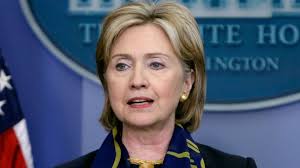
As most of you know, Former First Lady, Senator and Secretary of State Hilary Rodham Clinton is running for US President in 2016. But there are some controversies surrounding her, like private emails.
The State Department is setting up a January 2016 deadline to release emails on her private server turned over to the agency she used to run. That includes all 55,000 of them. This January 2016 proposal addresses a lawsuit filed by Vice News demanding such emails. The email controversy has been a dark cloud over Hilary Clinton ever since she announced her candidacy for US President. While she wants public/work related emails released, she admits some emails her lawyers called private were erased. New York Times reveled Clinton’s email issues, and her team responded almost immediately. Some may ask, “Why is it taking months to reveal these emails?” According to State Department Information Program and Services director John Hackett, twelve staffers have been hired to review these emails. Now they’re scanning them in the records. This process alone takes five weeks. Also keep in mind there are 55,000 of them. The completion date should be around January 16, 2016.
Keep in mind the Iowa caucus, the unofficial journey start to the Democrat and Republican National Conventions, is on February 1, 2016. That’s two weeks removed from the email releases. Will it make a difference or impact? Only time will tell. I can’t stress this enough: This isn’t an endorsement of Hilary Clinton. Nor is this an endorsement of any of her Republican rivalries. But there’s a small lesson to be learned here. If you’re going to run for president, you better watch your emails. This is by no means Fmr. Secretary Clinton’s only concern, but this one has been following her. How important is this email issue to you as a voter (assuming you are a registered voter)? Do you think Republican candidates will submit their emails as well?
May 18, 2015 | Computer technology, Software
Do you remember Apple Maps from a few years ago? Remember what a disaster and a joke that was? Apple has acquired a GPS company that could help.
Apple announced it’s acquirement of Coherent Navigation, a Silicon Valley area based mapping and positioning firm. This purchase was made to boost Apple’s presence in the GPS field. Coherent Navigation was founded in 2008 as a small commercial navigation firm. In the years that followed, navigational firms have exploded! Coherent has worked on everything from auto navigation to robotics. Coherent has worked on high precision systems, which is even stronger than consumer navigation systems, since there’s less room for error. We don’t know how Apple is going to use Coherent Navigation’s services. But the competition over navigation among major tech conglomerates continues to intensify. For years, Google has all but dominated mapping technology. In February, Uber opened a robotic autonomous research facility at Pittsburgh, PA’s Carnegie Mellon University. A group of German car makers are trying to beat Uber in acquiring Nokia Here, the digital mapping section of Nokia. There’s another reason Uber wants Nokia Here. Uber wants to lessen their dependence on Google Maps. So the plot thickens.
What’s the fight over Nokia Here got to do anything? It shows you how important mapping/GPS technology is. And with more people depending ?on GPS, the competition is going to get even more intense. Apple knows this and is doing something about it. From what I know, Coherent Navigation is a solid company to help Apple out. I’m not taking sides by any means. Personally, I’d like for businesses to remain small and I’m getting a little weary of hearing of yet another acquisition every week. But if I were an Apple executive, this is the move I would make. Do you Apple acquiring Coherent Navigation will even make a difference?
May 17, 2015 | Uncategorized
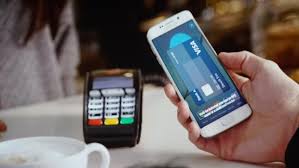
Do you use Samsung Wallet? Did you get their email notification? It not, let me spoil it for you: Samsung Wallet will be discontinued after June 30, 2015. This is the transition from Samsung Wallet to Samsung Pay.
Samsung Wallet was a service that allowed Samsung customers to store coupons, plane tickets, and mobile apps, among other services. Samsung hooked up with companies like Walgreens, American Express, and United Airlines to make Samsung Wallet a reality. This was a deliberate move to compete with Apple Passbook. But now, the attention shifts to Samsung Pay, which will compete with Apple Pay. Like it’s competitor, Samsung Pay will combine mobile payments with credit card readers. Samsung smartphone owners can pay with their phone, just like Apple device owners can use Apple Pay for the same reason. Samsung Pay could make it’s debut in the US and South Korea as early as September 2015. How appropriate: That’s around the same time Samsung’s latest devices, the Galaxy S6 and S6 Edge is expected to be released all around the world. Timelines are unconfirmed, so these debuts could come earlier or later. But I predict a soon showdown between Apple and Samsung over mobile pay services. Who has the advantage?
Although Samsung offers no explanation for the stoppage of Samsung Wallet, even a fifth grader can see the strategy. After the June 30 deadline, no coupons on Samsung Wallet will be any good. Any tickets and reservations will be accessible only through existing partner apps. So come July, Samsung Wallet will be as good as Windows XP?. So the stage is being set. The competition between Samsung and Apple is intensifying. Some experts say Samsung Pay hast the edge because it’s compatible with older store check-out terminals. Only time and the future will tell. Who will win the mobile pay wars?
May 16, 2015 | General
How is today’s job market among teens and twenty-somethings? Many people and statistics say that it isn’t good. Many college graduates go into the real world, only to find few career opportunities. ?But apparently in Silicon Valley, ?some young adults succeed like it’s 1999.
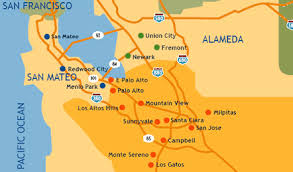
According to this article called The Real Teens and Silicon Valley, some teens and early twenty-somethings are thriving in this tech paradise. And they’re risking everything to strike it big. There’s the 17-year-old high school dropout who is a lead engineer of message app Yo. There’s Ari Weinstein, the co-founder of DeskConnect. Pay Pal founder Peter Theil offers $100,000 to 20 people who skip or drop out of college. He does this annually because, “Some ideas can’t wait.”In 2014, 3,100 people applied. This is to shape young, entrepreneurial minds and maybe, even find the next Silicon Valley superstar. In fact, Conrad Kramer, 18, co-founder of DeskConnect, is one of Theil’s recipients. There’s the story of 18-year-old Ashu Desai. While still in high school, Desai made and sold an iPhone game that sold 50,000 copies. To appease his parents, he went to UCLA, but dropped out soon afterwards because of lack of interest in college. He moved to the San Francisco area. And they’re many teens coming to Silicon Valley with some experience in hopes of making it big in the tech industry, like many go to New York, LA or Las Vegas in hopes of making it big in the entertainment industry.
I am impressed and proud of these young adults who took the great risk. And now it’s paying off. Life is often about risk. And in an uncertain world, there’s no guarantee of anything. They took matters in their own hands, started their own businesses, and created jobs. That’s awesome. But for every Silicon Valley success story, I wonder how many failures and shattered dreams there are. I’m not being a pessimist, just a realist. It’s always good to have an impossible dream and do what it takes to make the dream a reality. Isn’t it even better to have a backup plan?
May 15, 2015 | Computer technology, General
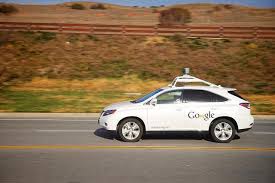
For years, Google has toiled to produce the perfect self-driving car. It’s been on road tests for a long time. Now, the Google car is almost ready to make it’s public debut.
This summer, the Google self-driving car will make it’s debut road trip in Silicon Valley. Google’s central headquarters are there, in Mountain Valley. These robot cars can only go up to 25 mph. In case of emergency or mishap, feature drivers will be available to intervene. They’re now testing how the driving community interacts with and thinks of such a vehicle. The self-driving panel wants to face challenges to a self-driving car, like destination points, construction and other stoppages, and traffic issues. In all the tests that have taken place between Nevada and California, there’s been only eleven accidents and no injuries to anyone. All the crashes were minor. And there was a small incident involving a cyclist, where a driver had to take the wheel. Google engineers quickly corrected the problem, then added it to a list of issues to be studied. Please remember, when Google cars have these road test drive, they’re just that: test drives on live roads. This isn’t the time to pre-order a Google self-driving car. They’re forecasting another five years will pass before that happens.
But I think the Google car is ready for this next step. Yes, there has been some accidents along the way, but those have been few and far between. The main thing is nobody has been injured. So that must mean the majority of these tests went very well. These cars are going to be maximum 25 mph. It often takes a lot more speed before a serious accident can occur. The question is: how well will these real life road tests do? Google car is laying a lot on the line. If they mess up on the road too much, they can kiss their self-car dreams goodbye. If Google car was on the lot and ready to sale today, would you buy one?
May 14, 2015 | Computer technology, Wireless
In the early 1900s, man dreamed of flying. It happened. In the 1960s, man dreamed of going to the moon. It happened. In the decade of the 2000s, civilians dreamed of going to space. It’s happening. Now people dream of drone selfies?
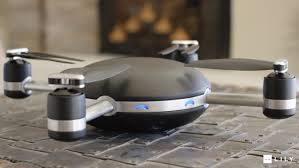
This is where Lily drone comes in. They’re already calling it ‘magic’ because unlike most other drones, it’s easy to use out the box. When ready to use, just throw it in the air. Assuming you’re going under 25 mph, it’ll follow you for 20 minutes maximum without need for recharging. Lily records sound and makes videos as well as takes pictures. The drone is used for recording outdoor sporting events. Extreme sports enthusiast would embrace this device very well. Lily is expected to cost $500 in the pre-order phase. It will run you double if you wait afterwards. It contains a tracking device as well as a waterproof case. Lily herself is waterproof. ?And for those really death defying stunts, it has a slow motion feature. But this drone isn’t perfect (but what drone is?). It doesn’t have obstacle avoidance capabilities. So remember that if you’re flying it into mountainous or urban areas. It follows you around, but if it crashes somewhere, remember it’s unavoidable. The release date of Lily isn’t yet known, but I bet it’s coming sooner than later.
When I heard the term ‘selfie drone’, I immediately thought the worst. That’s what some media outlets are touting Lily as. But if people are using to capture extreme sports, a world few of us will ever know, then Lily is a great investment! Just be careful out there. If Lily is going to be used this to just take selfies every two minutes, then for the love of all things good, then don’t spend $500-$1,000 on Lily! Isn’t selfie culture out of control already?
May 13, 2015 | internet, networking
How do you get your news? If you’re like me, probably through alternative media and social media sites like Facebook. Facebook is catching on and wants to help alternative media givers and receivers alike.
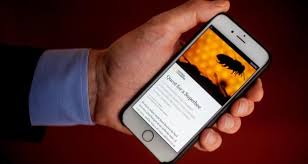
This is where Facebook instant articles comes in. Now any publisher, whether you’re the New York Times or a struggling author in your mother’s basement, can publish articles on their new app. Effective today, the only publishers involved right now are the big boys: National Geographic, Buzz Feed, NBC News, BBC News. But don’t go rushing to publish articles just yet. While they’re not calling this ‘an experiment’, that’s how they’re treating it. There are other concerns: If they publish their articles on Facebook, will Facebook automatically own the articles? That’s a valid concern. But if you do publish an instant article, it’s expected to load immediately on the Apple app. You can use your own tools, though they have some really cool ones, like the Paper app. Here’s the part publishers will really like: they keep all the revenue made from Instant Articles. And if they have unsold merchandise, Facebook will sale if for you and you still get 70% of the pie. Publishers control most of the look and content of the article. Facebook leaders assure publishers this is strictly to give users a better reading experience, not to start their own publishing company. Should we believe them?
From what see now, I do believe them. It answers the question I had in the last paragraph…for now. Facebook can always tighten up the rules and gain more control; I hope they don’t. Facebook instant articles can go a long way if they just let the publishers be themselves and control their content, so long as the publishers exercise some responsibility and respect. Could the next big author or publisher be discovered through Facebook instant articles?
May 12, 2015 | News
Yet another mega merger, or buyout, is taking place. Telecom conglomerate Verizon purchases Internet/email pioneer AOL (America Online) for $50 a share. That’s $4.4 billion. How and why did this happen?
Verizon wants AOL’s content and digital advertising. This deal will give it to them, and a powerful edge in online advertising space. Verizon is the country’s largest Internet provider and wireless carrier. Needless to say their wireless space is increasing. So is the competition from rival telecom companies over video content. The transaction is expected to finish in summer 2015 and by that time, Verizon will totally own AOL, though Tim Armstrong will remain the AOL Chairman and CEO. It seems AOL will get something out of this merger too. Verizon will help AOL compete in a forever changing market. Tim Armstrong discussed the optimism he has of this transaction. He said, “If you look at AOL in the past five years…we turned the company around. But if you look forward five years, you’re going to be in a space where there are going to be massive, global-scale networks…”. ?Armstrong is confident Verizon can help them do this. Is he right?
You must admit, AOL has had quite an odyssey. ?In the 1990s, AOL helped launch a technological revolution. Then they merged with Time Warner and still did well. But by the late 2000s, AOL became a technological punchline. Not even a great-grandmother would’ve been caught with an AOL email address. But starting in 2010, under Tim Armstrong’s leadership, things have turned around. Their stocks are nearly twice as high. They co-own Huffington Post. They’re a legitimate online company again. Now with Verizon, they can put their name out there in the video streaming and advertising race. One could argue this is another mega conglomerate purchasing another mega conglomerate, and more small businesses will be squeezed out. But this story is different. This is a story of AOL going from the brink to a major comeback. And this is another step to that comeback. What do you think of the Verizon/AOL purchase?
