Jun 10, 2015 | Computer technology
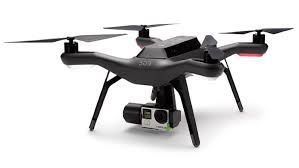
A company called 3D Robotics Solo is developing a smart drone to revolutionize the photography industry. But you don’t have to be a Hollywood director to get into this act.
All you need is this drone that carries a Go Pro camera and two computers to capture air views that would make James Cameron blush. This drone is expected to be a hot item for the summer and into this Christmas holiday season (let’s just get through summer first; it’s way too early for the C word or H word). Even the Federal Aviation Administration is testing it out for safety purposes. According to 3D Robotics CEO Chris Anderson, it’s all in the software. With the push of a button, the software takes the outdoor shots that rivals what you see in A-list movies. This is targeted to bloggers, You Tube channels, or anybody wanting to take their social media game to the next level. It’s also good for young film students. But there are rules and responsibility when it comes to the 3D Robotics drone. It must be flown within your own visibility. It can’t be above 400 ft. up, nor can it be within five miles from an airport. But here’s the best rule of all for privacy rights advocates: you can’t fly it over other people’s property without their knowledge or approval. Safety is also a major concern. These 3D Robotics Solo drones will run you anywhere between $400-1,000 dollars.
Let’s look pass the prices for a minute. Let’s keep the pressure on when it comes to safety and privacy. The last thing we need are sociopaths using these drones for all the wrong reasons. Look at the way they’re using social media to rip-off, hack, bully, and do goodness knows what else. How do we keep the drone culture safe and secure while keeping it fun and wholesome?

Jun 9, 2015 | Uncategorized
In the wake of last week’s severe cyber breach of a federal agency, US President Barack Obama called for aggressive improvement and bolstering of all government cyber defenses.
A probe is pointing to blatant signs of Chinese involvement. President Obama himself didn’t exactly accuse the Chinese government of leading the hacking, but one could feel the tension. The tension is already there thanks to territory disputes over the South China Sea. The President vows to block those who break into system at the G7 Summit, a summit where top nations discuss global threats and tensions. US officials say the reason intruders hacked the Office of Personal Management wasn’t for typical financial gains. These motives were allegedly even more sinister. The motives include recruiting spies and getting weapon and industrial secrets. Beijing continues to insists it had nothing to do with this security breach. But President Obama admits significant venerability in our old US computer systems. He urged US Congress to pass laws strengthening cyber-security. President Obama said at the summit, “In the case of state actors, they’re probing for intelligence or in some cases trying to bring down systems in pursuit of their various foreign policy objectives.” Again, he didn’t name names or nations, but I think they’re plenty of elephants in the room.
And China isn’t the only elephant. Look at the tension between China and the US, over jobs, over economies, and now over the South China Sea. But Russia has also been known for hacking into US government facilities. In recent years, relations between Obama and Russian President Vladimir Putin have been colder than ice. They’ve argued over everything from Ukraine to Iran. Remember the whole North Korea hacking scandal over the Franco/Rogen movie The Interview? If they’re willing to commit a hack attack over a movie, then what about when real issues come up? Is it just me, or is the world becoming a more dangerous place? Now do you understand why we need to strengthen our cyber defenses to maximum security by any means possible?

Jun 8, 2015 | Computer technology, networking
This is a busy time for Apple. They already have the World Wide Developers Conference and the preparation of their upcoming streaming service. But CEO Tim Cook is using this platform to expose a problem in the tech community.
That problem is the lack of diversity in tech based employment. Recently, mega tech companies gave themselves diversity report cards. Even the companies were alarmed at how few African-Americans, Latinos, and women were employed with them. Cook took at long look at his own company, Apple. He discovered just 7% of his roster are African-American, compared to 13% of the overall US population. This statistic, among others, gave Cook a wake up call, and now he’s taking action. He pledged $10 million to organizations like National Center for Women & Information Technology (NCWIT), an organization dedicated in getting girls interested in computer technology. Ruthe Farmer, one of NCWIT’s leaders, insists it’s important to teach girls technological skills at an early age. One tactic is an annual summer camp called App Camp for Girls. It teaches junior high girls how do develop apps and code software. Then there’s former school teacher Ms. Natasha Usher. She’s built apps to connect with her students. She works with World Wide Developers Conference to bring scholarships to African-Americans interested in app technology. She hit it on the head when she said, “You don’t have to be a young, white male in order to code.”
We need more people like that to combat lack of diversity in technology. Here’s another problem: ourselves. How often do we discourage girls from being tech savvy? When they want computer gadgets to improve their minds, how often do we give them dolls and make up kits instead? Or when a young African-American or Latino kid shows tech savvy skills, how often is he bullied for ‘acting white’? And we wonder why there’s a diversity problem in the tech community. Let’s encourage our kids’ dreams of building the next big app, or founding the next social media site, or incorporating the next company. Where will the next Steve Jobs come from?

Jun 7, 2015 | Entertainment
Sony CEO Doug Morris confirmed what many music lovers have been waiting months for. At the World Wide Developers Conference, Apple is expected to announce their streaming music service tomorrow.
Some may ask, “Why didn’t the announcement come from an Apple exec or spokesperson?” In actuality, Sony‘s backing is critical to the existence of this streaming service. Morris talked about the coming event at an event in Cannes, France that celebrated Morris’ fruitful, successful career. Part of that includes a long alliance with Jimmy Lovine, who runs Apple music service. Lovine lead the purchase of Beats from hip-hop legend Dr. Dre for $3 billion. Morris praised Lovine for this move. Apple streaming service is expected to cost $9.99 a month and it’s expected to help DJ’s bring consumers new music and new artists. While Morris didn’t confirm the cost, he prefers paid streaming services than ad sponsored services. He hopes Apple’s music service is the’ tipping point’ that will accelerate the streaming revolution. He said, “A rising tide will lift all boats…It’s the beginning of an amazing moment in our industry.” Is he right?
This is coming at a time when the music streaming industry is becoming very competitive. Recently, hip-hop mogul Shawn ‘Jay Z‘ Carter purchased Tidal and with the help of music heavyweights like Madonna, is turning it into his own streaming service. But Tidal’s streaming services, well, their premium services, will run you $19.99 a month. But are Apple and Tidal aware of what they’re asking consumers to do? In fact, during Doug Morris’ interview, I didn’t hear one thing about how this was going to benefit the most important person in this transaction, the customer. Both these and other streaming services should do a better job convincing regular folks why they should part with $10-$20 a month when they can get the same service for free through an ad sponsored company. What will it take to convince you?

Jun 6, 2015 | Computer technology
In Apple’s quest to promote their purchasing service called Apple Pay, there’s yet another complication. I’m not talking about competition from Android Pay. I’m talking about stores themselves.
Many stores refuse Apple Pay. With all due respect to Apple CEO Tim Cook, I think he had it wrong when he declared 2015 the year of Apple Pay. Of the top 100 retailers polled by Reuters, fewer than 25 currently accept Apple Pay. Around two-thirds said they won’t accept Apple Pay this year, and only four said they plan to bring in Apple Pay next year. Why aren’t many stores jumping on Apple Pay’s bandwagon? Apparently, customers aren’t very interested. Others reasons include stores’ lack of data to process Apple Pay, the cost of running Apple Pay, and there’s a plan to participate in a mobile payment system to be launched by an alliance of retailers sometime this year. But from the minority of stores that do accept Apple Pay, they’re happy with the service. Customers seem to enjoy the speed, convenience and security Apple Pay offers. But these transactions are still few and far between. According to Wakefield Research, mobile payments accounted for four percent of all retail transactions, and that number shows little sign of going up.
But clearly, there is work to be done. Apple needs to do a better job selling this concept. Why isn’t this being blasted in commercials everywhere? I hope Apple execs don’t think they can sell Apple Pay simply because of the name Apple. Surely one of the most successful companies of all-time knows better than that. I think Apple should peak consumer interest. If the customers are interested enough, they’ll go their local stores in drove and demand they accept Apple Pay. If the demand is big enough, stores will have no choice but give in. They’d better do so before this store alliance comes out with their own mobile pay system. Is there hope for Apple Pay?

Jun 5, 2015 | Computer technology, News, scam, Security
US law officials suspect Chinese hackers compromised four million people by breaking into their business computers. If such suspicions turn out to be true, then this would be one of the biggest government breaches of all-time.
The FBI believes the victims are employees of the Office of Personnel Management. They’re responsible for the federal government’s human resources, background checks and job training, among other things. It’s unclear what was stolen, but the cyber attacks began in April and May 2015. The Chinese Foreign Ministry has all but denied these allegations, claiming China opposes all forms of hacking. The Office of Personnel Management was allegedly hacked last year; it’s believed this is a different incident. The White House and other government entities often urge private companies to do a better fighting hacks. But this isn’t the first time the government has struggled with it’s own data security issues. The Department of Homeland Security said they discovered the breach through a data system called Einstein, a system known for identifying cyber intruders, especially on the Federal level. Office of Personnel Management insists they’re taking steps to improve their security so such breaches don’t keep happening. But Rep. Adam Schiff (D-CA) sums up what most Americans are already thinking: We expect federal agencies to be among the most protected.
In the past several years, China and the US have been beefing over cyber security issues for several years now. Not only that, there’s been an intense conflict of words over the South China Seas. With these events, China could very well be a prime suspect. If you’re buying China’s stance against hacking, I have some oceanfront property in Kansas I’d like to sell you. But Rep. Schiff has a great point. Think about how much sensitive data comes through government servers on a daily basis. Now think about if this sensitive gets into the wrong hands. I shutter to think what our enemies could do with this. The US needs to do a far better job protecting their agencies and their employees. This is why I’m considering starting a petition and sending it to my local representatives addressing this critical issue. If the Feds can’t protect their own computer systems, what hope is there for the rest of us?

Jun 4, 2015 | General
Fortune Magazine released the top 500 companies of 2015. Walmart took this year’s number one spot this year (somebody give me a barf bag!), followed by big oil companies Exxon Mobil and Chevron (make it a bigger barf bag!). Let’s see how technology companies rank.
The top tech giant is Apple, taking the #5 spot. But according to Fortune’s editor Alan Murray, Apple is #1 when it comes to profits and market value. But these rankings are in order of revenue. Apple is the first company ever to have a market cap worth $700 billion. And they have a nice bed of cash on hand. I think their iPhone 6 products had a lot to do with their position. Facebook made a significant leap up in this poll. They jumped a whopping 99 spots, form #341 last year to #242 this year. Profit wise, they’re in the top ten. With the innovations Facebook is coming out with, expect to see them cross the #200, or maybe even the #150 mark next year. If Murray is right, we can expect a lot of tech companies to rise up next year. This will be especially true in mobile technology and cloud computing. Did you know Tim Cook was among the most admired CEO’s among his fellow CEO’s? Other top tech/telecommunication companies that made top of the list inclue AT&T (#12), Verizon (#15), HP (#19), IBM (#24), Amazon.com (#29), Microsoft (#31), Google (#40), Comcast (#43), Intel (52#), Oracle (#81), Direct TV (#95), Time Warner (#104), and many others that go down this list.
And for technology take this many spots tells you how important technology is today. The fact Facebook ?jumps 99 spots show how important social media is. I‘m already curious about next year’s list. How many spots will Facebook climb? And with the Time Warner/Comcast merger, how far up will they be in this poll? With Google and Microsoft gaining so much momentum, where will they rank? Will Apple take the number one spot next year?

Jun 3, 2015 | Computer technology
It’s amusement park season again. Have you been to your favorite one yet? Let’s see how technology will play a critical part in the future of the American amusement park.
It already is. In the 1880s, an amusement ride called Switchback Railway was brought to Coney Island. Today, thanks to 21st century technology, roller coasters can now top 75 ft. high and reach speeds of 149 mph in less than 5 seconds. But technology could be used to combat long lines. Disney World is considering setting up video games centers to make the line process better. Disney has the Operational Command Center. Using technology, Disney employees know and monitor your line. If the line gets too crazy or long, they will intervene. But this is just the beginning. Some say that by 2020, you’ll be able to book an amusement park ride on your smartphone like you do an airplane. Then, they’ll be no lines at all. Thanks to technology, expect rides to be bigger, scarier and darker. Entertainment developers are collaborating with engineers to create dark rides to captivate the rider’s imagination. Expect game engines and on-demand mass media to create a more thrilling experience and repeat ridership. Also, expect technology to help amusement parks move from passive rides and shows to full audience participation.One designer believes lines will be no more and attractions will just flow.
The days of your old amusement parks are about over. Wooden roller coasters are being torn down at parks nationwide (that’s a shame because those are my favorites). I can remember when the stand-up roller coaster was so revolutionary. Now, with better technology and better equipped engineers, we can make rides scarier and more challenging than ever before. And that can be good. But remember two things: Safety and audience. Let’s not make the ride so intense that people are falling off or hanging in mid-ride getting killed or injured. Let’s not make it so bad people are having heart attacks over these intense experiences. That does nobody any good. Please remember that young children are too small for such intense rides and people who are either physically or just too squeamish for such experiences. How can amusement parks use technology to cater to these needs?
Jun 2, 2015 | Computer technology
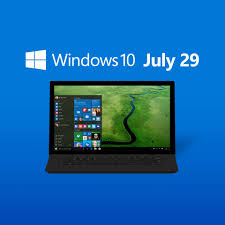
Are you anxious to get on the Windows 10 bandwagon? Part of the mystery is solved. The unofficial countdown to Windows 10 is underway.
Windows 10 will be released July 29, 2015. It will be free for anyone currently using Windows 7, Windows 8, or Windows 8.1. You have a year to take advantage of this free update. If you’re still running Windows XP (what’s wrong with you!?) or an older version of Windows, you’ll be paying $119,. From what I’ve seen, Windows 10 will get you more organized. Just click the task button, and Windows 10 shows you all the windows and apps already opened. They’ll be a black box which helps you create virtual private islands. For example, you can have a desktop for work, a desktop for gaming, a desktop for reading blogs, a desktop for You Tube viewing. To organize apps, right click an app in Task view and drag it wherever you like. Expect apps to play a critical part of Windows 10 success, especially on smartphone devices and gaming systems. For example, there’s a photo app that scans all you devices and One Drive account for photos and puts them in one giant collection, whether you’re using a desktop, laptop, or smartphone. You can enhance everything on these photos. Microsoft believes PCs are old news. I doubt that very seriously, but Windows 10 is being designed to handle forever changing technological times.
I hope Windows 10 is a smashing success, for the sake of Microsoft. There will be no Windows 11 or Windows 12. Windows will spend the rest of that time and energy improving Windows 10 as they see fit. From what I’ve read, this is a good start. I’ll believe it when these apps are as easy as claimed. I think I may wait a few months after July 29 and see how other people feel about Windows 10. Then I’ll make the personal decision to upgrade to Windows 10…for free. Are you counting down to July 29?
Jun 1, 2015 | News, Security
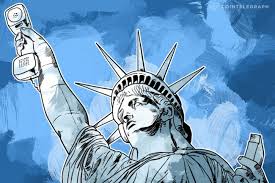
Sometimes ‘I told you so’ doesn’t do justice. A couple of weeks ago, I blogged about the June 1 expiration of surveillance aspects of the Patriot Act of 2001. That prediction has come true.
Because Washington couldn’t come up with a reform agreement, these surveillance powers expired at midnight Eastern Standard Time June 1, 2015. Even those who are pro NSA surveillance say there needs to be reform. Ever since Edward Snowden‘s exposure of bulk surveillance in 2013, we learned ?how the federal government can read every social media post, every email, every instant message, and how they can listen to every smartphone conversation. Many political leaders have called for a stop to this kid of surveillance. There’s hope for new legislation called the USA Freedom Act. This would ban the NSA from collecting bulk telephone conversations and restrict other areas of surveillance. But as for now, the Feds can’t use bulk telephone records, or business records relating to Internet use. This debate has turned Republican against Republican, even fellow Kentucky Senators Rand Paul and Mitch McConnell. Senator McConnell is opposed to any surveillance reform. Senator Paul is a staunch opponent of NSA surveillance. He even believes this new USA Freedom Act doesn’t go far enough in fighting surveillance abuses. Rand Paul is running for US President in 2016 under the Republican ticket, but is popular among civil libertarians.
With Memorial Day vacation and June 1 shortly after, and politicians hardly agreeing on anything these days, I knew the old NSA surveillance wouldn’t be renewed. But I have hope for the USA Freedom Act. On one hand, it would ban unnecessary privacy abuses. On the other hand, this act will help keep us safe. Some say a resolution should happen by the end of this week. Do you think our elected officials will put differences aside and put our privacy and security first?
