Jul 31, 2015 | Computer technology
Amazon isn’t the only entity interested in drones. Google wants a slice of the drone delivery pie. Those two, and other companies, team up with NASA to create a drone air traffic control system.
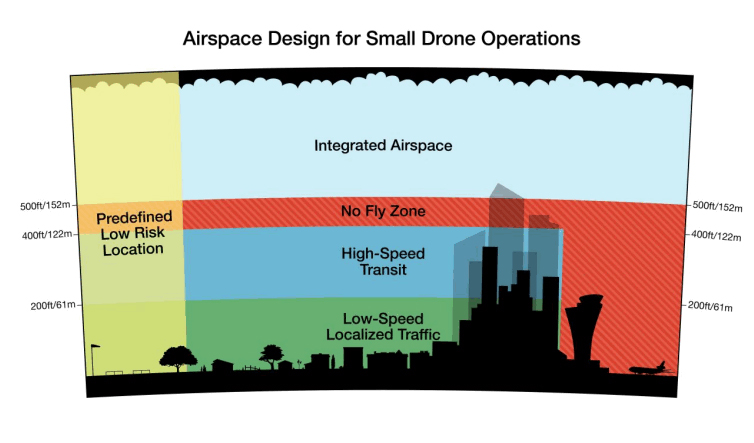
Amazon’s drone vice-president Gur Kinchi revealed his company’s vision at a NASA conference. This conference took place two days ago at the Ames Research Center at Mountain View, CA. It’s highly doubted you’ll see drone delivery services in the months to come. But the conversation is already starting. Rules and regulations must be in place well before drones can deliver packages. Such a system is being dubbed Unmanned Aerial System Traffic Management. Other companies helping NASA’s movement including Verizon Communication and Harris Corporation. Kinchi believes a drone traffic control system is the only way to keep drones from hitting each other, other air traffic, and other human beings. In fact, recreation drones have already caused injuries among people. Back in February, the FAA revealed strict laws revealing drone use. If passed, commercial drones could only fly during the day and within the drone operator’s sight. Drones would be forbidden within five miles of airports. Drones are to remain under 400 feet to avoid crashing with other air traffic. Long range drones must tell where they’re going. And all drone vehicles must have some communication skills to avoid disaster.
And this is a good start from the FAA. ?Gur Kinchi and the rest are right. We need a system to maintain some kind of order if drone delivery service is even going to be possible. Think of the mass destruction that will take place if Amazon and everyone else start delivering package drones tomorrow. It would be the equivalent of allowing toddlers to drive cars and fly airplanes. I don’t care how long it takes. But a drone traffic system needs to be in place before one drone delivery is complete. What do you think the drone movement?

Jul 29, 2015 | Smartphone
Happy Windows 10 day, to everybody from Geek Choice! Today is the day countless people from 190 countries can upgrade from Windows 7, 8, and Windows Phone 8.1 (hopefully nobody’s still holding onto XP!) to Windows 10. And there won’t be a Windows 11.
While Windows 10 is available on PCs, it’s clearly geared toward mobile use. Windows 10’s start button and menu are easy and more manageable. That’s good news for frustrated Windows 8 customers. They’re offering free upgrades for a reason. It’s not out of their generous hearts. They know Apple and Google/Android are on their trail. Thus, Microsoft wants Windows 10 on as many PCs, laptops and smartphones as possible. Currently and financially, the free upgrade isn’t that big of a risk. Windows is less than 3% of Window’s overall revenue. The majority of that doesn’t come from Windows users, but from hardware companies installing their products on PCs and businesses paying for annual and multi-annual licencing. Speaking of PCs, new computers and smartphones already carrying Windows 10 go on sale today. By 2018, Microsoft hopes to have Windows 10 on over a billion machines. ?In conjunction with the Windows 10 debut, celebrations are going on around the world to mark the occasion. Using the hashtags #UpgradeYourWorld and #Vote, you can go on social media to vote for Microsoft’s tenth global charity. I’m going to vote later on because I see a much needed winner. What’s your vote?
So Windows only represents two and a half percent of Microsoft’s entire payroll. Why should Microsoft even put this much effort in Windows 10? Microsoft is putting their reputation on the line. Windows is Microsoft‘s baby, and they need Windows 10 to be the best Windows ever. If Windows users are let down, they can easily go to Apple or Android. And since much of Windows’ profit comes from businesses, they’re not going to like a dysfunctional, inept, disappointing Windows 10. There goes that revenue. What else is on the line with Windows 10 debut?
Jul 28, 2015 | Computer technology, Security
Some of the brightest scientist and technology leaders are urging the ban of killer robots and unmanned intelligence weapons.
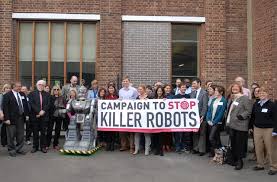
A letter was written and signed by Professor Steven Hawkins, Apple co-founder Steve Wozniak, and other respected leaders of the science technology community. This letter was signed by over 1,000 robotic researchers and 1,000 others. This letter calls for a ban on “offensive autonomous weapons”, weapons that can kill people on their own without human help and can’t be stopped by human intervention. This letter warned against a ‘military artificial intelligence arms race’ that could destroy the human race. The letter was presented at the International Joint Conference of Artificial Intelligence in Argentina. The letter writers aren’t anti-artificial intelligence. In fact, the letter argues AI can be good. For example, AI can protect our military in combat zones. They acknowledge that. But there’s concern offensive weapons could turn wherever they want and cause great human death and destruction. Hawkins even said such AI is our biggest threat. They’re calling on the UN to stop the threat. And there are other groups like Campaign to Stop Killer Robots to call attention to this issue.
I’m glad someone is exposing the potential threat. When I was a kid, I used to hear stories and watch shows about how robots could take over the world and destroy the Earth and her inhabitants. I never thought we’d see it happen. But here we are faced with this threat. What if someone turns on these machines and can’t turn them off? Next thing you know, dozens are dead. There’s no apology, explanation, investigation, lawsuit, or criminal trial that’s going to bring the dead back. This is why we need to prevent offensive autonomous weapons before they’re turned on in the first place. Or worse, what if they’re deliberately turned on with malicious intent to kill innocent human beings? You don’t think somebody is that psychopathic?

Jul 27, 2015 | youtube
For a decade, You Tube has been the premier social media video site. For almost that long, Facebook has been the premier social media interaction site. These two worlds have been clashing for years. The clash seems to be approaching a climax.
This rivalry played out at last week’s VidCon conference, as Facebook, You Tube, and smaller competitors didn’t hold back trying to lure Internet celebrities and vloggers to their side. For years, You Tube held a virtual monopoly on video blogs. But lately, Facebook has been on a campaign to become one of the major, if not the major social media video source for producers and advertisers alike. At VidCon, Facebook showed off it’s visible management tools for video producers. They showed off a ‘spotlight showcase’. This highlights top Facebook video ads and teaches others to make great ads directly aimed at their customer base. According to the Wall Street Journal, increased competition makes You Tube have better relationships with their most popular You Tube vloggers. Facebook isn’t the only rising competitor. Up to 82% of Twitter users watched video content on Twitter in May 2015, mostly on mobile devices.
This increased video competition between You Tube, Twitter, Facebook and others is good. It’s good for the video producers. It’s good for advertisers. It’s good for fans like you and me. You read it yourself. Competition is forcing You Tube to do better by channel producers and advertisers. Remember, when a corporation is too big to fail, they’re too big to care. The social media video race keeps You Tube in check. Plus, this could open up the door for more vloggers. Let’s say you’re starting an Internet show, but You Tube is too crowded. But there’s opportunities on Facebook to start your videos. And there’s advertisers to cater to your audience. And there’s a hungry audience, including your Facebook friends, waiting to hear it. Where would you start your video blog channel?

Jul 26, 2015 | internet
Now we all know about the Amazon fiasco back on July 15, when their Amazon Prime Day sale ended in humiliation. I hope Amazon got that behind them. It certainly seems that way.
According to Silicon Valley insiders, Amazon is moving to their next ambition: the drive-in grocery store. Don’t confuse this with their delivery service. Here is how it’s expected to work: you order your groceries online. You schedule a pick up at a grocery store. On the way, someone is packing up your order. By the time you drive up, they’re ready for you to be picked up and taken back home. If the world’s biggest online retailer can pull this off, that would bring an additional challenge to a grocery industry already caught up in a whirlwind of change. We see that change from questions about the food (the GMO debate) to the way we pay for them (Apple Pay). The debut location is expected to be in Sunnydale, CA, the heart of Silicon Valley. Real estate developers are already preparing 11,600 square foot building for grocery housing and pick up. They even have an address planned for pickup: 777 Sunnyvale Saratoga Road. Amazon isn’t confirming or saying anything about this alleged new project. Neither is the real estate developer.
I must stress this. Amazon hasn’t yet confirmed this new endeavor. So why even write about it? Imagine if Amazon grocery drive-up services are successful. Imagine if that success travels across the country. Can you imagine how much more power and influence that would give Amazon, already one of the most powerful corporations in the world today? But I can’t imagine getting groceries online and then going to pick them up and be done with it. Call me old school, but there’s something sacred about looking around for brands, produce and price. There’s something about smelling the fruits, feeling the vegetables, asking the butchers about the meat, and indulging the free samples. Yes, I even like to squeeze the Charmin every once in a while. Can you do that with Amazon grocery drive up?

Jul 25, 2015 | General
FuelBand was supposed to track exercise and health activity. FuelBand was supposed to work ?with an Apple iPhone, iPad or Droid. But for many, that wasn’t the case.
Contrary to the promotional hype, FuelBand woefully failed to live up to expectations. Those who bought it between January 2012 and June 2015 claimed it couldn’t count burned calories or track overall health activity. They took their complaints to court against Apple and Nike in a class action lawsuit. Lawyers representing the jilted customers said Apple and Nike deliberately deceived customers in their FuelBand advertisements. These lawyers also argued the companies knew about the deficiencies and did nothing to improve them and kept selling FuelBand anyway. In June 2015, a settlement was reached. Nike will pay a total of 2.4 million dollars to customers taking part in the lawsuit. Friday, members of the plaintiff were instructed through email about this settlement. Plaintiffs would either get a $15 check or $25 Nike gift card, or they could exclude themselves from the settlement altogether. However, Apple got off totally free. Apple has no liability when it comes to paying disgruntle customers or attorney fees. In November 2015, a hearing will discuss attorney fees and other fees.
Believe it or not, I see how Apple got out of this one. The failed health wristband was Nike’s. While Apple was a part of the promotion process, Nike put it’s name on FuelBand. So they should be held responsible for the damages. Nike is a multi-billion dollar entity. Two and a half million dollars isn’t going to hurt them. I‘m just glad this deal was settled out of court. This could of dragged on for a very long time and that would have done nobody any good. But is $25 per customer a good payout for this suit? Where will FuelBand rank in the biggest flops in tech history?

Jul 24, 2015 | Computer technology, Security, Software
In the last year or so, we’ve learned anything can be hacked. Even entire retail corporations?and government entities aren’t safe. Can a car be hacked?
The answer is yes. That’s according to professional hacker Charlie Miller of Ladue, Missouri, a suburb of St. Louis. Earlier this week, he and a friend tested their hacking skills on a 2014 Jeep Cherokee. One person was on a laptop while another was on the road driving around greater St. Louis. From the laptop, Miller was able to lock the doors. He blasted the car radio. He was took control of the steering wheel. Miller even shut down the breaks and transmission. Charlie Miller plans to discuss these disturbing results at the Black Hat convention in Las Vegas in August 2015. Miller’s experiment is so alarming that everyone is taking note, from consumers to car makers to political leaders. Chrysler is already teaming up with Miller to fix their soft security spots. A Chrysler spokesperson said the company is “…focused on identifying and implementing software best practices…”. Senators Richard Blumenthal (D-Conn) and Edward Markey (D-Mass) are pushing for laws that secure cars and protect the lives and privacy of everyone on the road. Miller worries the more automobiles depend on 21st century software technology, the more vulnerable?we all are. There could be hundreds of thousands of vulnerable cars on the road right now.
I agree with Charlie Miller. And I hope more legislators and car companies take note and do something. Don’t wait for tragedy to strike to combat evil and chaos. If they have a chance to stop it before they get started, then take it! We consumers should stay on their case until something is done. So share this and other stories like this all over social media. Write to your local Congressmen, Senator, car dealership and car company and insist this security threat is solved before someone gets hurt or killed. Don’t think somebody would hijack somebody’s car from home? Tell that to terrorists, cyber criminals, psychopaths, or anybody with a grudge. I‘m thinking even jilted ex-lovers could use this against each other. Can we afford to wait any longer to fight car hacking?

Jul 23, 2015 | Entertainment, General, News
In Nagasaki, Japan, a new hotel called the Henn-na just opened up. It’s nicknamed “Strange Hotel” for a reason. This hotel is run by robots!
That’s not a sarcastic catch phrase or put down, that’s the truth. A lady robot will check you in and bow to you, literally. A dinosaur robot will serve as your concierge and entertain the kids. Robots will handle your bags and give you travel suggestions. You don’t even use a room key. You use facial recognition technology. Don’t expect a hotel bar, restaurant, diner, or continental breakfast or even an in-room refrigerator, microwave, or coffee maker at Henn-na. You get snacks from a vending machine. The goal of this technology on steroids is to cut cost, save energy, and give customers an experience they’ve never have before. Though the hotel owner admits it was expensive to get the robotic system set up, he believes it will be much cheaper than human labor cost. Rooms at Strange Hotel start at around $80 a night.
Keep in mind Japan is obsessed with robot culture. They’re robots that serve as store greeters, psychiatrists, even as companions. But an all robot hotel is creepy on all levels, even for Japan. What if there is a robot malfunction? What if something goes wrong? Who are you going to report to? I know humans can be difficult to deal with at times. So I can see the appeal of an all robot hotel from that perspective. I just don’t share that perspective. According to a JD Poll, most American and Canadian travelers don’t. Most of us prefer a human being checking us in. We prefer our microwaves, refrigerators, and continental breakfasts. And what about jobs? The hotel/hospitality industry accounts for millions of jobs around the world, from minimum wage to executive jobs. How are you just going to toss all these working people out on the ground just to save the CEO money? Good luck explaining that one. And it’s still $80 a night. With the exception a handful of cities, I can still find a nice human run hotel for that much or less. Would you stay at a robot hotel?

Jul 22, 2015 | General
Tell me if this makes sense. Your hottest product sells tens of millions of copies. Your profit margins this quarter alone is over $10 billion. But yet your stock market points fell over six percent in one day.
That’s what happened to Apple yesterday. Despite selling over 47 million iPhones in the last quarter alone, and despite 35% increase in sales from last year, Apple stock prices fell six percent yesterday. To Apple stockholders, it’s not the past they’re concerned about. It’s the future. There’s uncertainty for the next quarter, and analysts aren’t too excited about the iWatch. Those two things are what brought stocks down. The iPhone has been critical in Apple’s success. But investors are depending on the iWatch to carry that success to the next level. Apple CEO Tim Cook knows it. Cook said sales didn’t exceed their expectations, while sales did increase somewhat from April to May and from May to June. Cook didn’t give too many numbers or details because he doesn’t want smartwatch competitors to see this and take advantage. Apple did get a boost from China. Despite their recent economic turmoil, China is responsible for 25% of the company’s revenue. Their sales have doubled from more than a year ago. Keep in mind Apple is releasing new services as well, like Apple Pay and streaming music services.
I need to get a few elephants out of the room. Competitors have been pretty aggressive with their smartwatches. But Apple tries to keep hush about their iPhone numbers. Could smartwatch competition be a factor? Look at China’s struggling economy. Just a couple of weeks ago, their stock market lost 30% of their entire value. And this is the nation that attributes a quarter of their sales. Could the turbulent world economy be a factor? Plus, Apple has several new projects, like iWatch, Apple Pay and streaming services. Is Apple doing too much too fast? Is that another reason why stocks fell?

Jul 21, 2015 | General
Transportation service Uber is one of the fastest growing companies today. And that is ticking a lot of people off, from cabbies to local governments.
Around the world, protesters have claimed Uber uses shady practices and loosely regulated tactics to steal jobs and business. While taxi regulations are extremely strict, virtually anyone over 21 with a valid drivers licence and a good car can become an Uber driver. ?Uber claims they’re simply providing services to people who can’t find good service otherwise and providing jobs. But a showdown is taking place in New York City. Uber put out a scathing commercial about New York City taxi drivers. The commercial portrayed them as drivers who would only pick up certain people in certain neighborhoods, suggesting people in minority neighborhoods have little chance in even catching a cab. Then there’s NYC major Bill DeBlasio, who accepted taxi donations, tried to block Uber’s progress in his city. Not all political leaders take such a hard line against Uber. On the campaign trail, Uber is about almost as big as a subject as the economy and Iran. Jeb Bush uses Uber on the campaign trail. Marco Rubio also embraces Uber. Hilary Clinton talked about Uber’s influence, and how it raises questions about future job and workplace issues. Uber isn’t going away.
On one hand, I see Uber’s point. As a minority, there was one time when I tried to hail a cab. He rode right past me and picked up a white passenger.And I’ve dealt with cabbies who weren’t nice. I’m not throwing the whole industry under the bus. That’s not my intention. I’ve had great and pleasant experiences with the vast majority of taxis. ?But this is the United States of America. This nation and it’s economy was founded on a free market enterprise system. On the other hand, I’m worried about Uber’s relaxed requirements of who becomes a driver. It almost seems like any sociopath can become an Uber driver. Who knows? Maybe Uber is the scare taxi companies need to treat their drivers better. Maybe Uber is the scare drivers need to treat their passengers better. Who do you side with? Uber or the world?
