
Nov 10, 2013 | General
Who built your new iPhone 5? It wasn’t apple; they’ll tell you that on the box. Foxconn is one of the builders, but even they need companies to make the supplies.
They need companies like FLEX, Flextronics International. They own 28 million sq. ft.worth of factory all around the world. So now they need countless manpower to manage the plants and hire the workers needed to make and distribute these supplies. This is where it gets dicey. In Malaysia, recruiters go into an unregulated network of getting laborers. They go into the rural improvised farms of Malaysia and neighboring countries. These factory jobs are so in demand that these laborers aren’t hired: the jobs are sold! Think of the tenant farming system of the early 20th century in the US. To prepare for the iPhone 5 rollout, brokers had to get 1,500 men to make cameras in one day! Brokers say so many men so quickly were needed that they had to go to the most remote parts of the Himalayas…by foot.
What’s to make of this? At best, better planning needs to be in order. Heck, a better system needs to be in order. I don’t know how, but something needs to be put in place to select the right amount of workers for the jobs. That way, those laborers who are chosen can get a decent wage and feed their families. And they should have known that many hands were needed ahead of time to build those cameras, so why didn’t they plan better? Recruiters shouldn’t have to walk to all over everywhere in that short of time. But something has to be done. What though?

Nov 3, 2013 | General, networking
Several weeks ago, I talked about tech billionaires like Facebook’s Mark Zuckerberg and their initiative to get everyone in the world Internet access. But Microsoft Chairman Bill Gates isn’t on board.
According to one recent interview, Gates called this initiative ‘a joke’. He talked about a malaria vaccine that he’s working on, and asked which was more important…health or online connection. He seems to insists we should meet people’s more basic needs, like access to quality food and clean water. Bill Gates and his wife Melinda has been on the front lines of global issues for a long time. Since the Bill and Melinda Gates Foundation was founded in 1994, they’ve raised tens of billions of dollars to help eradicate poverty and disease in developing nations. One project they’re working on is eradicating polio worldwide.
But Mark Zuckerberg is no philanthropy slouch either. A few years ago, he donated $100 million to Newark, NJ public schools, one of the most troubled school systems in the US. Personally, I’d like to see these two come together to fight global poverty. Gates is right on one hand: everyone in the world needs to have access to good food, clean water, decent clothes and shelter,? excellent medical care, good jobs, and an education. Zuckerberg is right too :In the 2010s, everyone should have the right to online access, regardless of where you live or what your income is. So I wish this bickering and putting down would stop and both would put their resources together and make a true change. Wouldn’t it be a Heaven on Earth if all 7 billion people of Earth were healthy and well connected? Where do you stand on this?
Oct 23, 2013 | General, internet
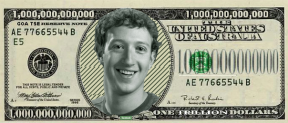
But not everyone is struggling during these turbulent times. It’s been reported Facebook CEO and Founder Mark Zuckerberg is the highest paid CEO for a North American company.
In 2012, Zuckerberg pocketed approximately 2.28 billion dollars. The majority of this didn’t come from advertising, but from stock options. To put this in perspective, 2.28 billion is almost as much as the other nine highest paid CEOs combined (that came up to 4.7 billion). A year ago, Facebook’s stocks were around $17 a share. As of today, October 23, 2013, it stands at around $52 a share. But as early as 2005, during Facebook’s infancy, Zuckerberg exercised stock options at just six cents a pop. When Facebook went public in spring 2012, those stocks were worth over 2.7 billion dollars. If you’re wondering, Apple CEO Tim Cook ranked fifth on this list.
It’s impressive that someone not even 30 years old made this list and has already changed the world forever. It’s also impressive he’s investing in projects, like making sure anyone who wants online access can have it regardless of cost and/or location. But I thought more tech giant CEOs and general managers would have made the list. Salesforce.com CEO Marc Benioff made ninth on the list. Where’s the Google CEO? Aren’t their stocks in record numbers? Where’s Amazon CEO Jeff Bezos? Where’s Bill Gates? Why aren’t they on this list?
Oct 21, 2013 | General, Security
As Blackberry continues it’s free fall, companies are vying for it’s buy out. One of those companies is China’s Lenovo. But what are their intentions for attempting to buy Blackberry?
According to some security sources, even the Pentagon, say Lenovo wants Blackberry not to turn it around, but to hack into that system. It’s not like they haven’t done it before. Back in the 2000s, the Chinese hacked Nortel, a Canada based company. It went on for most of the decade. The hacking got so bad that in 2009, Nortel filed bankruptcy and the company was split and sold in parts. But Blackberry isn’t Nortel, and I’d like to think people learn from previous choices. The Canadian government is working around the clock to make sure Lenovo doesn’t get Blackberry. They’ve already blocked several foreign attempts to get Blackberry. Lenovo’s bid was rejected too.
The American government is doing it’s part to keep Blackberry from China’s grip. The US Defense Department estimated over 75% of it’s mobile devices are blackberries. Lenovo’s equipment is banned from five major English speaking countries: United States, Canada, Great Britain, Australia and New Zealand. I hope all of this and more is done to prevent Lenovo from getting Blackberry. Call me old fashioned, but when a company is bought, I believe the purchasing company’s job is to help turn the bankrupt company into a winner, not destroy it some more. Think of the global ramifications if China keeps it’s hacking up with no accountability or nobody to stop it. There’s already talk that China’s calling for the de-Americanizing the world. I don’t think this is junk talk; I think they actually mean it! What should happen to Blackberry?
Oct 12, 2013 | General
In recent days, we’ve learned Facebook is doing away with a privacy setting. How many stories have we heard of people not getting a job or getting fired from a job because they’re employer checked their social media pages? Then there’s the NSA scandals. The online privacy debate has no end in sight.
There’s a group called World Wide Web Consortium.? It consists of advertisers, privacy rights advocates and other Internet experts. They can’t even agree on the Do Not Track controversy.? Advertisers proposed an opt out button. There, people can visit websites without getting target ads so long as they push that button. But privacy advocates claim this won’t stop data collection on people. Ad agencies know the rules are getting tighter as the public outcry gets louder. So they’re coming up with new ways for tracking.
Look, I get it. Advertisers need a way to get their product or service out there. For 20 years, the Internet has been an inexpensive but effective way to do that. But I also understand people want to left alone. And they don’t want to be bombarded by ads because they looked on a previous site. For me, the term ‘site tracking’ has all kinds of negative connotations, especially after last summer’s NSA scandal. But the fact that ad companies and privacy rights groups are trying to figure out a solution is an encouraging sign. It’s more encouraging than the bickering in Washington, DC right now (oops! did I say that aloud?). Is there a solution out there for advertisers that will ensure privacy?
Oct 5, 2013 | General
Today, two years ago, Apple founder Steve Jobs passed away. Let’s count some of the ways his peers are remembering him.
Apple co-founder and current CEO wrote a letter to his to his company honoring Jobs’ legacy. He also tweeted about their long friendship. In Cook’s letter, he tells employees about Jobs’ vision and leadership. Cook told them to honor Jobs’ work by continuing on with his work and vision. Andy Grignon, a senor engineer at Apple, also reflected. In the New York Times, one can read Grignon’s story about iPhone development. Gringnon was in charge of radio development of the iPhone. What I got from Grignon’s article was the Jobs’ and the company’s nervousness and excitement at the same time. They knew they were on the verge of something revolutionary, but were cautionary optimistic.
Both of these accounts capture Jobs’ innovation, creativity, and sometimes ruthless attributes as a businessman. We all know by now he wasn’t perfect, especially when it comes to family issues. Some say? his business practices were questionable. But you can’t argue with successful results. Cook and Grignon bring the human and business side of Jobs and do it with style. What would Jobs say about the things that have happened since his October 2011 passing. What would he say about the NSA revelations? What would he say about the iPhone 5S? What would he say about his company named most valuable in the world? If Steve Jobs were alive today, would he approve or disapprove of the way Apple is going today?
