Sep 11, 2013 | Computer technology, Wireless
September 20 should be a big day in Apple’s history. This will be the day the iPhone 5C and iPhone 5S should be released. But the vibe I’m getting from the media and the public is: who cares?
The last time I checked today’s ticker tape, Apple stock lost 5% of it’s share this day alone. A year ago at this time, Apple’s stock was worth over $700. Another factor is timing. Are you aware it’s been 230 days since Apple came out with it’s last product? The last big space was 132 days. Low prices are doing little to help. This iPhone 5C goes for $99 in the US, with a contract. Some economic experts say the mid-lower price smartphone booming so much$99 isn’t cheap enough. Speaking of competition, as of this week, Samsung sold over 38 million Galaxy Note smartphones. During Apple’s release drought, Microsoft released the Windows 8 phone. Some experts say by 2017, Windows will have almost the same amount of the phone market Apple does now.
This is a long way from what we’re used to. I don’t see long lines and people sleeping on the streets rushing to get these iPhones. They got us spoiled. When you release new product after new product, you’re going to shorten consumers’ attention span. By this point, we’re addicted to seeing what’s next. When the what’s next doesn’t come for over 7 months, naturally, our attention is going to wander elsewhere. Competitors knew it and jumped on the opportunity. One would think a smartphone for under $100 would get people running to the Apple store. A few years ago, it probably would have. Now, you can get one for far cheaper, with a contract of course. Don’t get me wrong; I love Apple products as much as anybody. But it’s a new world out there. Can Apple compete?

Sep 6, 2013 | Computer technology, Wireless
This week, Google Glass and Samsung Galaxy Smartwatch have dominated headlines. That got me thinking: What wearable technology has made history? I’m putting this in chorological order.
10. Abacus jewelry: In the 17th century Far East, this jewelry was all the rage. You could add and subtract on it, a revolutionary concept for that century.
9. The first wristwatch: It was designed by Breguet Queens of Naples in the?1810s. It was the first to tell time on your wrist. It took decades for this to catch on. In fact, the first men’s wristwatch wasn’t developed until 1904.
8. 3D Glasses: During the 1950s, these disposable tools brought cheesy action and?horror movies closer to the viewer. In 1952, Bwana Devil was the first to test this fad.
7. First Digital Wristwatch: In the early 1970s, Pulsar LED were the first wristwatches to tell you the time computerized, not manually. Pulsar LED made a huge pop culture impact in the James Bond film Live and Let Die.
6. Heart Rate Monitor: Wear this around your wrist and/or your chest, and you can measure your heart rate during and after exercise. Invented in the late 1970s and tested by a Finnish ski team,?they ?began to fly off shelves by the mid 80s, and haven’t stopped flying.
5. Virtual Reality: In the late 20th century, a headpiece taking you into another world became a part of American psyche. By the ’90s, it was a part of TV and film culture, there was even talk of applying it to video games. The military uses virtual reality to train soldiers to this day.
4. First Bluetooth Headset: In the early 2000s, these headsets started to bridge the gap between fixed and mobile devices. They made you look really important too.
3. RFID Technology: Since the mid-2000s,?it’s been used in passports to track the passport holder.?RFID?chips no bigger than a grain of rice have?been put in animals in case they get lost. There’s talk of (and some have done this) of putting them in human beings for various reasons. It’s controversial technology; many argue RFID violates privacy rights.
2. Smartwatch: It’s been anticipated for years, but by October 2013,? you can take pictures, hold smartphone apps, and even talk on your watch!
1. Google Glass: Still not amazed? Starting in 2014, you can take pictures with the wink of an eye. In fact, all the things you can do with a phone you can do with a set of?glasses. If this and smartwatches are successful, by the 2020s,?we may not even need smartphones anymore.
That’s my list. What did I miss?

Sep 5, 2013 | Computer technology, Wireless
I learned something today. I thought Apple dominated the smartwatch scene. Then I learned of the Samsung Galaxy Gear and it’s early October release. I wonder what the outcome will be.
With this watch, you can catch notifications and keep time using many faces and time zones. The Galaxy Gear contains 1.9 megapixels worth of camera, two microphones. One can produce 10 second?movies with this watch. It’s not supposed to be used as a phone. But one can still conduct conversations with it. Samsung says you can access 70 apps on this watch, from Evernote to Pocket. It has a pedometer, to help you find your other Galaxy device in case it’s misplaced or stolen. There is some debate about battery life. They say battery life can last around 24 hours with no charging. But keep in mind it runs on Bluetooth 4.0 Low Energy, so I’ll believe it when I see it. This watch is packed with 4GB of storage power. The cost is expected to run around $299.
So are you convinced to go get a Samsung Galaxy Gear Smartwatch? If I wasn’t prone to losing my watches all the time, I’d be tempted. The many faces, camera, microphone and that good storage power on one little device are all great selling points. The real red flag is the battery life. It’s enough I got to keep my iPod touch plugged in all the time because battery life goes so quick. Do I have to worry about that?with this watch? Then there’s the $299 cost. With what I’m allegedly getting, I’m good with that price.?However, I’m reading comments that some people aren’t. Some even say they’ll only pay that much with an Apple watch. Speaking of Apple I-Watch, what will their response be? When these two devices go head to head, who will win?

Sep 4, 2013 | Computer technology, Wireless
Google Glass has been?a hot topic in the tech community for a while. They’ve even been the subject of a congressional inquiry. Now, there’s a Google Glass App Store coming for Google Glass users.
But they’ll have to wait until 2014 to get that app store. An essay in the New York Times seems to confirm that. This app store will be available when Google Glass is publically available next year. As of today, only a few thousand of qualified people have access to them. Rumors say they will run around $500, but some experts say that price will be about $1000. Google did confirm the app store rumors, but kept hush about the more intimate details. Will this app store be part of Google play or will it have it’s own store?
These are just a few of the questions I’m looking forward to. When in 2014 is Google Glass going to be released?? They’re still encouraging app developers to submit their apps. So don’t look for a January of February date. One thing that does make sense about Glass is they’re building the store around time when the device is made public. It makes no sense to release the app store when only several thousand people can ever get access to it. How well will Google Glass do? How well will this store do? There’s a part of me that’s rooting against Google Glass because I have serious privacy concerns. What questions do you have about Google Glass?

Sep 1, 2013 | Computer technology
For years, I’ve been hearing about this crisis on both sides. One side says there won’t be enough qualified people to fill the needed jobs for the STEM fields?(science, technology, engineering, math). Another side tells us there aren’t enough jobs for the number of qualified people.
It appears to be a little of both.?For instance, President Obama called for?at least 100,000 engineers to be trained by 2020. Earlier, I did a blog of how tech companies from Facebook to Microsoft?are asking immigration to lax policies so more qualified workers can come in and?get jobs. Nonetheless, some reports?suggest those trained to be in the STEM fields are struggling to find work. Even after the Great Recession, tech companies like IBM and Best Buy close down stores and lay off employees. Plus, you have HB-1 visa immigrants, new college graduates, existing STEM job holders, and a not so booming economy. Maybe they’re too many cooks in the kitchen.
I’m no job expert , but I might have a dilemma that will help both ends. First of all, we need to get kids interested on science, technology, engineering and math at an early age. I know people have been?preaching that since Sputnik in the late 1950s, but it’s far more true today. You can’t wait until high school and college to cram STEM in these kids’ heads. Get them interested in?STEM fields while they’re in pre-school, even when they’re babies! After all, child psychologists say that 80% of a child’s personality is formed by their 6th birthday. This goes into my next solution. Maybe?these?kids will create?STEM jobs, so that anybody whose qualified enough to get one will have one. Yes, we need to train workers, but we also need to train leaders, innovators?creators and employers. Whose going to be the next Bill Gates or Steve Jobs??Whose going to be the next Mark Zuckerburg? Whose going to be the next Marissa?Meyer? Whose going to be the next savior of?STEM?
Aug 24, 2013 | Computer technology
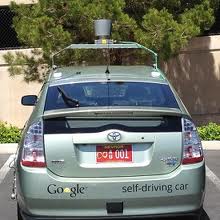
Most of us know this day is coming. Movies have been made about it. And look at how far our technology has come in the last 10 years. Now it’s almost here.
Google is working on software to make the very first self-driving car. They’ve talked with major car companies about this. They’ve talked with certain manufacturers about being a car to Google’s requests. While personal use is an obvious reason to build the car, there are ramblings about the cars being used for taxi services on demand. According to a German newspaper, Google was drawing contracts with Continental AG about creating a self-driving car. Devices are being built too, while apps and software are next on the to-do-list. As far as Robo taxis go, at first, it would still require a driver, but as they become more advanced, they wouldn’t even need that. If the self-driving car were releases on the market today, expect to pay around $150,000.
The first thing that struck me was the potential taxi service. This would be a huge welcome for anybody. Between you and me,?the majority of?taxi drivers aren’t exactly warm and cuddly people.?Come to think of it, the majority of?people driving on the?road today?aren’t exactly warm and cuddly people. And if self-driving cars will help take the stress out of things, then I say?bring it on. The one thing I’m surprised about is the cost.?With the software, hardware and the apps it’s going to take to put this car together,?I thought it would be a little more. This robo car will be?only a?little more?than?most luxury cars are. So I close with this question:?Will self-driving cars be a hit or flop?
