
Nov 14, 2014 | Backup, Computer technology
It’s time to go Lambda. I’m not talking about your fraternity pledging days. I’m talking about Amazon’s Lambda,? Amazon Web Service’s new contribution to the computer programming world.
According to Amazon Web Service’s CTO Werner Vogels, Lambda will allow programmers to reduce effort on their part. All they’ll have to do is write the code, define event triggers, and the program will automatically run after that. This is expected to save the programmer time, money and work. Lambda is also expected to do the managing, scaling and monitoring. Less than a second after an event is triggered, it’s processed through cloud functions. Lambda can follow principals of function business logic, data business states and interactions in between, as well as the basics. Though Lambda only supports Java script for the time being, but Mr. Vogels assures it will support other computer languages as this service becomes more well known. It’s advised that after you create your function, you give it content and resources at that time. Amazon is giving consumers the free sample to entice our potential appetite for Lambda. For those who are willing to attempt this endeavor, Amazon Web Service will provide a million free request a month and 3.2 million seconds of computer time a month.
It’s been eight years since Amazon got into the web service game. It’s now up there as one of the top. Back in 2012, Amazon was voted the best cloud provider of them all, beating out names like Microsoft, Verizon/Terremark, and Century Link/Savvis. So they’re in good position to make this announcement about their Lambda service. However, I’m a little weary of the promises it will do all the managing, scaling, and monitoring for you. If that can be pulled off, great! But at the moment, it sounds a little too good to be true. What do you think of Amazon Web Service’s Lambda?

Nov 10, 2014 | Computer technology, internet
In a statement on Monday morning, November 10, 2014, US President Barak Obama urged the Federal Communications Commission (FCC) to support net neutrality. The President says that will keep the Internet free for all companies and people.
The message says that mega cable and Internet conglomerates should not decide which sites the consumer can or can’t visit. Though President Obama stressed the FCC is an independent organization, let’s read behind the lines. He’s really giving FCC Tom Wheeler and his sympathizers the green light to take no prisoners when it comes to net neutrality issues. Earlier this year, Wheeler tried to come up with a compromise, allowing Internet companies to sell faster service to anyone willing to pay. But the President’s statement is a win for Internet activists everywhere, and for small Internet companies who can’t afford to pay for faster service, much less compete with the big boys. The set of rules the President asked for include the following: no blocking (your Internet service provider can’t block a website so long as that website is legal), no throttling (they can’t slow down websites and speed up others at their choosing), and ‘no paid prioritization’ (no service should be stuck in a slow lane because of inability to pay). You know major cable companies aren’t happy about this. I’m sure come 2015, they’re going to send lobbyist to plea with the newly controlled Republican congress do swing this in their favor.
But the FCC is an independent organization, remember? So what good is lobbying and bribing going to do? I’m glad President Obama made this statement. The Internet has been open and free for all for around twenty years. Shouldn’t we leave well enough alone? If net neutrality isn’t enforced, major corporations are bound to censor what we can or can’t watch, download, or where we can’t do business, not because of racy content, but because it doesn’t line up with their already fat bank accounts. Shouldn’t the Internet be fair for all humanity and all competitors? Doesn’t corporate America have enough control over our lives?

Nov 5, 2014 | Computer technology, Wireless
Are you excited about wearable technology or just tired of it? If you’re tired of it, I’m sorry. There’s another company jumping in the race just in time for the holiday shopping season.
Bluetooth product maker Jawbone and health and fitness system Up will be introducing two products. Up Move is an aluminum nugget that can be worn either in a wristband or clip-on. It measures basic health activity: calories, steps taken, your sleep amounts. Up Move has a free mobile app for Apple and Android smartphones. The price of Up Move is usually $50. The wristband: only $15! You can start ordering today, but shipping starts November 7.
The other wearable product is called Up3. This wristband will run you $180. Jawbone says this device is like jumping from phone to smartphone. It’s features include wireless synching, water resistance (so long as it’s not submerged), customized reminders, built in alarm clock, motivation and connection with family and friends, goal set-up, and others. They also have resting heart rates as well as workout heart rates. Up3 can detect hydration and respiration rates. Don’t go rushing to Up 3 website’s yet. Shipping isn’t expected to start for a few weeks.
I’ve always said competition is good for business, especially this time of year. I have to do more research, but I think fifteen dollars is a record low price for any fitness technology, or any wearable technology for that matter. This is a good thing because now wearable devices are accessible to everyone and more people will want them. For all UP 3 is offering, $180 is a decent price. I’m not saying I want the Up3 for Christmas, but this is a good buy. The reviews of Up 3 are pretty good. I hope Fitbit and others step up their advertising and promotion game this holiday season, and I think they will. Which wearable technology is on your Christmas list?

Nov 3, 2014 | Computer technology, Smartphone
Let me clear the title up: Apple is not selling keys. But Apple is teaming up with hotel chains. These chains will allow you to use your iPhone to lock and unlock your hotel room at your convenience.
Starwood Hotels (the chain that gives us luxury hotels like Sheraton, Aloft, W and Le Meridian) are starting the SPG Keyless program. You can use this program as soon as you book a Starwood hotel. You can choose to register your phone through the SPG app. The day before your stay, they’ll give you your room number and cyber key through that app. At your arrival, you skip the check-in desk and use your iPhone and go straight to your room. With the app on your iPhone, you unlock your room and there you go. As of today, only three Starwood brands: Aloft, W and Element have this service. Other Starwood brands are expected to follow soon. SPG Keyless will be available through iPhone 4, 5,and 6? systems. Hilton Hotels are looking to get into the key less trend. Starting in early 2015, they will be launching their own key less system at select hotels and resorts in the US. Eventually, you’ll be able to use these upcoming hotel key less systems on Android smartphones.
This could work. I don’t know about you, but I’ve been on vacations and I forget my card key. Now I have to go to the front desk, sometimes at crazy hours, and ask to be let in. This new system will eliminate that hassle and potential embarrassment. I like the way they’re starting up for more expensive chains and smartphones too. I hope this is so successful that withing a few years, the key less trend will trickle down to every hotel chain and will be affordable to all hotel patrons. Would you use your smartphone as a hotel key?

Nov 2, 2014 | Computer technology, Entertainment
Let’s go back to the decade of the 2000s: the era of George W., Paris Hilton, and the rise of reality TV. It was also the era of the podcast, programs broadcasted over the Internet. Get ready for the podcast comeback.
By 2009 or 2010, the podcast was slipping, thanks to You Tube and other social media venues. But now, the podcast is back with vengeance! Where do you want to start? You can watch true crime podcast like Serial, a radio style talk show like Alex Jones Infowars, or catch the podcast of celebrities from Jersey Shore’s Snooki to WWE superstar Chris Jericho. Last month, 39 million people listened to at least one podcast show, a new record.? Not only are more people listening to podcast, more people are launching one. John Lee Dumas, host of podcast ‘Entrepreneurship on Fire’, says “It’s spreading like wildfire.” Dumas should know. He’s made over 700 episodes of Entrepreneurship on Fire. There are several reasons why the podcast is making such a resurgent comeback. One reason is the shows are better than they were 10 years ago. Another is economics. It costs less to produce than other media. Traffic and technology have a lot to do with this trend. We’re spending more hours in our car than ever before. Most cars made in the 2010s, at least in the US, can play Internet radio either through USB, Bluetooth or auxiliary plug. It’s estimated next year, half of all cars sold will be Internet connected. By the mid 2020s, all of them will be.
I like to add another reason to the podcast comeback: the overall quality of today’s media has taken a downward turn. From the mainstream news to the music, it’s more of the same. People are tired of it and switching to podcast and other alternative entertainment. This trend will only continue as time marches on. What’s your favorite podcast?
Nov 1, 2014 | Computer technology
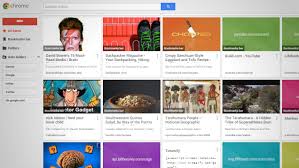
The wait for Google Stars is over, but they’re not calling it that. It’s simply being called Chrone Bookmark Manager. And it seems like not too many people are waiting.
But Google Chrome Bookmark Manager is launched. They’ve been tweaking and polishing this new addition to the Google family since May, but just released it yesterday. Here, you can save all your bookmarks with a single clique and it organizes bookmarks for you based on categories of what you’ve already saved. You can even share bookmark folders with your Chrome friends. And they’ve done a good job updating the interface.
But the few people that tried it if haven’t given it rave reviews. Complaints about the new extension have been plentiful. Some say it may require an updated version of Google Chrome altogether. If that’s the case, then I don’t think it’s worth it. Others agree. I’ve read reviews saying they already have so many tools for bookmarking, saving and sharing they don’t need anymore. Too much can become confusing. At best, some say it’s easier to work with, but not that appealing or easy on the eyes. Keep in mind this is a new venture for Google, so maybe Bookmark Manager will improve as time goes along and as more people respond. Are you going to jump on the Google Chrome Bookmark Manager anytime soon?
