
Aug 21, 2017 | Computer technology
Are you ready for the total eclipse? For two hours, from Oregon to South Carolina, the moon will move between Earth and sun. Then, in much of the country, it will go dark, especially in totality areas. But what does this have to do with technology? Here’s how technology helps you watch the total eclipse.
So take men like astrophysicist Henry Winter. He talked to a blind co-worker about the eclipse. Then he go an idea, and put it into action. Winter and his colleagues came up with Eclipse Soundscapes. That’s an app that helps visually impaired people enjoy the coming eclipse. Also, it’s already on Apple and Google stores. So how will Eclipse Soundscapes do this?
They’ll do it through spoken description. There will be a voice over option either through a smartphone or through app recording. This app will give a play-by-play of what the eclipse is doing. Furthermore, it will be so descriptive that it will feel like they’re sitting in a totality location. It also includes a special map. This map uses touch to on the sun’s picture. When they touch the picture, they will hear noises. This allows the user to interpret the eclipse in his/her own way. Winter and his team hopes to use Eclipse Soundscapes for future space based events.
That’s just one example of how IT support and technology mark the eclipse. There are others. For example, Google’s front page has a cartoon of two aliens playing with the moon, creating an eclipse. You know your Facebook and Twitter pages will have people covering it, especially if you’re in the totality zone. On You Tube, countless channels also cover the event. And of course, you can watch coverage on your smartphone or streaming network. These are just some of the ways technology helps you watch the total eclipse. Will you be watching?
Aug 11, 2017 | Computer technology
There will be no Windows 11. I think most people in IT support know that by now. But that means Windows 10 needs to keep improving, if they want to keep existing. So this is where Microsoft Windows 10 Workstations comes in.
Maybe I should say Microsoft Windows 10 for Workstations. Because they’re revealing this OS today, specifically for Workstations. Also, they’re aiming it for server grade PC hardware and true power users. Furthermore, this Windows 10 will help machines with high amounts of RAM and logical processors. Microsoft is also making other to support business PC software. Because imagine running a business on mediocre software. Just don’t do it.
First of all, the ReFS (Resilient File System) can better fight data corruption and other ills. Then, they’ll support more memory modules. This means faster read and write speeds and files will still be in place. Speaking of files, there will be faster support for Microsoft Windows 10 Workstations. And last, but certainly not least, they will expand hardware support for this new system. I will try to say this without getting too technical. But this Windows 10 can support more CPU’s, processors, and ram terabytes. Keep in mind they’re just revealing Microsoft Windows 10 Workstations. They plan on releasing it sometime in fall 2017. So far, we don’t know the date.
Obviously, businesses use Microsoft as well as more personal systems. But does Microsoft cater to the business as well as they should? Ask some people in our Boston computer service shop. Many will tell you no. And some others will tell you that’s why they use Apple software. So this is a huge step in Microsoft’s direction. They realize they’re not the only candy store in town. So now they’re doing something about it? But is it enough? Will businesses use it? How will Microsoft Windows 10 Workstations play out in the future?
Aug 8, 2017 | Computer technology, Smartphone
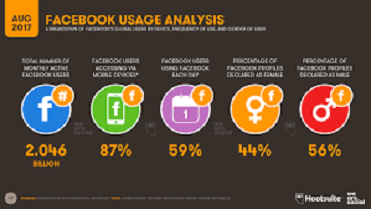
They social media population reaches three million people. So you may ask, “What’s the big deal”? Well, the global population stands at 7.52 billion. So when you break it down, around 40% of the world’s population regularly connects to social media.
But that’s not all. Over half the world’s population use the Internet daily. Then, take into account over 2/3 of the global population has smartphones. However, if you take the US alone, 83% of us has smartphones. In fact, I know people who swore they would never get one. But today, even they have a smartphone, and social media apps to go with it. There’s no escape anymore. I don’t think too many people want to escape.
Who are the social media winners? Facebook is the biggest one, because they lead the social media lead by a fairly big margin. Facebook alone has over 2 billion accounts. So more than a quarter of the global population uses Facebook. A good second winner is You Tube. Some people in our Boston computer service shop watch You Tube more than network TV. ?Coming in third is What’sApp. They have 1.2 billion accounts. Instagram is holding it’s own with 700 million.
But who are the social media population losers? One loser is Twitter. Of all the major social media companies in this poll, Twitter came in ninth place. They have 328 million accounts. That many sound good to some people, but remember when Twitter was supposed to be the next big thing? Then add the scandals, the layoffs, the bullying, and a certain US President who can’t put Twitter down. More people are turning Twitter off. Not even the NFL can help their matters. Some social platforms, like Uber and Airbnb, are not on the list, yet. But the way they keep growing, they will be. What do you think of this list? I hear people say smartphones and social media are destroying this generation. Are they right?
Aug 2, 2017 | Computer technology
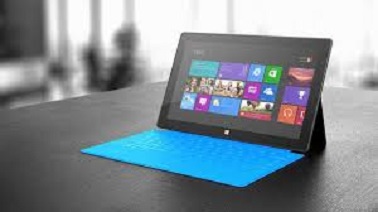
Today, Microsoft introduces their Microsoft Surface Plus program. It’s a new payment plan for Microsoft Surface customers for Surface customers, personal and business. So let’s look at Microsoft Surface PC: New payment line and luring tool.
So the program begins at 9am Pacific time. They present it as a flexible finance program for anybody using Surface. But you can only get it at Microsoft stores, physical and online. In fact, when you buy a Surface desktop and/or laptop, you can get a 2-year-payment plan at 0% interest. Also, every 18 months, you can trade in your old Surface for the newest one. Hopefully, you don’t have to wait in those long line for hours.
This goes for all things Surface. Furthermore, you get a 30-day return guarantee and a year’s worth of free tech support. Obviously, so long as that tech support comes from Microsoft. Yes, this program includes businesses and schools. In fact, they can get the 55-inch Surface Hub for $8.25 a month. The Surface Hub is very popular in business conferences and classrooms. But so are Apple Mac products and Droid facilities. So in addition to this generous offer, they get the Office 365 suite.
The timing is very interesting, and good. It’s back-to-school season (I know many kids, and many teachers, don’t want to hear that). This is the second busiest retail time of the year, next to the Christmas shopping season. Here in our Boston computer service shop neighborhood, moving trucks are here daily. That’s the sign of the upcoming academic year. Microsoft wants a piece of those profits. That’s a smart move on Microsoft’s part. Because Microsoft makes up less than 5% of the smartphone market. And between you and me, their smartphones haven’t been that good. When I give gifts, people even say to me, “Not a Microsoft phone or tablet.” Will Microsoft Surface Plus turn that around?
Aug 1, 2017 | Computer technology, General
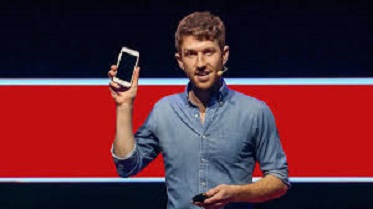
Tristan Harris is a rising star not only in the tech world, but on the public speaking stage. He gives TED talks?and goes on TV. He also warns of what technology can lead to. Let’s look at the attention economy, technology, and Tristan Harris.
Harris explains the attention economy as a race to build attention. For example, the more attention you get, the better off you are. He says there are three major tech companies that build attention: Google, Facebook and Apple. In order to get Facebook likes, you need to get people’s attention. When things get shared the most, it is bound to get people’s attention. If you want You Tube subscribers, then you need to get people’s attention.
Harris talks about the 2016 election, and how Trump used the attention economy to win. Look at how some of his shocking tweets got attention. But he’s not the only one. There are celebrities like Amber Rose. Amber Rose doesn’t sing, act, rap, dance, tell jokes, write books, run for office, teach, or anything like this. In fact, she got famous by getting people’s attention, and uses technology to do so. She does this by saying shocking things, wearing shocking clothes, and dating other celebs. I’m not necessarily picking on Rose. Over the years, how many celebrities made themselves famous by using the attention economy, and used technology to do it?
But Tristan Harris offers solutions. One is to recognize this problem and take responsibility. You see fake news. Then it’s your responsibility to avoid it, and tell others this is fake news. I find myself doing that with celebrity death hoaxes. Yesterday, I found myself doing that at our Boston computer service shop. The second thing to do for tech companies like Google, Facebook and Apple to recognize the human mind. Even adult, highly educated minds are like sponges. Sponges will digest whatever people and things put in them. So he calls on Silicon Valley to be more careful of what they feed our brains. Basically, Harris says it’s a team effort. I slightly disagree. It’s an individual choice to decide what gets your attention. If we, not Silicon Valley, dominated the attention economy, and decided what got our attention, wouldn’t Silicon Valley, Hollywood, and Washington get the message?

Jul 29, 2017 | Computer technology, Smartphone
Do you remember the 2002 movie Minority Report, starring Tom Cruise? If you don’t, then here it is. Taking place in the 2050s, they arrested you before you even did anything. Because artificial intelligence predicted their crimes. But can this happen in real life? Can AI predict crimes? China thinks so.
So China wants to use artificial intelligence to help them solve crimes. That sounds good, right? But China wants to help the police solve crimes before they happen. They also want to catch the bad guys even before they have the opportunities to become bad guys. The Chinese police are all for it.
China also has an ally in Cloud Walk, a facial recognition tech firm. They make software that gathers data on the whereabouts and doings of people. For example, if the person goes somewhere shady, Cloud walk assumes the person is more likely to be a criminal. They can also use?algorithms and crowd analysis to study what they deem as ‘suspicious patterns and activities’. Furthermore, they want to use personal re-identification software. That matches a person’s real ID, even if they moved to a new town. Or even if they try to change their identity. It’s also a part of what they call body recognition.
This opens the door to so many problems, in IT service, in law enforcement, and especially for society. This is going to cause everything from profiling to police brutality to false arrests. For example, someone who goes into a bar might just want a drink, not to start a fight. When someone goes to a gun shop, that doesn’t mean they’re planning to start a killing spree. Plus, one again, you’re taking jobs out of human hands and putting them in robots. Can AI predict crimes? Or will a lot of innocent people be imprisoned, or worse?
