Feb 22, 2018 | General
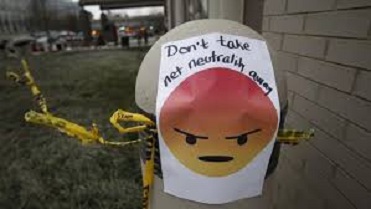
So back in December 2017, they repealed net neutrality. But why am I talking about this today? Because today, this ruling is now official. However, that doesn’t mean the fight for net neutrality is over. Is net neutrality really dead? Maybe not.
So okay, the fight really started right after they passed the law. For example, 20 states sued to stop net neutrality repeal.?? But they can’t do that now. Because now that the repeal is official, these states can no longer complain how the repeal infringes on their rights. Does this mean states can’t do anything? And does this also mean there is nothing individuals can do?
Well, not exactly. Protests are going on all across the country. They’re even going on near our computer service shop. It may not change things right away, but it will get people to listen. Democrats can force a vote to challenge this repeal. It may not override President Trump’s support, but it could send a powerful message come midterms. Many states are coming up with their own net neutrality rules. Also, many political leaders argue this repeal violates the Administrative Protection Act (APA). This prohibits arbitrary rule making. Some argue the net neutrality repeal lacked major discussions and not experts testified before they made this ruling.
Is net neutrality really dead? I say maybe not because many other people are doing something about it. People are writing to the Senators and Congressmen and keeping this issue very fresh. Our elected officials know mid-terms are coming up. They also know 2020 isn’t that far behind, and there is so much at stake. I think if we, especially us in IT service, keep net neutrality a hot issue, then they won’t just let this repeal go. Watch your ISP’s as well. If enough resistance comes, they could resist right back. But how would it look on their part? Then again, how many ISP’s do you have competing against each other? That’s why we need more ISP competition, but that’s another subject for another time.? So is net neutrality really dead?

Feb 21, 2018 | Security
So I take it this happens to you. You go on a website, especially to buy or sell something. But they give you a math problem or question to answer. It’s because they want to prove you’re human. They call the program Think fast: Trying to outsmart robots.
As you know, many are people are turning to facial recognition for security. They’re using it everywhere, from airports to new smartphones. In fact, facial recognition is the only way to unlock the iPhone X. But some researchers and experts say that’s not enough. They say this because robots and AI technologies are getting smarter and smarter.
So they come up with a way to recognize your face while you answer a simple question at the same time. Georgia Tech U. researchers still try to perfect this. Believe it or not, even with 2018 IT support, it’s tough? for face and voice recognition to align. However, there are many human vs robot tests out there. As early as the 2000s, you had websites asking you to type in a code or answer a math problem. However, it’s a different world know. Everyone in computer repair knows it. In fact, everyone everywhere knows it.
So I love this test Think Fast did. They asked a question. It took humans about a second to answer. Then, it took robots/computers about six seconds to answer. These were simple, like “Do you like cats or dogs?”. Right now, the goal is to fight spam, hacking and ID theft. But as bots and AI get smarter and smarter, the fight could be so much more critical. I hate to sound like a sci-fi movie, but we’ve seen what robots are doing. We also see how they’re permeating every aspect of life. Is this just an extra layer of protection? Or is this necessary in the fight against robot domination?
Feb 20, 2018 | Smartphone
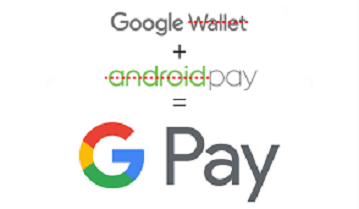
So starting in January 2018, Google brought together all of it’s pay brands into one umbrella. That umbrella is Google Pay. But Android Pay took it’s time getting that memo…until now. Android Pay turns into Google Pay.
With these updates, Google hopes to create a more dominant presence in stores, online and retail, around the world. Then add new designs to Google Wallet. They now call it Google Pay Send. Soon, they will be able to use the app for sending and requesting money, kinda like Western Union. Google Pay consumers can expect this function in the coming days. But wait…that’s not all.
The new Google Pay app will show you stores that will accept Google Pay. This will be according to your location and shopping habits. For example, if I am near our Boston computer service shop. I use my phone to pay for food items. Then it’s going to show grocers, coffee shops, and restaurants near my Boston computer service shop. Or it could be anywhere in your neighborhood, city or town. Google leaders and executives are doing all they can to make this transition as easy as possible. Of course, this is because they want you to use Google Pay as fast as possible.
Here is just one way they’re trying this. Do you have a Bank of America account? It’s the second most popular bank in America, and one of the most popular in the world. If you do, then you can set you the Google Pay app in the Bank of America app. That way, they can intertwine. So this is another way they can get you shopping with Google Pay quicker. I don’t know if they’re doing this with other banks or not. It wouldn’t surprise me. They’re already linking this new app with other apps like AirBnb. That doesn’t surprise me either. But why does Android Pay turns into Google Pay? Is it perhaps to keep up with Apple Pay?

Feb 19, 2018 | networking
So this past weekend, they had their NBA All Star game. But it’s just more than the game itself; there are tons of other festivities. However, there was one you probably didn’t know about. The NBA All Star game used as a technology platform.
They called the platform BIG, meaning Business Inside the Game. One of the hosts was NBA all-star Baron Davis. Then add Lyft co-founder John Zimmer, Moviepass co-founder Hamet Watt, and rapper/actor turned entrepreneur Ice Cube. There were also some other, like NBA star Chris Paul. One focus is to ask how NBA stars can make an impact other than basketball. The other is to address how technology is changing sports and popular culture.
John Zimmer never forgot how cab companies and local governments tried to stop Lyft and Uber when ride sharing first came out. But he emphasized this was just the beginning. He said today, ride sharing contributes 0.5% of all human transportation. Then he said that in 20 years, ride sharing would contribute to the majority of all rides. Ice Cube hinted it’s important for innovators to continue to challenge, and break, the status quo. Others are suing technology to test mew ways of entertaining. Baron Davis himself emailed the reason he started BIG.
He started it because he wants to create a platform from all walks of life to make change. And they can do it through business and IT support. I say good for them. Because I’m tired of reading stories of celebrities going broke a few years after retirement. One year, they are living it up. Then the following year, they’re in bankruptcy court or can’t even pay child support for their kids. Maybe computer servicing and IT service can start the turnaround. Maybe what men like Baron Davis and John Zimmer are doing will change that. Would you use an event like the NBA All Star game as a technology platform?
Feb 16, 2018 | General
So I read this article about a San Francisco coffee house. This one house charges eight dollars per cup of coffee. That’s just one example of Silicon Valley’s wealth inequality problem.
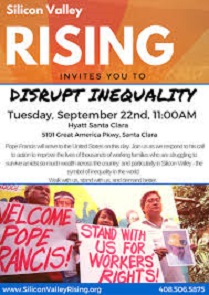
Silicon Valley, greater San Francisco and San Jose, have some of the worst wealth inequality in America. In fact, the San Francisco area ranks third in the highest wealth gaps between rich and everybody else. Then take the San Jose area, just down the road. They rank sixth highest in the highest wealth gaps between rich and everybody else. But that’s just where this tragic comedy begins.
Because between 2014-2016, the highest wage earners see raises averaging $60,000. Meanwhile, everybody else saw wage increases of only $2,000. So $2,000 is hardly enough to match inflation, especially in that part of the country. But wait…isn’t technology helping stop Silicon Valley’s wealth inequality problem? No it’s not. In fact, though I hate to say it, IT support is making wealth inequality worse. Some experts say Silicon Valley companies reward those who already have higher salaries. Meanwhile, a third of the population depend on assistance just to survive. The billions of dollars the high tech industry makes just isn’t trickling down to the rest of the community.
Over the last several years, I witnessed protests from maids, waiters, and drivers making minimum wage serving tech leaders making billions. Also, I read stories where 20-somethings tech employees get fired for daring to complain about their low salary. Silicon Valley/San Francisco is the home of: Google, Facebook, Salesforce,? NetApp, Apple, and Ebay. It’s also the home of Cisco, Intel, Synmantic, etc. I don’t know if they’re doing anything to curb this problem. But it is a problem. And they need to do something. Because if they don’t, I fear Silicon Valley will collapse on it’s own weight and greed. I shouldn’t blame Silicon Valley though. In Boston, home of our computer service shop, we have our battles with wealth inequality.? Companies and people are already leaving Silicon Valley because of this. What do you think, if anything, can be done?
