
Jul 31, 2018 | Entertainment
So when people think of Nintendo, they think of something my generation played back in the 1980s and 1990s. That was the go-to system for many of us in computer repair.? But maybe we should look at Nintendo as a current hot commodity. Nintendo’s comeback: Their profits soar.
So according to their own reports, Nintendo sold around 20 million of their newest console, the Switch. Nintendo also reports an 88% increase in profits just from last year. Overall revenue is up almost 10%. In Q2 2018 alone, Nintendo sold 1.88 million switches. Let’s not forget that we’re in the back to school shopping season already. Then comes the holiday shopping season. So I think we can expect these numbers to only increase.
But it doesn’t stop at the Switch. In September, they’re going to be new titles, like Super Smash Bros. and some new Pokemon games. Remember the classic Nintendo consoles for all us old school heads, and for those looking for nostalgia? Well, they sold over 1.25 million copies. It also sold 1.39 million Labo kits. That’s just in the last couple of months. Recently, their online games have been doing very well. They made billions of dollars recently. They’re anticipating the latest editions of Mario Kart Tour and Dragalia Lost. They should be out in early 2019.
I myself see the switch to Nintendo products. Because near our computer service shop, a customer let us play with his Switch. He told us he even sold his XBox One and switched to Switch. This is just part of Nintendo’s comeback. For a while, it wasn’t looking good. Just a while ago, they came out with their Wii U. It was a flop. Then you had competition from Xbox. But I’m glad to see Nintendo making a comeback. This is the system I grew up with. This is the system that brought me games like Zelda, Duck Hunt and Mike Tyson’s Punch Out. Past or present, what’s your favorite Nintendo game?

Jul 30, 2018 | Computer technology, News
So there are many things to talk about,as usual. But I think this episode will resonate with all of us. Because we all fly, and fortunately, I only fly a couple of times a year. American Airlines glitch exposes fragile system.
Yesterday, American Airlines grounded all their flights. However, this wasn’t because of weather, terrorism or crime. It was due to a computer glitch and IT service failure. They felt the outage nationwide. This is especially true in their busy airports, like Chicago O’Hare and Minneapolis/St. Paul. You can bet, it didn’t take long before complaints flew and tempers flared.
But there is some good news. This IT support outage didn’t last very long. The operating system and dispatch went out around 2:05 yesterday EST. However, by 2:45 EST, they fixed the problems and all operations ran as normal. They also did a good job coordinating with the FAA to handle this ground stoppage. One more piece of good news. They didn’t have to cancel any flights because of this. In fact, they only delayed nine flights because of this stoppage. And from what I’m reading, there was no physical violence or incidents or uprisings in the wake of this glitch.
So what? Why do I write about this? To show you how the American Airlines glitch exposes a fragile system. Yes, it only lasted 40 minutes, thank goodness.? I do applaud American Airlines and the FAA for correcting the problem quickly before it got out of hand. But during the glitch, there was no way the passengers could have know that. For all they knew, this could have lasted for hours. I hate to say it, but American Airlines passengers got lucky yesterday. In recent years, a lot of airline glitches got a lot worse. Not only that, what if somebody hacks into the system and holds it for ransom? I’m not trying to scare anybody. But the airline industry and the government needs to do something prevent, or at least minimize, these glitches. But what though?

Jul 27, 2018 | internet
So first come the Facebook woes. Then come the Twitter woes. We learn Twitter loses about 20% of their stocks. It’s not because of profits. But it’s because overall usage is down. Twitter gains profits but loses users.
Well, last time I checked, Twitter is doing a little better. As of this writing, they’re only 15% in the red. But it’s still a long way to go. The culprit: the smaller number of users, especially in the USA. While the number of int’l users is holding steady, US users take a decline. And it’s not even a big one. Statistics show that in Q2 2018, the US had 68 million Twitter users. That’s down from 69 million last quarter. However, it was clearly enough to make stockholders nervous.
They also doubt that Twitter can even hold an audience anymore. Experts predict Twitter followers and activity will continue to slip for years to come. However, Twitter profits are at an all-time high. In fact, Q2 gave Twitter record profits; the GAAP income came to around $100 million for that quarter. That’s well above what they expected. But even this ride probably won’t last long. Because experts also predict a decline in profits.
Like Facebook, Twtter had it’s woes over the past couple of years. We can go all the way back to 2016 and the Leslie Jones scandal (she was bullied so bad Twitter execs had to intervene). Remember when Twitter tried to bring the NFL on to boost usage? That didn’t work either. Let’s face it. Twitter needs followers in order to keep the profits going. It looks like they’re not getting them. I believe this turbulent political climate is also hindering Twitter. A lot of folks still don’t like President Trump. I know people near our Boston computer repair shop, and computer repair experts feel like that.? But guess what social media site he uses most? Could that have something to do with it. Twitter gains profits but loses users, and can they get them back?
Jul 26, 2018 | internet, networking, News
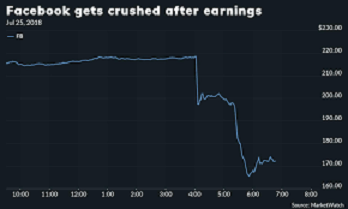
So yesterday, Facebook made IT support history. But it’s probably the worst kind of history a company can make. Facebook sets a record (this one ain’t good).
Yesterday, Facebook lost around $150 billion in 90 minutes! Facebook leaders told stockholders and the public they expect a slowdown. They also expect this slowdown to last for years. These are things no Facebook stockholder wants to hear. Then the selloff began, and kept up for the last 90 minutes of the trading day. By the time the nightmare of a day ended, Facebook stocks were down 24%. Now, $148 billion in Facebook value is gone. As of this writing, it still struggles in the red.
Yesterday, CEO Mark Zuckerberg said 2.5 billion people are on Facebook now. But that’s where the good news ends. Because he followed with woeful second quarter numbers. Then add the lack of new daily and monthly active users. But that’s not what started the downward spiral. First, Facebook CFO David Wehner said revenue growth will slow. Then he said expenses will surpass growth and revenue into 2019. Ouch. That’s not good. Right now, operating margins are in the early forties. But for now, and in the years to come, they expect profit margins to be in the middle thirties. I’m not sure if Facebook sets a record. But it’s coming awfully close.
Facebook is an IT service company that knows better days. They can start with the fake news controversy in the wake of the tumultuous 2016 US election. To this day, many on the political left partially blame Facebook for Trump’s win because of ‘fake news’ articles and alleged Russian hacking. Then came the Cambridge Analytical scandal. Finally, I read an article saying that less teenagers, the iGeneration/Generation Z, are even into Facebook. Partially because it’s now so popular with older generations. So now, they’re turning to other forms of social media. Will Facebook recover?

Jul 25, 2018 | Uncategorized
So, how many remember the good ol’ days? A college degree got you a job, and you stayed on the same job, often times with the same company, for your entire career? Those days are so over now. Americans and IT service jobs: Are we ready?
Studies show today’s 22-year-olds could work as many as 30 different jobs and 3 careers over their lives. Also, thanks to technology, more people will work at home or freelance then ever before. But that means they won’t have the same benefits their parents and others had. These include things like health care, on the job training and retirement. That is, those who are fortunate enough to land the job of their choice at all.
I say that because of the technological challenges. We have AI and robotics taking away manufacturing. Then we have E-commerce replacing retail stores. I often wonder what drones and self-driving cars will do to the job market in the decades ahead. They estimate that by 2030, 60% of jobs humans do today will be done by robots. That’s only 12 years from now! Agencies in the government and private sector rush to address this new order. It doesn’t just affect jobs. For example, what about unemployment? Now that many won’t be working traditional jobs like they did in the 20th century, how will they handle unemployment insurance?
So what do we do? I think education is a good place to start. I think it’s wonderful that they’re introducing code technology to elementary schoolkids. It’s also good they’re introducing them to the latest technology. But they need to do more. I think starting in pre-school, kindergarten at the latest, we need to equip kids for this changing work force. Don’t wait until they’re in high school. During the 20th century, the employer-employee relationship, despite the flaws, made the US the strongest economy in the world. But technology changes, as well as recent social movements, changes that game too. Even in our Boston computer service shop, we don’t operate the same way we did five years ago due to tech changes. Americans and IT service jobs: Are we ready?
