Apr 19, 2016 | Computer technology, Software
A few days ago, I wrote a blog arguing the desktop computer is irreplaceable. According to this one article I read, I may be in the very few who think so.
A study was done on 53,000 Americans from all walks of life. All across the board, Americans are abandoning wired Internet and choosing mobile only Internet in record numbers. In fact, 20% of households today are mobile only, compared to 10% in 2013. That’s double in just three short years. Households making $50,000-$75,000 a year were surveyed. About 18% of them had a mobile home. Only about 8% of households the same income went mobile only in 2013. For those making over $75,000, nearly a third of those homes are mobile only. Back in 2013, only 14% of such homes were exclusively mobile. Even for those making under $25,000 a year, the number of people trading in wired Internet for mobile service has nearly doubled. In public libraries, less people are standing in line for use of the wired desktop computer. More are coming in logging on to WiFi and using their smartphones. In fact, more of the financially challenged are using public WiFi from libraries to coffee houses to restaurants rather than pay the cost of ever increasing cable and Internet bills.
This is what happens when only a handful of companies own the whole ISP (Internet Service Provider) industry. They can charge whatever they want, and whose going to stop them? When they’re too big to fail, they’re too big to care. Plus, think about how expensive a smartphone was a few years ago. Today, prices for smartphones are so low that pretty much anyone can afford one. We can’t really say the same thing for monthly online service. But wired Internet isn’t going away, anymore than the desktop computer is going away. They will be needed for years and decades to come. But do you see even more Americans going mobile only in the years to come?

Apr 17, 2016 | Computer technology, Smartphone
How many of you can remember the 1968 election? How many remember how volatile that was? There were two political assassinations, first Dr. King, then Senator Robert Kennedy. There was the 1968 Democratic Convention in Chicago that ended in riots. There was George Wallace, then a die hard segregationist who won half the South.
Today, we are in the smartphone era and the 2016 election is shaping to be almost as volatile. In July, the Republican National Convention will take place in Cleveland, probably with no clear-cut nominee. Nearly 20,000 will attend, including delegates. Most will be blogging, texting, Facebook(ing), tweeting, and You Tube(ing) their experience. A Trump campaign member says they will use their own tech hardware for communication rather than Quicken Loans Arena’s WiFi. Ted Cruz’s team works on an app to see where each delegate might be swayed. Expect FireChat to be used. That’s an app that doesn’t even need the Internet. It uses Bluetooth and peer WiFi connections. Organizers can even track delegates by putting RFID technologies in their badges. Candidates can ask delegates to download an app specifically for the convention. These are small trackers that can be bought and sold for $20. There’s also talk of an online check-in. We don’t know how many, or if any, Trump, Cruz or Kasich have supported.
Are you aware that by July’s convention, none of these candidates may have the 1,237 delegates they need to get the nominee. Then what? The last time the Republicans had to deal with that was in 1952. Obviously, this is a totally different world than it was in 1952. A lot more is at stake. Allegations of corruption and wrongdoing are everywhere. ?I think it’s disturbing enough they want to use RFID technology to track people’s every move, even in the bathroom. It makes me wonder, “What are they doing with the RFID chips in our cards”? I hate to say it, but tensions are so high within and between the political parties that I wouldn’t be surprised if rioting broke out, just like it did in 1968, probably even worse. And smartphone technology would cover it all. Do they have an app to help keep the peace? Will they come up with that?
Apr 16, 2016 | Computer technology
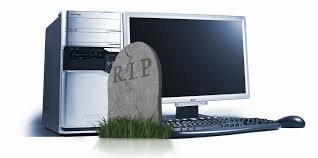
I can actually remember a time when not only the desktop computer was a luxury, but a status symbol. Not that long ago, people did just about everything on desktop. But now, with so many other options, I have a question to ask: Is the desktop dying?
I ask this because time spent online with the desktop computer has dipped and continues dipping. Online desktop use declined 9.3% in December 2015, 7.6% in January 2016, and 6% in March 2016. Some tech industry leaders say people are ditching desktop habits for mobile ones. But not so fast. For much of 2015, desktop online use actually went up. Some data suggests the desktop era is still very active. March 2015 was the most active use of desktops in the past three years. But that was March 2015. March 2016 paints a difference picture, as desktop online use dwindles over 20% from just a year before. However, some research says mobile and desktop Internet usage were increasing at the same rate. These stats aren’t only important for consumers, but for publishers, media leaders, marketers, and social media leaders. Many of them depend on social media growth and smartphone use growth to feed their businesses. But one thing is obvious: the Internet business is here to stay forever! In March 2015 alone, nearly 1.6 trillion minutes were spent online, whether it be through desktop or mobile device.
I have to laugh at people who say, “The desktop is going to be dead in five years.” No it’s not. Sure, mobile technology is taking over and probably will be. But ten years from now, I can almost guarantee somebody’s going to using a desktop, just like somebody is using a radio or television today. ?Offices around the country will be using them. Teachers and students at school will be using them. Many other professions will use them. Do you think the desktop is dying?

Apr 15, 2016 | Computer technology, Smartphone
The majority of us have smartphones by now. We seem to have a fascination with robots. But unlike the 1980s, these robots could cost us our jobs. How would you like a robot smartphone?
You can have one, thanks to a Japanese company called Sharp. This robot is called RoBoHon. It’s the first smartphone that dances; we’re talking about a robot here. Sharp is taking pre-orders. RoBoHon made his debut at Tokyo’s International Robot Exhibition last December. This robot/smartphone is 7.6 inches tall, runs Android 5.0 Lollipop, and powered on 1.2 GHz Qualcomm Snapdragon 400, and has 2GB of RAM. ReBoHon has 16 GB of storage and 1,700 milliamp-hour battery. RoBoHon carries an 8-megapixel camera and responds to voice commands. One of the creators thought this was necessary; they thought this is more natural. People are talking into their square smartphones all the time, thanks to Siri and other voice based mobile technology. But with this robot smartphone, you actually think you’re talking to a person, at least the phone seems more like a person. What’s not natural is the cost. RoBoHon is available through pre-orders, but it won’t be cheap. RoBoHon will cost you around $1,800.
Well, this is one of the first, if not, the first robot smartphone. We shouldn’t be surprised Japan gave us RoBoHon. This is the nation that gave us an all robot run hotel. This is the nation that gave us the robot swinger partner. That’s about as PG rated as I can put it; read this link if you want to know more?It’s pretty creepy stuff, huh???Thank goodness the RoBoHon is more innocent. It can dance and speak to you. Yes, it does have an innocence to it, but I’d still hide it from kids. They may think it’s a toy, but what if they break it? Do you have $1,800 to get a new one? Even if I did, I wouldn’t pay that much for this robot smartphone. How much would you pay for a RoBoHon?

Apr 14, 2016 | email, Humor, internet
Let’s talk about the emoji. They’re everywhere: Facebook, You Tube, Twitter, all other social media. You may think you’re sending a smiling, loving, or funny emoji. But some studies are saying that emoji could be easily misinterpreted.
A study was done at a GroupLens lab through the University of Minnesota. They observed the Emoji ‘Grinning Face With Smiling Eyes’. This one differs, depending what app and what device you use. The version of this particular emoji on Samsung Galaxy looks happier than it does on Facebook or Apple, but they’re still the same emoji. This causes confusion of how the grinning emoji is interpreted. Samsung Galaxy users, for the most part, thought the ‘Grinning Face With Smiling Eyes’ emoji sent positive vibes. Apple and Facebook Messenger users thought this same emoji produced either negative or creepy vibes. If that wasn’t confusing enough, a good percentage of iPhone users thought this was a positive emoji. So there’s confusion even among Apple users. And what about the more neutral emoji? The rain emoji could tell someone it’s raining in their town, or it send the message that you’re very sad. The eggplant emoji could tell someone you’re eating healthy or encouraging someone to eat healthy. Or you could be sending someone an insult about their weight or health.
My advice before you send an emoji: Know your audience. This study proves that. Not only know your audience, know the device you’re sending your emoji from. What might be funny to one person might be offensive to another person, especially in this highly offensive politically correct environment we’re in now. What might mean happiness to another person might mean doom and gloom to another. How often do you use the emoji in your life? What message do you convey? Which ones are the easiest? Which ones are the most confusing?
