
Sep 14, 2016 | Security
Can someone take down our Internet? Unfortunately, the answer is yes. It wouldn’t be that hard to do either. I just read an article that gave me chills.
Some people, or some organizations, have been probing Internet security and defense companies. They’re learning how these companies defend themselves and their clients. Not because they want to imitate their strategies. They’re learning defense tactics because they want to take the Internet down. Ever hear of DDoS (distributed denial of service)? This attack blocks users from websites, well, at least the ones that are supposed to be there. Some online companies have seen an increase of DDoS attacks. They’re being attacked by several culprits in several different areas. That means the online companies have to work harder to defend themselves. Hackers are seeing if they can manipulate the Internet addresses and routers, and seeing if online defenders will do something about it. This sounds like something worse than your typical cyber criminal or hacktivists. Could this be the work of mega corporations, or foreign governments?
This article wasn’t written by some stoner in his mom’s basement. This article and research was written and conducted by Bruce Schneier. He’s one of the most respected cyber security techs in the world. He’s written book, essays, and scholarly articles dedicated to online security. Schneier is the CTO (Chief Technological Officer) of Resilient Systems Inc. So if Bruce Schneier sounds a warning like this, the warning needs to be taken seriously. Schneier believes foreign governments could be behind this probing, like Russia and/or China. How many articles have I written about Russian and Chinese hackers? How much tensions have we seen between these nations over the last several years? Yes, this could happen. Yes, it will mean catastrophic things for our Internet if the bad guys are successful. Can this threat be stopped?

Sep 13, 2016 | General, Uncategorized
There’s been a lot of talk about Millennials, the generation born between 1981-1998. We can’t deny their contribution to technology, as innovators, leaders, tech employees, and obviously, tech consumers. But what about the generation coming after them? What about Generation Z (born between 1999-present)?
That’s just one name they’re being called. Some call them Centennials. Some call them the iGeneration. Whatever name you wish, they’re bringing a lot of tech savvy and buying power with them. They are called digital natives’ for a reason. The average Gen Z’er gets their first smartphone at 10 years old. They check their phones 150 times a day (that’s no exaggeration; that’s a literal statistic). They sent 50 billion instant messages a day. Over 6 billion emojis are sent daily by the Gen Z’er. Keep in mind the oldest of Generation Z are in high school. Already, tech companies and banks prepare for this generation’s buying power. Bank of America prepare for this oncoming wave of future investors. Other companies work around the clock to build better apps, smartphones, social media networks, omnichannel marketing, and other tech facilities catering to the Gen Z crowd. They better hurry. The oldest Gen Z’ers already have after school jobs and the buying power that goes with it.
Tech leaders need to be on their A+ game if they want this generations’ business. Millennials saw the Internet mature. With Gen Z, it already matured. By the time the oldest ones were in 4th grade, we already had smartphones and social media. Plus, by 2030, they’ll be the largest generation of all time, with 2.4 billion people. Compare that to two billion millennials (age 18-35) today, making up 27% of the global population. By the 2040s, Generation Z will make half the global population. They’ll probably be the first generation where the average life expectancy is 100 (today, it’s 71 globally, 79 in USA, Monaco has highest with 89). So we need to take this generation seriously. They are our future. How do we cater to their needs now?

Sep 12, 2016 | internet
There’s another trend breaking the Internet. It’s not Pokemon Go. It’s not a new hip-hop video. It’s not a funny You Tube clip. It’s the world of optical illusions.
Yesterday, a game developer named Will Kerslake tweeted perpendicular gray lines on a white background. Twelve black dots appear throughout this contraption. They appear in 12 places where gray lines meet. It sounds simple and mundane. Not even six hours after Kerslake tweeted this, it was shared over 6,000 times. Here’s the trick: you can’t see all 12 dots at the same time. You see the dots in one spot the first time. The second time you see it, the spots appear to be in different places.
Kerslake isn’t the first to share optical illusions. The day before, a Japanese psychologist named??Akiyoshi Kitaoka put it on his Facebook page. Kitaoka’s image was shared over 6,000 times. There are 12 dots on this impression. You can’t see them all at the same time. In some cases, you see them in different places. That’s why this optical illusion is such a sensation. This charts expose our bad?peripheral vision. If you start at the center, you’ll see it clearer. But if you read the chart without moving your eyes, you’ll miss the dots.
I found another way to find the 12 black dots. But I’m not going to spoil it for you. You’ll just have to look up the optical illusions yourselves. Some may say, “It’s only been shared 12,000 times in one or two days. This isn’t exactly a phenomenon.” You must understand, some online trends take some time to catch on. Some take off immediately. But this optical illusion teaches us something about ourselves. Plus, this could inspire others to come up with their own optical illusion. Let’s see if they can connect the dots with your illusion. Are you ready to create your own world of optical illusion?

Sep 11, 2016 | internet
Do you ever have the idea the world is just too politically correct? Do you think social media has gotten politically correct? There’s a new social media network guaranteeing freedom.
The network is called Gab.ai. It’s founder is Andrew Torba. Torba created this platform to compete against Twitter and Facebook. Not only that, Torba wants to combat what he sees as social media censorship. Facebook has been accused of censoring political speech, then claiming it was a ‘glitch’. Recently, they’ve come under fire for censoring the ‘Napalm Girl’ photo, one of the most iconic and chilling photos of the Vietnam War. Twitter permanently suspended conservative commentator? Milo Yiannopoulos for allegedly cyber bullying actress Leslie Jones. Naturally, Yiannopoulous was one of the first to open a Gab.ai account.
He’s not the only one. Gab.ai has over 12,000 users. Another 42,000 have registered for accounts. There are 12 million pages holding 240,000 posts. Users spend 12 minutes per session. Gab.ai guarantees freedom of speech and an anti-censorship environment. But there are some rules and regulations. No threats of violence will be tolerated, neither will or pornography. Your personal information won’t be exposed without your consent. Users are expected to show the same respect. Torba says nobody has been banned from Gab.ai.
So far, most users are conservatives who feel threatened by censorship. You can tell by the pro-Trump and anti-Hilary posts. Many conservatives feel threatened and left out by social media. That’s why so many flock to Gab.ai. The NSA revelations are still fresh in many memories. People want a safe haven for freedom of speech. I’m just glad for more social media competition. Hopefully, Gab.ai will put Facebook and Twitter on notice that all opinions matter, so long as they’re not violent or threatening to anybody’s safety. I hope Gab.ai puts the politically correct police on notice, too. Freedom of speech will be had, whether they approve or not. Many conservatives turn to Gab.ai because they think other social media sites are biased. Are they?
Sep 10, 2016 | Computer technology
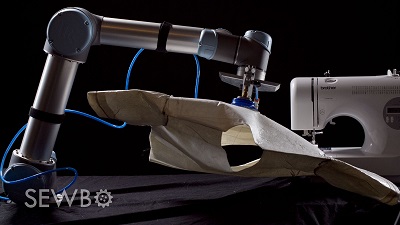
Obviously, the robot craze isn’t going away. Robots check you in at hotels. Robots act as nurses; they bring you food and medicine. Now, robots sew your shirt.
We can thank Sewbo for this development. Sewbo’s machine can turn stiffening fabric into a t-shirt. The arm feeds the piece into the sewing machine. The shirt is finished sewing. The robots puts the t-shirt in hot water to remove the fabric stiffener. This machine cuts and measures fabric. So it can make shirts regardless of size, from small to 5x large. There are some parts of Sewbo’s process that aren’t exactly clear. But watching the progress sure was intriguing. Sewbo isn’t the only one investing in sewing bots.
A company called Electroloom wants to print 3D garments. But instead of a factory run by humans, robots would do most of the work here too. The process is very complex, so I won’t make a fool out of myself explaining it. I’ll let Electroloom employees explain in this link. ?Shoemaker Adidas use robots to make shoes now. So how far fetched is it for robots to make shirts, or any other clothing item for that matter?
Normally, I would cringe at robots making anything. I hate the mere idea of robots taking jobs away from human beings. But here, I’ll make an exception. How many shirt factories do you see in America anymore? When I was little, we had one in our hometown. But those days are long gone. Maybe Sewbo and Electroloom can bring shirt factoring jobs back to America. At the very least, it would get interest back in sewing. The Electroloom demonstration seems like a real winner. I hope they can continue the funding and the venture capitalism to keep it up. Sewing is tough work. Maybe Sewbo’s bot will make it easier. Would you let robots sew your shirt?
