
Jul 22, 2016 | internet, Smartphone
You want to believe that Facebook message is private. It’s supposed to be between you and your recipient. But even private Facebook messages are subject to hacking. Facebook tries to ensure privacy.
Facebook introduces a new feature called Secret Conversations. You can scramble and self-destruct your messages. The social media conglomerate didn’t give an exact date. But a press statement said Secret Conversations will be available later this summer. You need the latest Facebook Messenger for your smart device. That smart device needs to have the utmost security. It’s probably better to get a phone with fingerprint security. Choose a Facebook friend, with a green dot. That’s how you know the person is available to chat. Tap their name and choose Secret Conversation. The recipient will designate their encrypted device. Your message appears in a black box instead of a blue one. That’s how you will separate Secret Conversation from Facebook Messenger. Facebook gets an identity key that confirms your real identity. Secret Conversation can hold word messages, likes, emoji, and photos. It can’t hold videos (at least not now). You choose when to self-destruct a message. You can choose five seconds, like they do in Mission Impossible. Or you can choose a whole year.
I hope Secret Conversation is successful for another reason. Lately, hackers and spammers posing as Facebook friends and family have been sending messages. When I click on, they’re trying to sell me stuff or get me in a ‘home based business’. It took a while. I shortly noticed the real friends didn’t talk like the posers do. I wonder if they would have broken through Secret Conversation. Would encryption be strong enough to tell a real friend from an imposture? If Facebook didn’t notice already, summer is half over. They said Secret Conversation would be released later that summer. Shouldn’t they hurry with that?

Jul 21, 2016 | Entertainment, internet, News
Remember when hip-hop sensation Iggy Azalea quit Twitter because of constant trolling and abuse? Another celebrity quits Twitter. It’s for the very same reason.
Leslie Jones, star of the new Ghostbusters and Saturday Night Live, signed off Twitter due to many abusive tweets that came her way. Some are so racist and sexually offensive I won’t dare quote them. Jones fought back. She reported some of her abusers. But the more she did that, the more vicious the tweets got. Not only did Jones sign off, she called for action. She calls for stronger guidelines to crack down on hate speech. She urged fellow Twitters to report hate speech. In her final tweets Jones said, “I didn’t do anything to deserve this. It’s just too much. It shouldn’t be like this. So hurt right now.” Some Twitter users were found out and suspended permanently. A Twitter spokesperson vows his company will do more to fight Twitter abuse. One suspended Twitter user is Breitbart editor and conservative commentator?Milo Yiannopoulos. Yiannopoulos denied any abuse.??Milo Y. claims his suspension was politically based. He criticized Twitter. Yinnopoulos said he was targeted because he was a conservative. He even hinted he’s part of a left-wing witch hunt.
It shouldn’t take a celebrity to remind us about proper social media etiquette. Twitter should not be a place to spit venomous hatred. And cowards hide behind fake names and pictures to spew it. That’s the real tragedy here. I’d like to see one of those abusers confront Jones face to face. But we have to be careful when we say, ‘curb hate speech’. Milo Y. may have a point. Let’s not turn hate speech into a witch hunt. How can we crack down on abusive tweets without interfering with free speech? I’ve seen some of the tweets Jones got. Some are really vile and perverse. That has no place on Twitter. But if someone doesn’t like Ghostbusters, and posts a constructive criticism about the movie, that should not be censored. Let’s be respectable about it. Will this case make Twitter a safer place? Or is this an attempt to stifle our First Amendment rights?
Jul 20, 2016 | Uncategorized
The emoji was developed in Japan in the late 1990s. It took a while to catch on globally. But when it did, it took off with authority. Today, the emoji is a very popular form of communication. Can the emoji be a symbol of inspiration? That’s where emoji girl power comes in.
You see, there are only three four emoji signs. One is a wedding bride. One is a nail polishing. One is a princess wearing a crown. One wears scissors in her hair (sorry, I can’t explain that one). The Google Unicorn Emoji Subcommittee wants to change the emoji tide. They’re introducing emoji that specify women in various careers. These careers include teacher, secretary, business executive, college student, doctor, singer, chef, fashion designer. They new emoji include careers women aren’t often linked to. I’m talking about careers like construction worker, welder, computer technician, farmer, auto mechanic. There will be over 100 new emoji to choose from. The emoji will include all races, colors and ethnicity. Guys, don’t feel left out or discriminated against. The emoji will feature men in various careers. Male emoji will be racially diverse as well. But this new crop of emoji is focused on women. The Unicorn Emoji Subcommittee ?hopes this encourages girls to embrace careers in math, science, and technology.
My question is: What took so long? The original girl emoji are totally stereotypical. Think about it: a princess, a bride and scissors. If racial emoji stereotypes were this blatant, the firestorm would be all over America. This needed to change. The educational statistics are alarming. Among industrialized nations, the US often ranks last in science and math. Among women and minorities, the stats are even worse. Some may ask, “What’s an emoji going to do?” Well, it might wake up a young girl’s imagination. It might tell her she can be something other than a bride or princess. It might give her confidence. It might even improve our education stats. What career emoji would you like to see?

Jul 19, 2016 | News
The political convention season is underway. But the real stars of the show aren’t the speakers or celebrities. They’re not the first ladies, as Milania Trump proved during her speech. The real stars may be the hackers, like hacker Guccifer 2.0.
Allegedly, Guccifer 2.0 hacked the Democratic National Committee’s servers. The leaked documents talked about the Iran nuclear deal of last summer. They listed generous celebrity campaign donors, like director Stephen Spielberg. They found their way to The Hill. The Hill is an online media publication devoted to politics. The hacker gave The Hill juicy information, like their political strategies and Democrat National Convention secrets. The documents contain a list of ‘wobbly Democrats’. These are Democrats who weren’t exactly keen on the Iran nuclear deal. A lot of prominent Democrats made this list. The documents includes names and addresses of donors. These donors are powerful people, from Hollywood actors to tech leaders. Elon Musk is on that list. These aren’t the only document Guccifer 2.0 provided. Last week, more documents were released, allegedly by Guccifer 2.0. They include research on Sarah Palin. Don’t take these hacks and documents as the stone cold truth. We don’t even know if Guccifer 2.0 is real. What country is he/she from? Some say Russia. Others say Romania.
This is what I mean. The hackers may steal the show by what information they leak. I will admit: Guccifer’s information isn’t exactly earth-shattering. We know the donor names are Democrat supporters. We know not every Democrat was on board with the Iran nuclear deal. However, it could determine who Hilary Clinton’s running mate could be (or could not be). But I am curious what this alleged hacker has on Trump supporter Sarah Palin. Don’t be naive. We all know Guccifer isn’t the only hacker out there. It’s scary enough Guccifer isn’t even American. What other trouble and dirt can hackers stir up this election season?
Jul 18, 2016 | Computer Repair, Computer technology, Security
There’s no doubt about it. One of the biggest threats to computer technology is the computer virus. It can lead to ID theft, malware, even crimes like sextortion. There seems to be no end in sight. But one government agency vows to fight this epidemic.
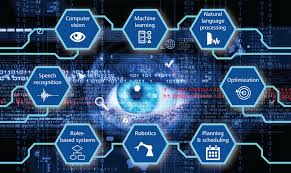
DARPA (Defense Advanced Research Projects Agency) brings top tech security experts to fight viruses. The event is called Cyber Grand Challenges (CGC). This event will test auto programs that look for computer vulnerabilities. Then, can they create and fix the vulnerability before the virus strikes? Can they do so without human help? A lot is riding on this. If this CGC is successful, this could mean no more cyber attacks on our devices. Yes, I know there are people and companies that fix viruses. We at Geek Choice do so all the time. Yes, there are security software firms like Avast who prevent viruses and malware. But according to DARPA program manager Mike Walker, it can take over 300 days to find a security flaw. Hackers can do much damage in that time span. Operating systems run on millions of code lines. All it takes is one mistake in one code line to attack a computer or device. Even with these anti-virus programs and computer repair services, as great as they are, can’t totally protect you from flaws they don’t even know about.
I’m glad DARPA is on the case. We can’t go through a week without reading about a major hack attack. And it’s not just people in labs and basements either. Governments are hacking each other. I’ve read reports of Russian and/or Chinese hackers attacking our political ?conventions. We’re all in the war against computer viruses. All of us. So I’m not jealous at all of this CGC program. In fact, I hope it goes well. Wouldn’t it be great to live in a world without viruses, malware or the crime they bring?

Jul 17, 2016 | Computer technology, Entertainment
The Nintendo comeback is in full swing. First came the Pokemon Go explosion. Now, Nintendo takes us back to our childhoods (those who grew up between 1985-1990).
Later this year, NES will bring Nintendo classics back. This game will fit in the palm of your hand. But it won’t be game boy. This is the exact Nintendo we played in the 1980s, only smaller. You connect the console with an HDMI cable to your TV or desktop computer screen. It includes the old school controller. It’s just like the one we remember. This controller can connect to a Wii Remote. That means this controller works with Wii or Wii U. The console has suspended points, so you won’t be playing ‘What’s my password again?’. The new NES classic is expected to be releases November 11. That’s right; just in time for the holiday shipping season. The NES will cost around $60. Thirty games come built in this system. These games include Super Mario Brothers 1, 2, and 3. They include Zelda 1 and 2. They include really old school arcade games like Pac Man, Galaga and Donkey Kong. They include Punch Out, Metroid, Techmobowl, Final Fantasy, Ghosts and Goblins, Balloon Fight.
I think of the ones this NES console don’t have. They have Double Dragon 2, but not the original Double Dragon. That one left me scratching my head. They don’t have Duck Hunt because this console doesn’t come with a gun. But they could have built the shots in the remote. Other games I will miss include RC Pro-Am, Spy Hunter, Pro Wrestling, and Kung Fu. How can they not have Kung Fu?! Despite that, I see good thing for this system. For anyone born before 1984, playing this game will allow us to relive memories, before gaming got all complicated. For the younger generation, it will be a great lesson on how things were back in the day. You can’t beat the price! You get a console and 30 games for $60. Who does that today? Who did that back in the ’80s? What games would you like to see on the upcoming NES?

Jul 16, 2016 | News
Last night, some Turkish military leaders and personnel tried to overthrow Turkey’s government in a coup. It was a night of gunfire, air raids, and bombs. The coup failed. By the end, 161 were dead, 1,440 were wounded and over 2,800 were detained. Tukey’s President?Recep T Erdogan promises harsh penalties for those who took part in this coup.
What does this have to do with social media? At least three main social media sites, Facebook, You Tube and Twitter, were blocked during this night of chaos. Turkey Blocks is an online freedom watchdog in the country. At approximately 11pm Ankara and Istanbul time, these social media sites were unresponsive. Vimeo and Instagram kept going. The shutoff only lasted 90 minutes. The US State Department acknowledged the block. Those with loved ones in Ankara were urged to reach out by phone, email, or text message. Live streaming services like Twitter’s Periscope and Facebook’s Facebook Live went unscathed. Speaking of Facebook, they didn’t report on the blocks. You Tube did. Local citizens used live streaming services to capture this uprising. A lady named Hazel caught an air raid. She used Periscope to broadcast it to the world. Someone named BM Grad caught footage of a helicopter opening fire.
Erdogan claims to be anti-social media. Yet Erdogan wasted little time using Twitter. He sent tweets condemning the coup attempt. He urged Turkish citizens to fight the coup attempt by any means necessary. I’m rather impressed by social media showing during this crisis. From what I’ve read, Erdogan isn’t exactly the biggest fan of Internet freedom. But this was a night when a government overthrow attempt was made. That’s serious business. Yet only three major social media sites went down. And that was only for a short period of time. Other media sites stayed up. They caught this historic event and broadcast it to the world. There has been several coups in recent decades. The most recent was in 1997. But this is the first Turkish coup of the social media era, and online freedoms remained in place, for the most part. How would you grade Turkey’s Internet freedoms during this crisis?

Jul 15, 2016 | News
Silicon Valley often leans left politically. So Donald Trump gets little love there. There was the iPhone San Bernadino controversy. Trump sided with the Feds. He said scathing things about Apple. That got him even less love. There’s a circulated letter about Trump today. It’s by no means an endorsement.
This letter is composed and signed by 140 tech leaders and entrepreneurs. The letter says a Trump presidency will be a disaster for tech innovation. This letter criticized Trump’s positions on immigration. ?They highlighted Trump’s desire to build a border wall. They criticized him on Internet freedoms. Trump proposes possible Internet shutdowns for security reasons. They criticized him on technology infrastructure. They say his policies are too few and far between. The signers insisted they weren’t speaking out for their respective companies. They only spoke for themselves. This statement says it all. And it’s in the letter: “We believe in an inclusive country that fosters opportunity, creativity, and a level playing field. Donald Trump does not.” Ouch! Did it get cold in here? Signers included Tumblr CEO David Karp, Twitter Product VP Josh McFarland, Ebay Founder?Pierre Omidyar,?Zynga Founder Mark Pincus, Yelp CEO?Jeremy Stoppelman, and Apple Co-founder Steve?Wozniak.
With that being said, Donald Trump has some Silicon Valley allies. Remember Peter Thiel? He’s the PayPal co-founder who stood up for Hulk Hogan. He openly supports Trump. Rumor has it Thiel will speak at next week’s convention. I’m sure there are other tech Trump supporters. They’re just being silent right now. In previous presidential elections, tech leaders quietly donated funds to various candidates, parties, and conventions. But never have this many tech leaders came out swinging against a certain presidential candidate. Like I said before, this has to be the most contentious election in my lifetime. Nobody is neutral. Not even Silicon Valley. Why aren’t more Trump tech supporters speaking out? Are they afraid of getting ostracized by the anti-Trump crowd?
*Disclaimer: I am not here to endorse or openly support any presidential candidate. I simply observe, report and critique tech trends to the best of my ability.

Jul 14, 2016 | Entertainment
In the 1990s, a game called Pokemon was released worldwide. It became the addiction of a generation. Now there’s Pokemon Go: the new addiction.
Pokemon Go is Nintendo’s first ever smartphone game. And they hit the jackpot. It’s already the most downloaded item in the Apple store. Nintendo stocks are soaring. This isn’t your 1990s Pokemon. Now, you look for Pokemon and other characters in the real world. It sounds like a simple concept. But this concept is taking off worldwide. Young and old play Pokemon go. So do all other demographics and cultures. The game may be Nintendo’s. But Pokemon Go was created by former Google subdivision Niantic. This game is unique for a reason. You use your smartphone as a mirror of the world around you. The game injects a Pokemon character somewhere in that reality image. Then you find it. Pokemon could be in the streets, or in your kitchen. It also uses mapping and GPS technology. You can turn neighborhoods and businesses into Pokestops. Tap on Pokestops. Swipe the coin in the center. You’ll get Pokemon balls, eggs and potions. The more famous the neighborhood is, the more Pokestops you’ll see. For example, you’ll see more Pokemon activity in South Beach Miami than you will in Medfield, Massachusetts.
I think that is what makes Pokemon Go so addictive. Yes, the characters are cute. But this game takes you to places very familiar. And it gives you an excuse to see places not very familiar. I’ve seen videos that show the Pokemon Go?experience. People are so into Pokemon they can’t get their work done. From where I stand, that’s not much of a parody. That’s real life. I’m old enough to remember when Pac-Man became so addictive. But with smartphones, and the easy access of smartphones, Pokemon Go addiction can get way out of control. Be careful out there. How many hours a day or week do you play Pokemon Go?
Jul 13, 2016 | News, Security
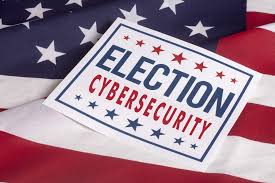
Next week, the National Republican Convention will take place in Cleveland, OH. Already, there’s talk of hackers targeting this election process. Will hackers target the Republican Convention?
Cyber security is a top concern. According to CIO (chief information officer) Max Everett, they’re already a number of ‘phishing’ incidents and hackers looking for weak spots. Everett assures there hasn’t been many specific threats, yet. It’s not just opposing threats that worry Everett. Hackers associated with the Russian government attacked the Democratic National Committee. Trump’s campaign has been target. It’s Russian and Chinese hackers that concern Everett and other cyber security experts. Of course, as contentious as this election has been, even an amateur could cause chaos at the Quicken Loans Arena. Cyber-threats for political conventions are different from cyber-threats for business. Employees are new. Employees are temporary. Each staffer has at least one mobile device connected to the convention’s online network. Many will have two or more. Managers are on alert as well. They’re reminding employees of common sense cyber security. Everett is testing ‘dark cube’. This dark cube will analysis where Internet data is coming from. It captures the IP address. It determines if that IP addresses means to do harm. Smart tactic. But will it work?
Some security needs to be in order. Like I said, this is the most contentious election I ever lived through (I wasn’t around in the 1960s.) Add tensions with Russia. Add tensions with China. This could be a perfect storm of a major hack fest. Yes, there were security preparations in previous elections. Yes, those conventions came out generally unscathed. But these are not the previous election. Some hater dreams of making a name for himself. Fellow haters will cheer him on. Hacking will give him that opportunity. The hater could be in China or Russia. The hater could be literally next door. Should cyber security be a concern?
