
Aug 21, 2016 | Computer technology, Smartphone
First came the smartphone. Then came the smart watch. They’re working on the self-driving smart car. How would you like a smart home?
Apple is working on just that. This app is called Home. With Home, you can control all your appliances, from turning on the air conditioning to dimming the lights. I wonder if Home can wash the dishes (thinking aloud). There are three components to Home: Home, Rooms and Automation. With the Home screen, you pick with of your favorite accessories to control. With Rooms, you control individual room accessories. Automation sets up your accessories to function in the real world. Home can be set up with all Apple devices. Say you’re just getting home. Your Apple device tells the Home app to unlock the door and turn on the lights at once. Can it pour you a drink, too (again, thinking aloud)? Home lets you activate scenes. One scene is Goodnight for going to bed. Can Goodnight read you a bedtime story too (again, thinking aloud)? You can control the Home app through Siri voice. You want the lights on? Just say, “Siri, turn the lights on.” She does it. Yes, there is competition for tech home control. Amazon has Echo. Echo’s voice command is Alexa. Google is working on it’s own home tech control.
There’s a reason I’m thinking aloud. All of this home control is totally unnecessary to me. Especially when it’s tasks you can do in seconds. Turn off the light? A toddler can do that. Unlock the door? I can do that in less than a second. Open the blinds? Isn’t that what the pulley is for? Maybe if you lost a key, I can see how Home can work for you. But that’s about it. When Apple Home can wash the dishes, pour me a drink, and read me a bedtime story, then we’ll talk. How would you like a smart home?

Aug 20, 2016 | Entertainment
The Rio Olympics were faced with problems. These problems included water pollution, crime waves, inadequate living quarters and new, frightening diseases. Many braced for low ratings, and they got them. Olympic ratings are down. Digital viewership is up.
Prime time TV ratings fell 17% compared to the London Olympics of 2012. Prime time ratings fell 25% among the critical 18-49 year old demographic. But digital viewership is booming. An incredible 1.86 billion, with a B, minutes of 2016 Olympics were streamed in the first seven days alone. That’s more than double of what London had in 2012 or what Sochi, Russia’s Winter Olympics had in 2014. Yes, less people are interested in this year’s Olympics. But more people are watching tidbits of them online. That creates a problem for NBC. You see, NBC has rights to the Olympics until 2032. They paid $12 billion for this investment. Naturally, they’re going to offer more digital options. Plenty of people are watching the Olympics on their computers, tablets, and smartphones this year. But you better have a cable login to watch the games, no matter how you’re watching it. The problem is not everybody has cable. How do they reach out to the millions who have computer devices but don’t subscribe to cable?
That’s a question NBC needs to answer sooner than later. More people obtain computer devices. Less people depend on cable. Why should they? In an era of Netflix, Hulu, and other streaming services, who needs the expensive costs and mediocre services of cable? That’s the dilemma. I tell you what…the prospect of this upcoming Olympics looked bleak. But some awesome stories came out of them. The stories are what saved the 2016 Olympics from total ruin. Technologically speaking, I guess the computers did too. But the human stories and competition are what saved these games from what many predicted would be a total disaster. NBC has the Olympics for at least 16 more years. What should they do to reach out to non-cable users? Should they?

Aug 19, 2016 | internet, News, Security
Over the months, I’ve written several blogs about the tech industry’s war against terrorism and extremism. Many social media corporations are in this fight. Few fight harder than Twitter. Twitter continues war on terrorism.
Twitter suspended 235,000 accounts believed to promote terrorism and/or extremist causes. This accounts were suspended over a six month period. Twitter began their anti-terrorism campaign in summer 2015. Since then, over 360,000 Twitter accounts were suspended. A Twitter spokesperson issued this statement: “We…remain committed to eliminating the promotion of violence or terrorism on our platform.” Twitter has a strict anti-terrorism policy and it’s enforced with authority. Suspensions have gone up 80% since last year. That’s because Twitter has cracked down over such extreme speech and promotion of violence and terror. As Twitter grows it’s teams of reporting extreme tweets, reports are dealt with quicker. They also work with other social media businesses and activist groups to fight online terrorism and extremism. This is a tremendous step in fighting this good step. But some activists say more needs to be done.
Some activists worry online terrorists can get to potential victims in other ways. For instance, they could publish personal information, like emails, phone numbers, addresses, credit/debit card numbers, and anything they wish to. They could use this information to fleece people’s finances, or worse, hunt people down and do the unthinkable. Some wonder how this could interfere with free speech. I’m a huge advocate for free speech and First Amendment rights. Twitter does a good job of keeping people safe without compromising people’s freedoms. I’m a advocate for personal responsibility. If thugs use Twitter to promote murder, bombings, or destruction, then they don’t need to be on Twitter. If someone makes such threats in the real world, they can be arrested and prosecuted for those threats. Same thing on social media. I love Jimmy Kimmel’s Mean Tweet segments. I’m not about political correctness or sensitivity at all. But look at all the terrorist attacks we’ve had in July 2016 and August 2016 alone. Why give these thugs a free platform? Do you think Twitter’s anti-terrorism rules compromise free speech?
Aug 18, 2016 | Computer technology, Smartphone, Software
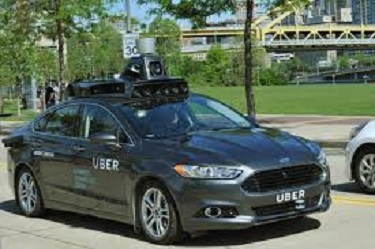
Just think: Five years ago, nobody ever heard of Uber. The only ride sharing services were taxis. Years later, Uber comes out. Uber starts a social media and app revolution. They’re not done yet. Uber’s self-driving car is almost here.
These cars are specialty made Volvo XC90s. Human drivers will just occupy the driver’s seat and supervise. The experiment will start in Pittsburgh. Later this month, Uber allows customers to choose these self-driving Volvos for service. There’s a reason this experiment is happening in Pittsburgh. It’s home to Carnegie Mellon University’s robotics program. This program helps Google produce self-driving cars. Now they’re helping Uber. That’s not all. In July 2016, Uber acquired Otto. I’m not talking about the Simpsons bus driver. I’m talking about Otto the start up driver less trucking company. Otto has 91 employees, all trying to bring self-driving technology to tech corporations. Otto currently develops big rigs to drive themselves so well drivers can catch up on sleep…while literally on the road! Uber will not produce fleets of self-driving cars. Instead, they’ll work with Volvo to produce self-driving models. Otto will help with lasers and other systems used in self-driving cars. Hailing a self-driving car will be as normal as any other car, even down to the price.
I must tell you, don’t go requesting a self-driving car in your home town. This is just an experiment. This experiment will only be done in Pittsburgh, PA…for now. But if Uber is going to get into the self-driving game, they should do a better job setting themselves apart. They’re starting to do this. They have Otto on their team; the other companies don’t. They’re not producing a fleet. Apple, Google and Tesla are. What I think they should do is invest in self-driving big rig trucks, maybe even put their name on them. I know the 18-wheeler isn’t Uber’s business…yet. But neither is car manufacturing Apple’s business…yet. If I were Uber, I’d work miracles with Otto and cause yet another social media and highway revolution…this time with mack trucks. How will Uber do with self-driving cars?
Aug 17, 2016 | Computer technology, Software
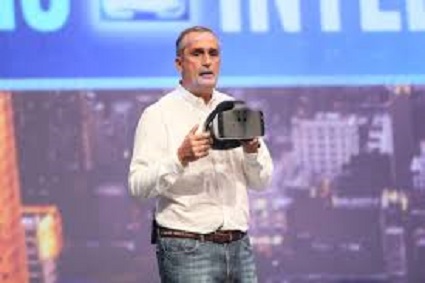
Intel’s revolutionary Project Alloy takes the VR (virtual reality) movement to another level. An Intel Developers Forum wants your VR experience to be without restraint or restriction.
Project Alloy is a virtual reality system that is completely wireless. Not even leading VR devices, like Oculus Rift, can boasts this. Intl’s VR headset has all cameras, sensors and controls all rolled up into one. Intel CEO Brian?Krzanich’s motive is clear. He and his top colleagues want a free moving VR experience. This means no wires, no screen issues, no technological hangups whatsoever. Project Alloy relies on hand tracking technology and integrated sensors. They use Real Sense technology and lasers ?to capture people walking into a virtual world. Other successful virtual reality devices have great frame rates and clean screenings. These headsets depend on their wiring to ensure quality frames and screens. Intel is partnering with Windows. Windows Holographic and Project Alloy will combine forces and operating systems to build powerful applications. This system is very early in development, although Krzanich gave a public demo about it. I say this because Project Alloy probably won’t be made public anytime soon. It mid to late 2017, it will reveal the Project Alloy hardware. This is so Alloys Hardware and Windows Holographic can be easier to combine.
Let’s get back to wireless. Just how is Intel going to give us the quality we need by cutting wires? If I were a VR fan, I’d hope Intel would give us the quality and wireless technology to make this work. If they do, that alone would set them apart from the competition. That would be good for Intel business wise. That would be good for virtual reality customers and enthusiasts. But what about socially? I wouldn’t want people to live in their fantasy VR world 24/7. I know it sounds far fetched. But I think so many people are disillusioned by the real world that they’d be happy with 24/7 VR. What these wires do is limit VR headsets. In some ways, they keep us from going too far. I’m afraid of what we’d do with wireless VR. Would wireless VR mean social chaos?

Aug 16, 2016 | Software
As of October 2015, over 2/3 of Americans adults own a smartphone or some kind of smart device. Also, the number of Americans with tattoos have increased sharply, especially over the last five years. Why not combine the two? Introducing smart tattoo.
Students at M.I.T. Media Lab want to make smart tattoos happen. So does Microsoft Research. They combine their talents to develop a temporary tattoo. This tattoo turns into a touchpad, and you control your smartphone with it. You can even share data using NFC chip technology. The tattoo’s formal name is DuoSkin. DuoSkin will be introduced to the world at a wearable technology conference next month. You design a circuit with graphic software. Use gold leaf because it conducts electricity. Other components make the tattoo interactive. The tattoo isn’t penned on like a regular one. It’s stamped on like a temporary one, along with the NFC chip, the gold leaf, and the other components. The marked part of your skin can be used as a trackpad. It can change colors and literally open doors. Perhaps the best part of DuoSkin is it’s temporary. That means you can peel it off anytime you want. You can apply another one easily. You can’t take a penned tattoo off and on.
Personally, I think that’s the only good thing about DuoSkin. At least you have a choice. I choose not to have anything to do with it. The fact you can use your body as a touchpad or tech control mechanism is creepy. Whatever DuoSkin offers can be done through another form of technology. For example, you can use can control your smartphone with a smart pen. Plus, there’s a lot we don’t know about DuoSkin. How much will it cost? Are there side effects? Will it work with all smartphones? The researchers behind DuoSkin have a lot of explaining to do. Would you get DuoSkin?

Aug 15, 2016 | General
This month, Apple CEO Tim Cook will celebrate his fifth anniversary in that position. In an interview, Cook reflects on these five years, and no topic is off limits. What’s five years of Tim Cook been like?
You can’t talk about Apple without talking about iPhone. During Cook’s tenure, the iPhone has been Apple’s bread and butter. The iPhone makes over half of Apple’s revenue. Though there has been disappointments, but Cook just celebrated a milestone. Recently, Apple sold it’s billionth iPhone. Cook talks about his mistakes, like his first hire to manage Apple Stores. He talks about learning from such mistakes. He highlights a better grooming process for future employees. He talked about recent privacy issues, like the beef between Apple and the FBI earlier this year. He talks about succeeding one of the biggest icons in American business, the late Steve Jobs. Cook is proud of his social justice record. In the last five years, he spoke out on everything from civil rights to gay rights to privacy rights. Apple’s presence in China came up. Cook revealed what inspired him to write a article revealing he is gay. He is proud of Apple’s swift rise in China since 2011. There are 41 Apple Stores in China. In 2011, there were four. What’s next for Apple’s future?
Cook has a reason to be optimistic. Apple stock shares have double. They’re sitting on over $231 billion in cash. That’s more than Portugal’s financial worth. They acquired 65 companies during his tenure. That’s including the 3 billion dollar deal with Dr. Dre’s Beats headphones. That’s the largest business deal of all-time. Of course, Apple has it’s criticism as well. It looks like they’re investing more in China than in the US. I see the business move behind that: They’re the second biggest economy in the world. But don’t forget about home. Some criticize Apple’s stance against the FBI. As far as Apple’s iPhone 7 is concerned, Samsung Galaxy Note 7 has their number. But Apple is one of the most prosperous businesses of all-time. Tim Cook has a huge part of that. Plus, he uses his power to speak out of pressing issues facing our generation. This is why Cook has my utmost respect. What will the next five years of Tim Cook hold?

Aug 14, 2016 | Uncategorized
The Apple iPhone 7 isn’t the only phone to get excited about right now. I researched some amazing things about the new Samsung Galaxy Note 7. Some of this stuff puts Apple to shame. So it’s Samsung Galaxy Note 7 vs iPhone 7. Let’s get ready to rumble!
You guys can read my report about iPhone 7. Let’s concentrate on Samsung Galaxy Note 7. One exciting feature is the S-Pen. You and/or the kids can draw on your phone with it. You can take notes with it. You can write memos with it, then save it to one of your apps. The S-Pen can even help you craft videos. There’s the whopping 12 megapixel camera and unbelievable storage amounts. This Galaxy Note is so waterproof you can be on it while deep sea diving or snorkeling, much less bathing. The iPhone 7 raves about it’s fingerprint security. Samsung Galaxy Note 7 has eye scan security. No more struggling with passwords. A simple iris scan will unlock your phone and phone apps, and your private folders. It’s the first Samsung phone with a USB-C charging port. It works perfectly with the Samsung VR headset. Coincidence? I think not. Many Galaxy Note fans rave about the coral blue option.
Don’t expect a phone of all this magnitude to came cheap. I’ve checked around. The cheapest Samsung Galaxy Note 7 will cost you around $849. That’s for a black one. Some experts expect the iPhone 7 will cost around $650 (If it’s more than that, don’t blame me! Remember, this is just speculation!) On the surface, price would be the only advantage Apple has on Samsung. But there’s also brand loyalty. I know people who stick with Apple, no matter what. This is Apple’s wild card. If someone offered me to choice between the two as a Christmas present, I’d choose the Samsung Galaxy Note 7. I’d choose it just for the S-Pen. But remember Apple’s loyalty card, and will that be played?

Aug 13, 2016 | Smartphone, Software
You forgot what coffee your friend wanted. You forgot what groceries you were asked to get. You forgot yet another password. You even forgot your wife/girlfriend’s birthday (Uh oh! You’re in big trouble!) There’s a device that helps you remember.
That device is a bot called Wonder. It’s fairly simple to activate. Go to their website. Give them your phone number. They’ll text back explaining how wonder works. Here are the instructions of Wonder. Text them the information you want remembered later. That information stays in the system until you’re ready. When you forget something, text Wonder the question. Wonder will text you back the answer. For example, you just redid your password for a certain site. Just text Wonder the password. When you forget your password, ask Wonder, “What’s my password for this website?” It will tell you. Wonder is the brain child of Univ. of Arizona student Jordan Singer and alum Shivkanth?Bagavathy. They built this bot using Twilio for texting, Wit.ai for language, and other software for other features. They were inspired by Siri’s voice reminders, but wanted a written, more tangible way to refresh someone’s memory. The Wonder bot is a free service. It’s only available in the United States and Europe…for now at least.
I appreciate Wonder helps us improve our memory. How many times do we forget the simple thing…on a weekly if not daily basis? So I’m glad Wonder helps with that. And I appreciate that it’s free. But Siri can help you remember stuff. Google Notepad helps me remember all the time. There are dozens of other apps to help you remember. So Wonder is a great service. My question is:What is Wonder doing different to stand out? I have another question, this one for the fellas: Can’t you remember your woman’s birthday on your own power? You can at least remember the anniversary, right?

Aug 12, 2016 | General
How would you like to work in the most quiet room ever? Microsoft headquarters in Redmond, Washington has it. This computer lab in Microsoft’s Building 88?even made the Guinness Book of World Records.
A tech insider named Matt Weinberger spend five minutes in this contraption. Microsoft lab engineer Gopal Gopal (I’m assuming that’s his real name) gave him the tour. Why is this room so quiet? It’s because this ‘anechoic chamber’ needs complete silence for audio testing. Here, they tests Surface tablets, laptops, Skype calls, and other Microsoft based products and services. One picture shows Gopal using a robot for microsoft testing. ?They need absolute silence for these tests. They didn’t just want a quiet room; they took it to the extreme. The most silent this world can ever record is -23 decibels. That’s sound molecules playing off each other. Microsoft’s anechoic chamber stands in at -20 decibles. You can hardly hear yourself talk. You hear no noise coming from outside or within. Gopal had to shout at maximum capacity just so Weinberger can hear him. The negative decibles quiet out normal conversation. But Gopal believes this extreme silence is necessary. He tested quiet sounds of a Surface Tablet’s power supply and fan.
So, in Gopal’s science, such crazy silence is golden. But is it sane? Weinberger stated he was on the brink of madness in that anechoic chamber. Gopal himself felt the clutches of insanity gripping him. When I’m at my desk, I need noise. It has to be music, news, a movie, TV show, conversations in the other room, something! I can’t go an hour in total silence. And I work in a regular office on a busy street in downtown Boston, MA. I can’t imagine being in a -23 decibels office all day. I hope Gopal can take breaks, like every 30 minutes. I’d need to experience the real world in an hourly basis if I’m to work in those extreme conditions. Gopal has an admirable work ethic that goes above and beyond the call. Could you work in the most quiet room ever?
