
Mar 13, 2017 | Security
Over the years, Apple users believed they were malware free. Then I come to our Boston computer service shop. They say, “I have a Mac. I have Apple. It can’t happen to me.” But I’m here to tell you it can. Mac malware: Don’t let it happen to you.
In fact, the latest MacOS is just as venerable to malware as Windows 10. More people just use Windows 10. So more hackers can create more malware, because more people will be susceptible. Hence, when a threat breaks out, more people know about it. But Apple isn’t off the hook. In fact, Mac malware threats are more common than you think. But what can be done to protect your MacOS?
First of all, run the latest software. Use the latest system update that you can. Because malware loves outdated systems. Furthermore, turn on firewall. It secures the right network traffic and protects you from the wrong traffic. ?Set up VileFault’s full desk. It gives you even more protection. Furthermore, get some anti-virus security. This should go without saying. Avast! offers free anti-virus and anti-malware security for Macs. It also protects from email schemes and phishing. But Avast! isn’t the only one. Malwarebytes’ offer good protection from Mac malware. So does Sophos Antivirus Mac and a few others.
So what am I saying? I’m saying malware attacks can happen to Macs as much as they can PC’s. It can happen to Apple devices just like it can happen to Androids, Samsungs, and Windows. I also say there are no excuses. It’s a lot cheaper and easier, to take these steps then to call for computer repair after the fact. Look, nothing is 100% guaranteed. But it’s a lot better to have some protection than take you chances with none at all. Consider this an advisory. Will you take heed?

Mar 12, 2017 | Computer technology
Every fast food chain has their niche. McDonald’s has Ronald. Then KFC has Colonial Sanders. Now, let’s go to CaliBurger, a fast growing chain. Their niches are computer technology and IT service. Because this place has robots flipping your burgers. So let’s learn more about CaliBurger Robots: meet chef Flippy.
Flippy is the brain child of Miso Robots. They develop robot technology that cooks, literally. But Flippy has his positive sides. He is quick and easy to install. Also, he flips burgers perfectly. That’s because he can see through cameras. Furthermore, they say CaliBurger robots will not take human jobs. However, more workers will be on the floor to entertain customers.
That’s not all. CaliBurger wants to lead the way in restaurant technology. While waiting for your food, you can play Minecraft with other customers. You can also play gaming tournaments. Plus, they want technology to be part of your whole CaliBurger experience. But there’s a reason Flippy is the star. They believe Flippy will cause fewer errors in the kitchen then teenagers will. They may be right there. But they want CaliBurger Robots to control all actions of their restaurants. They could be well on their way. They have restaurants in 12 countries already. By 2019, they expect to have over 50.
I’m torn on this one. They stress these robots aren’t going to take human jobs. But those CaliBurger Robots flipping burgers mean something. It means humans won’t be flipping those burgers, so humans won’t be getting those jobs. However, this could also mean better service. They want humans to engage with customers on the floor. But what if that ends up badly? And what if robots engage with customers, taking away those human jobs? It’s not far-fetched. In case you haven’t been paying attention, humans don’t like each other too much nowadays. I heard one employer say, “Robots are always on time, don’t give you attitude, and always do the job right.” Is that where this is heading?

Mar 11, 2017 | Security
Do I have any inventors in the house? If you’re a history buff like me, you know necessity is the mother of invention. This includes the IT service business. ?However, one Israel father took the prize, especially with cyber security. So this is The Dojo: innovation from necessity.
So Yossi Atlas sees a Band-Aid on his daughter’s laptop [our Boston site is wonderful at getting laptops fixed]. She put the Band-Aid on because she fears someone is spying on her. Then he noticed she had the Band-Aid on the camera. That’s what did it for this dad. Now, Atlas works to protect his daughter.
He invented The Dojo. That’s a device protecting electronics from spying and surveillance. Then, he founded Dojo Labs in 2015. Atlas’ invention came at the perfect time. Because by 2021, the number of smartphones, smart TVs, laptops, tables, and other devices will double from what they are now. Just connect the Dojo to your WiFi router. It filters traffic and stops spying software, like a goalie blocking the opponent’s shot. They expect to release it to the US in March 2017. It may be already here. Furthermore, it will cost you $199 the first year, and $99 for ever additional year.
Not only could The Dojo protect his daughter, it could protect us all. This week, we learned our Samsung TV’s are spying on us. I often report on cyber crimes like sextortion. Think of how many times hackers compromised major stores chains and even health care companies. Furthermore, this affects tens of millions of people. Also, in October 2016, web traffic firm Dyan suffered a cyber attack. This attack nearly brought the US East Coast’s web infrastructure to it’s knees. Thankfully, it only remained down a few hours. But what if somebody brings the web down and it stays down for months? It sounds sensational and apocalyptic, but cyber security experts say it’s very possible and plausible. ?Then you have governments like Russia, Iran and North Korea. They can use cyber warfare to shut ours website down. We’re in a dangerous world. Shouldn’t we protect ourselves? Will The Dojo help?
Mar 10, 2017 | internet
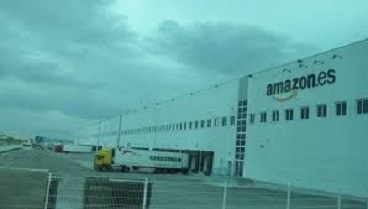
Amazon is making history. But you may ask, “Haven’t they made enough history over the years?” Well, yes, but not like this. Amazon introduces a website in a second language. It’s Amazon in Spanish: Amazon makes history.
Because this is the first time Amazon gave a Spanish website, at least in the USA. It’s a smart move, too. Did you know the US is the second biggest Spanish speaking country in the world? Mexico is the first. Did you also know there are over 41 million native Spanish speakers in the USA right now? That’s not counting the growing number of people who have Spanish as a second language.
So with this website, customers browse and shop in Spanish. Here’s how it work. Log into your Amazon account. Besides your name, an EN (English) and ES (Espanol). But if you want to switch to Spanish, just click ES. It’s just that easy. They just started the process. So one should wait a few weeks before Amazon in Spanish is complete. Also, if you’re also in Mexico or Spain, you can access Amazon in English. Of course, their Amazon websites are originally in Spanish.
There’s another reason why Amazon in Spanish makes history. Few major retail websites are doing so. In fact, I doubt any major website is. At best, they’ll have a local option. But Amazon is actually taking the first step to make this a reality. Okay, sometimes I think Amazon is too evasive and far reaching. It seems like they want to control every aspect of our lives. But I agree with this call. The IT support industry is getting more diverse in every way. Let’s use every tool we can to cater to this. Plus, other nations offer websites in several languages. The USA is just getting around to it. So we need to step it up. What other websites would you like to see be offered in another language? And what languages would you like to see?

Mar 9, 2017 | Computer technology
We talk a lot about robots around here. So yes, I talk about them in a negative light. That’s because I fear the day robots work all computer repair jobs, leaving all techs in the cold. But I stumbled on an article saying robots could be our saving grace. Robots save planet Earth: Can they save or destroy?
So the article talked the world’s problems, particularly global population. It says we need AI to take jobs. There are people who believe an aging population and a current low birth rate will cripple our economy. Also, the US Census Bureau says those over 65 will outnumber those under 5.
But wait a minute. ?Some say the robot revolution will happen because of our tech dependence. And I don’t have to tell anybody how dependent we are on technology these days. Some believe the aging gap will help replace human labor with robot labor. For example, let’s fast forward to 2027. Millions are in retirement. But too few are in the labor force. Well, by this point, young adults entering the workforce grew up smartphones and social media. So by this point, they’ll be more welcoming to robots. And this is how robots save planet Earth. But should we buy that?
All I know is that not many people in 2017 believe in robots save planet Earth. Tell that to the fast food workers losing their jobs to robots. Then, tell that to the clerks losing their jobs to robots. After that, explain that to the technicians watching their livelihoods go to AI technology. Maybe they have a point with the coming age gap. Yes, Baby Boomers are retiring. As of 2017, the youngest is 53 and oldest is 72. Think of what it’ll be in 10 years. Then, you have a somewhat low birth rate. But even that’s not as low as some ‘experts’ say it is. But lets’s focus on the now. People are losing jobs to AI now. And it will be a huge concern in the years to come. So I ask you. Can robots save planet Earth, or are we on the path to destruction?

Mar 8, 2017 | News, Security, Uncategorized
Some time ago, I wrote an article about how Samsung TV spies on it’s users. But apparently, I was just scratching the surface. According to WkiLeaks documents, the CIA (Central Intelligence Agency) can turn most electronics into spying devices. Hence, the CIA listens: big brother era arrives!
So, these phones and other devices have microphones. WikiLeaks reports the CIA exploits these microphones. Also, they seem to have documents to prove it. But wait. There’s more. There’s a program the CIA calls ‘Weeping Angel’. Their hackers get access to Samsung TVs. Furthermore, while the TV is off, the microphone remains on. But that’s not all.
Wikileaks obtained over 8,000 documents. None paint the CIA in a good light. In fact, documents show this kind of hacking done to iPhones, Androids and Windows Phones. Nobody ever reports these cyber attacks to parent companies, like Apple, Google, or Microsoft. And let’s call them what they are: cyber attacks. They’re not even trying to hide it anymore. In fact, one article from The Guardian gave a disturbing report. They said one intelligence leader bragged how it was spies’ priority to breach smart devices. He said they’ll use the ‘internet of things’ for monitoring and surveillance. When they said the ‘internet of things’, that means all things internet, from desktops to smartphones.
Yesterday, I had an interesting conversation with a tech at our Boston computer service shop. He won’t even buy a Google Home system. There is a story out that they can record everything in your home, and take it over, too. When I read this article, his concerns, and the story, ate not that far-fetched. Maybe this is what Edward Snowden has been warning about for years. Remember that song by Rockwell, called “Somebody’s Watching Me” back in the 1980s? It’s almost like he predicted the future. Because in 2017, they are watching, and they’re using our technology to do it. And what can we do about it?

Mar 7, 2017 | internet
Twitter is in trouble. It struggles with declining stocks, declining interest, better competition, and cyber bullying scandals. Furthermore, not even President Trump and the NFL can help. But more competition is here. They’re Twitch and Pulse. Twitch and Pulse: Does this equal Twitter’s doom?
So, Twitch is Amazon’s answer to Twitter. It’s a streaming site for the gaming community. In fact, top Twitch accounts have over a million followers per account. There’s no telling how many followers smaller accounts have. But yesterday, Twitch made an announcement. They introduced Pulse. What is Pulse?
With Pulse, you can keep up with all your followers. Hence, top Twitch streamers can keep up with their millions. They can do so with texts, links, pictures, emojis, and also videos. Pulse is even available on your Twitch smartphone app. So if you’re an account leader, you can share with them your gaming skills at anytime. Though Twitch made the announcement today, it will take a few weeks for Pulse’s debut. However, Twitch account leaders can moderate their accounts. They choose who their friends are, how many they can have, and they can delete comments. So trolls need not apply. When I look at what’s happening to Twitter, this is a good idea.
But you may say, “Twitch and Pulse are no threats to Twitter. Besides, Twitch and Pulse only caters to gamers.” Well, they’re expanding beyond the video game community. Twitch is catering to people who want to talk about real life issues, like food and drink. Twitter does that every day. Oh, Amazon owns Twitch and Pulse. And look at how Amazon is blowing up. In computer repair, from Boston to elsewhere, we love our games. Maybe you’ll see us on Pulse. Then, Twitch account leaders have power to control who gets in and who says what. There’s some control. As this continues, more people will choose Twitch. More people will follow accounts. And more people will probably leave the volatility of Twitter. Twitch and Pulse: Does this equal Twitter’s doom?

Mar 6, 2017 | News
It’s no secret the tech industry depends highly on international labor. Silicon Valley leaders will tell you that. But Friday, they passed a law that could hurt the IT service labor force. It’s about the H-1B visas: The affect on international tech workers. So, what will it be?
The government stops rushed processing of ?H-1B visas. So, why are H-1B visas important? They let international workers with high skills work in the US. Furthermore, US companies sponsor these workers. Also, the workers can stay for up to six years. The stop of expedited visas will last at least six months, but it will affect 2017-18 academic year applicants.
So what does this have to do with tech? A lot. Many companies in the tech industry depend on international workers with high skills. Many Boston IT support companies do. And rushed H-1B visas help get these workers over here quicker. There’s an annual 85,000 maximum for profit companies. But they get several times as many applications in just a few weeks. Furthermore, it takes several months to process these applications. Can you imagine what a suspension will do? Some visas depend on a lottery. Do you know what that means?
So here is an example. Five skilled engineers apply for an H-1B visa. The applicant pool is full. So luck determines who comes over here and who stays behind. This suspension will make it worse. Hence, I know I sound like a contradiction. A couple of days ago, I wrote a blog criticizing U-San Francisco about giving American jobs to foreign workers. But it’s not. Maybe tech companies will hire more American workers in place of this potential loss. I hope so. But I don’t see that happening. How quick can you train them, when you have thousands of already trained workers. But they can’t cross the border because of red tape. Look, I know many are concerned about immigration these days. But is blocking H-1B visas going to solve anything?

Mar 5, 2017 | General
A few years ago, the digital currency Bitcoin was in trouble. In fact, it was the laughing stock of the computer repair and tech industry. But some stuck with it. And who laughs now? Bitcoin’s comeback: Worth more than gold.
So, I mean that literally. As of Friday March 3, one Bitcoin is worth $1,251. An ounce of gold is worth $1,234. Bitcoin’s comeback puts this currency at an all-time high. Bitcoin’s worth tripled in just one year. Furthermore, in the last three months, their shares went up 30%. Meanwhile, gold shares are went down almost 4 percent in the last year.
So what’s causing this Bitcoin comeback? Many believe it’s the world’s rocky status right now. Many have little faith in their own national currency. Hence, in other nations, the currency already collapsed. India and Venezuela voted to replace throw their paper currency away. They’re replacing it with coins. Maybe Venezuela’s dire economic depression has a role in that. Then there’s the generation gap. And many people, especially Millennials, like paying for things with Bitcoin. But these coins are scarce. And they’re getting scarcer. There are only 21 million of them. That may sound like a lot, but it’s not.
Not if you’re looking at it from a global viewpoint. I’m sure many of these coins are already claimed by the super wealthy. Then you have others who are not giving them up. If you had a coin worth over $1,250, would you give that up? I wouldn’t either. I hate to say it, but cash isn’t as popular as it used to be. At one Boston area store, I couldn’t even use cash at the check out machine. So people, especially Millennials and Gen Z (anyone born after 1997) yearn for a new way of exchange. Bitcoin seems to be that way of exchange, especially for anyone in IT support. Is Bitcoin’s comeback ?the new way of life? Or is it a one hit wonder?

Mar 4, 2017 | General
How would you like to work for Facebook? How awesome would it be to work at their Silicon Valley headquarters? This is the dream for many in IT support. But not so fast! Some insiders talk about Facebook’s struggle: Employees can hardly pay rent.
So how does this happen? Because the San Francisco Bay and Silicon Valley areas are the most expensive areas in the country. Rent is extremely high. In fact, it’s so high engineers making over $100,000 a year struggle. Some even turn to Facebook CEO Mark Zuckerberg for help. Some engineers also asked Facebook, a multi-billion dollar corporation, to pay at least part of their rent.
According to Smartasset.com, you need to make over $215,000 a month for a two bedroom apartment in the Bay Area. Hence, I see the crisis. Also, employees complain of other high prices, like food. I read a coffee and bagel can cost over $8. Furthermore, fresh orange juice can cost over $10. And these are the lucky ones. Now imagine being a janitor, a cab driver, or cook working for Facebook. Then you see these prices everyday. You see, Facebook’s struggle isn’t just their struggle. This crisis, and it is a crisis, faces every tech worker in the Silicon Valley area.
But it sounds like Zuckerberg could be a sympathetic ear. I hope so. His New Year’s resolution is to ask more people how they’re living. He should start with his own employees. I don’t know if paying their rent is the answer, but something has to be done. Workers leave Silicon Valley. In fact, whole tech companies are leaving Silicon Valley. And trust me, the Boston area has room for IT service companies. So Silicon Valley isn’t the only tech candy store in town. And this isn’t just the tech leaders’ burden to bear. The whole area is at risk is something doesn’t change. What if so many leave that nobody wants to move to Silicon Valley? Does anyone think of that? Something has to change. Shouldn’t Facebook lead to way?
