May 7, 2017 | Entertainment, internet
Apple and Amazon never got along that well. But that was probably a good thing. Because that bred competition. They competed for our business and our loyalty. However, note how I’m using past tense. Amazon and Apple team up: What about competitors?
So here’s how Amazon and Apple team up. They agree to bring the Amazon video app to the Apple TV box. Do you know what this means? This means Amazon Prime subscribers can watch their favorite shows using their Apple TV. But before this, Amazon Prime users had to resort to trickery to watch their shows on Apple TV. And such trickery included connecting other Apple products using a WiFi connection.
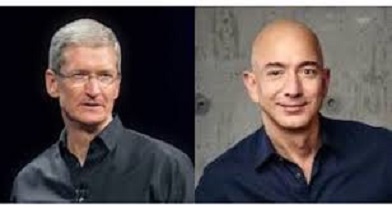
However, it’s going to be a lot easier now. Well, maybe not now. These Amazon services will be available on Apple TV sometime in fall 2017. It will probably happen just in time for the new fall 2017-18 TV lineup. Again, let me make this clear. No deal is official. But according to tech journalists and speculators, this deal would have to come from the very top. Hence, it would have to meet approval from Apple CEO Tim Cook and Amazon CEO Jeff Bezos. But why do this? Because they want to dominate the entertainment world at any costs.
So if that means merging their services, they will do it. Of course, nobody from Amazon nor Apple is talking. However, if Amazon and Apple team up like this, then what about competitors? Now I could play the cross-examiner. This could be a good thing for Apple TV watchers and Amazon Prime subscribers. Both have millions. So why should Amazon Prime people have to jump through hoops just to watch TV programs on Apple TV? Nobody else has to do that. And they would have a point. But still, what about competitors? And what about those, even in IT support and computer repair, who don’t care about Amazon Prime or Apple TV? Is this merger (let’s call if for what it really is) even worth it?

May 6, 2017 | News, Security
To this day, some say hackers caused Donald Trump to win the brutal election of 2016. But in France, another brutal presidential election plays out. Also, some believe hackers are playing a role. The French election: Are hackers targeting?
Tomorrow is France’s Election Day. The presidential race is between politically moderate?Emmanuel Macron and conservative, and often controversial, Marie LePen. But yesterday, Marcon’s people said hackers dumped a massive computer hack on him. So here is their story. Somebody posted 9GB of data to website?EMLEAKS to Pastebin. That’s a secret document sharing website. The timing is funny. Because it’s just 36 hours before the election. However, polls show Marcon leading LePen.
So far, we don’t know who did the hacking. In fact, we don’t even know if a hacking took place. But if it did, it violates France’s rules regarding influencing an election. French leaders are staying far away from this one. But an election committee will investigate Marcon’s claims. Also, this non-partisan committee told French media not to publish the details. If they did, they could face criminal charges. Like I said, we don’t know where these potential hacks came from. But as usual, Russia gets the blame.
So what? What does an election in France have to do with computer repair? Maybe nothing. But these potential election hacks should concern us. It doesn’t matter if we work in IT support or on a farm or in a classroom, politics affect us all. Elections affect us all. And if hackers from other countries, particularly ones that don’t like us, can sway an election, that’s not good. France is already on edge. In fact, this election is so intense riots are already flaring up. And voting day isn’t until Sunday, May 7. The French election could have been hacked. Is this any good for democracy?

May 5, 2017 | scam
This is a Google Docs alert. At least, the past few days were like this. I say this because a massive phishing scam took over Google Docs this week. Hence, Google Docs shut down for an hour two days ago.
So hackers sent an email with a link. Here is one scary part: They sent it in the name of someone you know and trust. Then, you clicked on the link. You got a real Google Apps page. But then, it told you to authorize another Google Docs app. There lies the problem. The app, sent to you by the hacker, was a fake app. It didn’t take long before this fake Google Docs app infected millions of systems: PCs, tablets, smartphones.
But thankfully, Google’s security was right there to answer this Google Docs alert. It took them about the hour to remove the threat. They removed all fake pages, applications and documents. Now why would they do this? Because the hackers know many people link their Gmails and Google Docs to Facebook, Amazon, Twitter, and other social media accounts. Do you realize how much info is on those accounts?
But there are things you can do to protect yourself. First of all, Google has a tool Password Alert. Password Alert warns you if a Google page isn’t really Google’s. ?If you run across a fake Google Docs or anything Google, they’ll alert you about it. Then, they’ll advise you to change your password and secure your account immediately! In our Boston computer service shop, many of us got this protection. That’s sound advice. If this phishing scam got you, change your password and secure everything right now! Don’t wait! For every second you wait, that’s every second the hackers have a party with your information. The other scary thing is they use real people and real docs to use this phishing scam. What do you suggest to keep us safe?
May 4, 2017 | internet
On Easter Sunday 2017, a guy made a Facebook video. But this wasn’t like other Facebook videos. Because he made one of himself killing a 74-year-old innocent man, then claimed he killed several others. Also, in April 2017, someone posted their own suicide. This is an epidemic Mark Zuckerberg wants to rid Facebook of. So Facebook fights violent videos by hiring 3,000.
Facebook will hire them to monitor violent and harmful videos. Also, this team will remove them quicker. ?Zuckerberg believes this move is vital. He hints that with more people, they deal with such videos more effectively. Facebook gets millions of complaints every week. Also, keep in mind Facebook has over two billion people. So many believe this move isn’t enough.
Yes, I know most people don’t put violent and deadly posts on Facebook. But all it takes is a small handful to mess it up for everyone else. This is just another attempt to make Facebook a safer place. They launched tools for loved ones to contact each other in the wake of natural disaster or mass violent attacks. Then they set up suicide prevention tools. Furthermore, they have tools to combat the epidemic of revenge porn and sexploitation. Now Facebook fights violent videos.
They also vow to fight ‘fake news’ and ‘hate speech’. I don’t know how to feel about that one. Yes, I’m all for getting rid of murder and suicide online. Why any psychopath wants to put that online is beyond me. Furthermore, why would anybody want to see a murder or suicide online? I do think every IT service company should fight this kind of videos. But them tackling ‘fake news’ and ‘hate speech’; I’m weary about that. Because I don’t want Mark Zuckerberg, or any other Facebook employee, telling me what ‘fake news’ and ‘hate speech’ are. That gives them way too much power. And couldn’t that lead to censorship altogether?

May 2, 2017 | internet
One thing about Facebook: It often target people’s emotions. For example, a Facebook friend posts a news article. Then, others feel emotional and rant about that same article. But I read one disturbing report. It has to do with Facebook emotions: Do they target venerable teens?
So this report leaked to The Australian. Supposedly, this report talked about how Facebook could target the emotions of millions of teenagers. They talked about looking for teens who want to ‘look good’ or ‘lose weight’ or ‘gain confidence’. All of this is to target them to advertisers. This is all according to this The Australian report. Also, Facebook can see when teens feel ‘useless’, ‘worthless’ or ‘like a failure’. So it sounds like they really are preying on Facebook emotions, especially on young teenagers.
But Facebook employees say not so. One calls this article misleading. They also say this was to study how people overall act on Facebook. They insists Facebook in no way targets venerable teens. But Facebook did apologize for this. Also, they say they broke no laws, or other legal rules, during this process. Facebook promises to improve it’s research. And they vow to take actions against anyone who abuses their research policies.
I don’t know what to say about this one. I understand the outrage. No company, no IT service company, or any other, should ever exploit the emotions of underage peoples. This goes double for those already feeling bad about themselves. That’s from a moral stand. But what about business? Let me explain. Advertisers always go after people’s vulnerabilities. It’s been that way for decades. Look at this early 1960s commercial; it preys on people’s social fears of being outcast because of bad breath. I hate to say it, but preying on people’s fears is a part of advertising. But doing it to young, struggling teenagers is something else. You have to draw the line. And to use teens already struggling with emotions is crossing that line. So I hope Facebook is sincere with this apology. Was this social research or were Facebook emotions purposely targeted?

May 1, 2017 | Smartphone
Why did many working class Americans elect Donald Trump in November 2016? Because he promised factory jobs would come back to the USA. But one NYU grad student says not so. He addressed American iPhone jobs and why Americans won’t see them.
So NYU student Dejian Zeng spent last summer working at an iPhone center at the Pentragon. That’s one of Apple’s biggest iPhone building places in China. Also, China’s Labor Watch Party helped organize this trip. Zeng worked 12 hour shifts at this iPhone factory. Furthermore, he worked Monday through Saturday. If my math is right’s that’s 72 hours a week. Zeng needed no resume, interview, or qualifications to get the job.
He just went there and stood in a long line. Then, they simply asked to see his ID and to recite the alphabet in English. They hired Zeng immediately. Then there’s the issue of pay. The average Chinese iPhone maker gets $450 a month. That salary will hardly take care of any American in 2017. Zeng also says if these jobs come to the USA, robots will work them. But Zeng says something that surprises me. Even Chinese workers are starting to get expensive. Because China is a fast rising economy and major world player. So to combat this, Apple is moving jobs to Vietnam, Bangladesh, and other Asian nations, where they can still keep the salaries low. This is why there won’t be American iPhone jobs anytime soon.
Zeng’s findings are disturbing, but not surprising. There was a time in the USA where anybody could walk in a manufacturing plant and just get a job. Now, you need a degree for everything. Also, it’s obvious Apple isn’t going to pay American workers their worth. It sounds like they don’t even want to pay Chinese workers their worth. I try to sympathize with Apple, but I can’t. I can’t because read how little it costs to make an iPhone. But if jobs do come back to America, you can bet iPhone prices will skyrocket. Not many Americans can, or will, ?pay that. And take it from our Boston computer service shop, often times it costs little to do a screen replacement. So in this cycle of cost and exploitation, where do we go from here?

Apr 29, 2017 | Law Blog, News
Today is a great day for privacy rights advocates. That’s because the NSA halted, at least for now, a practice many hate. The NSA change: a step towards the right direction.
So starting April 28, 2017, the NSA will no longer collect certain emails and texts. Such email and texts are with people overseas that include information. For example, you have a friend or college in China. You email and text them, and then you include a phone number or email address. The NSA will no longer collect or scrutinize that kind of email. This practice started with the Patriot Act of 2001. But for years, privacy rights and Fourth Amendment advocates screamed this was unlawful.
However, the Constitution isn’t responsible for this NSA change. We can thank the Foreign Intelligence Surveillance Court. What the NSA did violated their rules. So since this kind of NSA spying reached overseas, the foreign courts takes ruling over anything the NSA did. So yes, they practiced this kind of spying since the early 2000s. But much of it didn’t come to light until 2013. That year, former NSA contractor Edward Snowden exposed many of his former employer’s tactics. Mr. Snowden’s expose let to outrage and advocacy. Edward Snowden praised this NSA change. In a tweet, he said, “The truth changed everything”.
So yes, it seems that way. This NSA change is definitely a step in the right direction. But what grieves me is that it took an international law to change this. But thankfully, it’s changing. For years, political leaders, IT service leaders, and advocates have held the NSA’s feet to the fire. Now, it looks like global leaders are, too. And it’s working. But this is the beginning. Only the beginning. We should continue to educate the public about illegal and immoral spying. Knowledge is power, and power leads to change. What other changes need to be made?
Apr 28, 2017 | internet
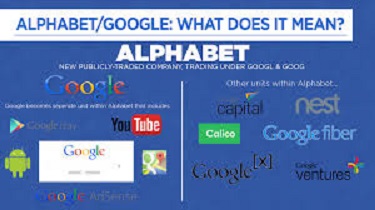
In October 2015, Google officially became Alphabet. They did this because Google had so much going on. So they combined all their smaller parts, from Google Maps to You Tube. Then they formed Alphabet. It seems to work for them. Because Alphabet stocks rise to n-e-w heights.
However, it’s not just stocks that are rising. Everything else Google is doing very well. Let’s look at digital advertising. Google and Facebook took 75 percent of the digital ad profits. Of course, that left little for the hundreds of other IT support companies. Also, Google’s revenue increased 22% from what it was at this time last year. Their overall net worth was 29% more then what is was in April 2016.
The stock traders are very happy with this. After this news, Alphabet stocks traded high within hours after getting this news. In fact, on Monday April 24, Alphabet stocks started at $868.50. But as of today’s writing, prices were $929.58. But not all the news is good news. You Tube took a hit, thanks to some controversy over offensive content. But then again, this is 2017. Everybody is offended by everything. I digress. But it got so bad some advertisers called for a boycott. But it doesn’t seem to hit their revenue much, if at all.
Financially, things couldn’t ?be brighter for Google, whoops, I mean alphabet. Not only that, but tests for Google cars seem to be going well too. So who knows? Maybe you’ll be driving a Google car sometime soon. But with this awesome news comes a little concern, especially with the consumers. I notice how Google and Facebook, two mega, super tech conglomerates, got 75% of the digital ad profits. But wait…aren’t there hundreds…no…thousands of tech companies out there? Yes, many of them. But only two of them got that much of the pie. Now do you see my concern here?

Apr 27, 2017 | Computer technology
In some cities, they raised the minimum wage. But what did one fast food company do? Instead of paying workers that increase, they fired them. Then, they replaced them with automation workers, or robots. Is that coming for the retail industry? Retail robots: What about human workers?
Yes, I know. Since the 19th century, people worried about technology taking human jobs. But in almost every case, technology created new jobs. However, tech and economy leaders worry it won’t happen this time. Small businesses and family businesses worry about keeping their employees human! Remember when they just worried about keeping the business in the family? But some retailers delight in this change.
Some major retail corporations look forward to retail robots. Here are some reasons why. They speak several languages. Also, they know stuff that human workers may not know. These are the reasons retail chain Lowe’s give. I used robots in retail stores before. But these Lowe’s retail robots can talk to you, in many languages. They’re not the only ones. At CVS, there are more computer check-out stations then there are human ones. Also, some of them don’t even take cash. At one Amazon store in Seattle, you don’t need to check out at all. Just get what you want and walk out. Amazon will charge it to your account.
So on the surface, it looks convenient. And yes, we as people seem to hate each other more than ever before. Just look at last year’s election. Maybe that’s what is driving this disturbing trend. But believe it or not, some of us still like human interaction. Furthermore, what about the thousands of retail workers that will be thrown out on the street? It’s not just the retail robots, either. Some believe computer repair techs will also be replaced by robots by the 2030s. In fact, many economists say robots are a bigger threat to American jobs than outsourcing jobs overseas. Because eventually, they’ll be replaced by robots too. So do you think these retail robots are a threat or a sign of technological advancement?
Apr 26, 2017 | internet
Since the 2016 US Presidential Election, there is a war on fake news. But what is ‘fake news’? That’s the debate that goes on everywhere, form computer service shops to bars to barbers/hair salons. So Google announces this project to stop fake news, hate speech, and inappropriate language. They call it Google’s Project Owl: Good idea or censorship tool?
Google’s Project Owl is in the form of a customer feedback system. Some say it will also weed out problem searches. It’s not just fake new they’re fighting. They’re targeting rumors, conspiracy theories, racial slurs, spam, strong violent and sexual content. However, Google processes over 6 billion searches a day. How will they tackle this?
So this is where feedback comes in. Here is how it goes down. You type in a search. Google gives you a set of choices. But what if you see one offensive or inappropriate? Then click on ‘report inappropriate predictions’. A form appears. This form lets you choose which phrase you had a problem with. Furthermore, you can choose more than one. Then you can choose why it’s inappropriate. The choices are: Hateful, Sexually Explicit, Violent or includes dangerous or harmful activity, and Other. However, Google processes six billion searches a day. So it may take days, or even weeks, to get them to process your complaint.
I give Google credit. At least they’re letting the people decide what is offensive and inappropriate. No big shot moralist or politically correct snob is calling the shots on his/her own discretion. That’s the worst thing Google, or any IT support company, can do. No one human being, or small handful of human beings, should have that kind of power. That’s not democracy. That’s dictatorship. But Google’s Project Owl could lead to other issues. Nowadays, many people find everything offensive. We’re in a very heightened politically correct society. What may be okay to some may be incredibly inappropriate to others. And what if Google blocks some searches but not others? Is Google’s Project Owl a good idea? Or will it lead to censorship?
