
Sep 5, 2017 | General
Yesterday was Labor Day. It’s a day we remember the sacrifice and hard work of the American laborer. But the holiday brings sadness too, especially in these 2010s. Because it seems many young Americans gave up on the American Dream. So let’s talk young people, the American dream and technology.
So yesterday in Boston, near our computer service shop, they had a march. Fast food workers went on strike. They demanded a wage increase to $15. But what does technology have to do with this? Well, other cities and states did raise the minimum wage. What did some fast food chains do? They fired all the workers, then replaced them with robots. Because in their eyes, robots are cheaper than human beings. I know that sounds awful, but that’s how many business owners and managers think nowadays.
However, at least these fast food workers have some belief in the American dream. According to one poll, only 42% of 18-29 years olds have a favorable view of capitalism. That’s an all-time low. In fact, 33% say they outright prefer socialism/communism. That’s disturbing. ?What is wrong with young people, the American dream and technology? ?I think history and circumstance have huge roles to play.
In 2017, the average college graduate was born between 1994-1995. They were in elementary school when 9/11 happened. Imagine how traumatizing that must have been for a first or second grader. So your childhood is already full of fear and anxiety. Then, when you’re in junior high, the Great Recession starts. You see parents, neighbors, and friends lose their jobs, houses, cars, etc. So now you’re in high school and college. You look for a part time job. Sorry. Somebody with a Masters degree or a parent feeding their three kids needs that job more than you. So you get no work at all.
Go to college, the Baby Boomers say. You do. You graduate. Everybody is so proud. But it takes you a year to find a job. Meanwhile, you’re $100,000+ in student loan debt. Your job is in Silicon Valley, or Seattle, or Boston, or New York City, or Washington, DC. You know how high rent is up there? Jobs in your hometown are scarce, or non-existent. Nobody wants to rent to you, so you’re stuck in daddy’s basement. No woman wants to date a jobless person living in the basement. But speaking of technology, you have your adult film websites. So what do you care what women think, but that’s another subject for another time.
So do you see how this just breeds hopelessness? You see why so many young adults are turning to socialism and hating capitalism? What can we do to bring back young people, the American dream and technology together again?
Sep 4, 2017 | Uncategorized
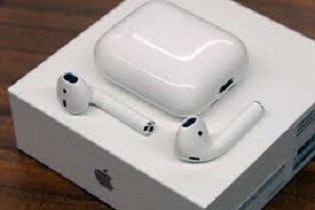
They can say 2017 is the year of the wireless headphone. So far in 2017, over 900,000 wireless headsets were sold. And that’s in the USA alone. Also, there are still four more months to go. But one company and one product tops them all.
I’m talking about Apple and their Air Pods. They came out around a year ago. However, they account for 85% of the sales of all wireless headphones. When Apple says their Air Pods are wireless, they mean it. Two small pods go into your ear. That’s it. A lady in our Boston computer service shop came in with some on. The only disadvantage: she forgot she had them on. We had to yell to get her attention.
But watch out, Apple. Because you do have competitors. Base, Sony and Beats all have wireless headphone products. Critics say they’re equally as good as Apple, if not better. We can thank the shift to Bluetooth for this trend. Also, we give credit to Bragi and Doppler Labs. Because they’re the ones who first made wireless earbuds. Furthermore, this technology goes deeper than just listening to music. For example, Samsung has headphones that also includes heart rate monitors. It has 4GB for music storage.
Then there hearing buds that Doppler’s provide. Remember when we had to yell to the lady because of her Air Pods? Well, these Doppler’s have an external microphone. This microphone helps two people have conversion at a loud raucous bar, or tune out crying babies and/or complaining, annoying adults. So 2017 is the year of the wireless headphone. Yes, Apple leads the charge, but there are many who want to take that throne. From what I’m reading, they very well could. In fact, some should. I’d love to have Air Pods that tune out distraction as read your heart rate as well as play your music. What is your favorite wireless headphone?

Sep 3, 2017 | Smartphone
In China, they have networking company Huawei. So that’s kind of like the AT&T or Verizon of China. So why am I talking about a Chinese networking company and I’m in a Boston computer service shop? Because Huawei has the artificial intelligence smartphone.
They call it the?Kirin 970. Let’s start with the chip set. It has 5.5 million transitors in one centimeter. They say it’s 8-core CPU and a 12-core GPU is 50x more efficient than the average smartphone. It should also give 25 times better performance Then they tested the chip set. It processes 2,000 images per minute. So why is all this important? Because they want to use Kirin 970 as a platform for AI, making this the artificial intelligence smartphone.
In fact, the Kirin 970 is part cloud AI and on-device AI. According to a Huawei spokesperson, AI will play a major role in the future of smartphones. They want AI to give smartphones better voice, data, and image facilities. However, when they say AI will ‘disrupt’ the smartphone experience, that concerns me. But even they say AI will make heavy demands on computing, energy, and cloud services. Maybe that’s why they’re taking their time.
Huawei leaders say the artificial intelligent smartphone will be complete around 2020. They’re even trying to make it more intelligent and give it almost human like capabilities. So even after they make the phone, they have to promote it. This is scary and exciting at the same time. Yes, this phone will be able to do things we can’t even dream of. But what if it can do too much for us? There’s already debate about AI taking human jobs. Could the AI smartphone add to that worry? So we have at least 2 1/2 years before this kind of phone comes out. Would you buy the artificial intelligence smartphone? And how much would you pay?

Sep 1, 2017 | News
Today, President Trump may make even more enemies. Because today, they expect him to end DACA. They call the program Deferred Action for Childhood Arrivals. So this program lets young adults who came to the US as children to stay in the US. However, they have to have work permits. This is the story of Trump, Silicon Valley and DACA.
The Obama Administration started the program started with 2012. For five years, it protected hard working young adults, they nickname them Dreamers, from deportation. These workers do not yet have documents. But today, President Trump may change that. White House insiders believe Trump will end this legal protection; they also believe he will announce it today.
Most Silicon Valley leaders urge Trump to continue DACA. If they cut DACA, over 800,000 young adults could face the real possibility of deportation. Leaders petitioning on DACA’s behalf include Facebook’s Mark Zuckerburg, Apple’s Tim Cook and Google’s Sundar Pichai. Then there are the 300 other CEOs. Many of them are from Silicon Valley companies like Linkedin, Lyft and Netflix. They signed a letter saying how critical Dreamers are to the US economy. In fact, Mark Zuckerberg said, “We need a government that protects Dreamers”.
What does Trump, Silicon Valley and DACA have to do with IT support and technology? Quite a bit. Because tensions between Silicon Valley and the Trump Administration are already high, and has been since the beginning. ?I thought, or I hoped, they could be at least tolerable with each other. But if Trump kills the DACA program, this could end the comrade. Then ask your self, “Why is Silicon Valley fighting so hard for DACA”? It’s not because out of love, but out of business! Are you aware of how many undocumented workers tech companies depend on? Are you aware of how many tech employees come from China and India alone? It doesn’t take a Ph.D. to figure out why Silicon Valley is so adamant about saving DACA. Where do you stand?

Aug 31, 2017 | Wireless
One thing I try to do is keep up with tech trends. Because even in our Boston computer service shop, people ask about such things. Though I never heard anyone ask about a thermostat, this one caught my eye. So here is introducing the Nest Thermostat.
Well, they call this latest one the Nest Thermostat E. Yes, it still takes the room temperature. But this learns your temperature preference. For example, you keep setting your Nest Thermostat E to 72 degrees. Eventually, it will set it to 72 degrees for you without you touching it. It also does your scheduling for you.
However, two thing separate the Nest Thermostat E from other thermometers, ?even it’s predecessor. Those things are the look and price. This one looks less like a smart thermometer. It has a circular white screen with a white ring. This makes it looks more homey and less technical. The older one had metallic rings. The numbers on the new ones on bigger. Instead of telling you the temp through a scale, it just displays the number. You choose whether you want it Centigrade or Fahrenheit. Again, this adds more of a homey feel. The leaf below the temp is pretty nice as well. The price will run you $169. Compare that to the $250 the original Nest Thermostat will cost you. You can control both on your own. Also, you can hook both up to Alexa or Google Assistant.
The Nest Thermostat E will cost less, but it seems to be a better buy. It does get you everything the original does. But this one looks better. That is, if you want one of these. This new thermostat will be available in the next several days. Between you and me, I’m not sold. This hardly sets themselves apart from other thermostats. I mean, what does the Nest do that other thermostats don’t?

Aug 30, 2017 | internet, News
In Northern India, there are the states of?Punjab and Haryana. So why do I talk about these two places? Because Northern India shuts down Internet service here.
But the situation is complex. There was a high profile rape case, and a local cult leader was the suspect. The cult leader stood trial for raping two of his women followers. So now, the trial is in deliberation phase, and everyone waits for a verdict. However, local governments got a bright idea (I say that with all sarcasm). Governments in Punjab and Haryana shut down all Internet and text messaging services. For five days, these Northern India citizens were left with no Internet, no texting, no nothing.
Some say it’s to keep the peace. Others say it’s to stop jury influence. But whatever the reason was, there was still damage and destruction. You see, the court found the cult leader guilty of rape. I don’t know what the sentence is, but his followers took to the streets in protests. The protest turned into riots. These riots killed 38 people. Also, that had to stop trains. Then, they had to shut down schools and businesses. Ironically, the carnage stopped when they turned the Internet back on.
So what’s to make of this? Well, this isn’t the first time. In the past, India locked up their own citizens for posting ‘blasphemous’ messages on social media. There are other instances as well. But I hope Northern India learned a lesson. Government censorship does not work! In fact, it might make situations worse. Now what if ?they let the Internet stay on? And what if they let people texted? What if they let IT support do their thing? ?That would have been a great place for people to vent their emotions. And free speech would let that happen. But when they shut down free speech, they let people’s anger build and build like a powder keg. The keg exploded. Dozens died. Countless more got injured, or scarred. So what good does censorship do to anybody?

Aug 29, 2017 | Computer technology
So there is an IFA show taking place in Berlin, Germany? But what does this have to do with us in America, and those who come in our Boston computer service shop? Quite a bit. Because a European electronic show can showcase what might be coming to a shop near you. So lets’ look at gadgets at the IFA show.
First of all, the IFA show represents every major global tech company: Samsung, Microsoft, Dell, LG, Motorola, and more. They say Samsung will display their new smartwatches, like Gear Fit 2 Pro. If they’re trying to get in the smartwatch race, now is a good time to get to promoting. Also, anything to take focus off their latest scandal. They also expect Motorola to launch their latest smartphone, the Moto X4. Among it’s qualities, it has a curving screen, duel cameras, and could become their flagship device. Furthermore, LG expects to launch their V30. Among other things, it comes with a fingerprint sensor, dual cameras, and a Quad DAC system.
But wait…there’s more. Microsoft and Dell combine to take advantage of the VR craze. They call it the Dell Visor. They plan on releasing it at the IFA show. So you know they’re keeping details at a minimum. But we know they will use 1440×1440 LCD panels, as well as extra padding. You can wear it over glasses. Now that’s something you can’t say about all VR headset technology. When you’re done, you can flip back to reality without even taking off the headset. Because in 2017 America, reality will likely have you wanting to put the VR world back on. And put it on a hurry. They’ll be other companies to showcase other things. However, the Samsung Galaxy 8 won’t be one of them. They figured, there’s been enough talk about that already. What would you like to see come out of the IFA show?

Aug 28, 2017 | Computer technology, News
Hurricane Harvey slammed into Texas last weekend. However, the rains keep coming, and have little end in sight. So before it’s over, the devastation could rival that of Hurricanes Sandy. But how does technology help Hurricane Harvey victims?
I have Facebook friends living in that area. People keep us up to date, and letting us know they’re okay. So say what you want about Facebook, but this is a huge blessing. Imagine the worry that eliminates for loved ones. You can use other social media outlets to do the same. Then you have Airbnb. This app offers free housing to Hurricane Harvey victims at least until September 1.
Through Twitter, the American Red Cross let people know they can donate through texting. You can visit this website, then follow the simple instructions. The deduction is simple and immediately gets to where it’s needed. Tech giants like Apple are accepting donations through their iTunes store. In fact, several organizations follow suit. Twitter even promotes a charity where Hurricane Harvey victims can shelter their pets. The US Coast Guard takes to Twitter as well. They remind people if they’re going into trouble, please call 911. And if the lines get pretty busy, keep calling.
There are other ways IT support and technology helps Hurricane Harvey victims. These are just a few. So if anyone is in need, please take advantage of these services. Now is not the time to be prideful. And if anyone wants to give, or help in any other way, technology can help you do that as well. If you don’t have it today, or right now, I’m certain the donation websites will be there when you’re ready. I have a feeling the people of Houston/South Texas will need our help for a long time after this. And I want to thank those in the hard hit areas for keeping the rest of us up to date. How can you help?
Aug 26, 2017 | internet
Ever have the need to build up your Facebook friend count? Then use the section ‘people you may know’. However, many of those people you probably don’t know. But for one woman, it opened up a world from long ago. It opened up Facebook and family secrets.
So this is the article I read. As this woman browsed through ‘people you may know’, a last name Porter came up. That was the name of her biological grandfather. But due to some heartbreaking circumstances, she never knew her grandfather. Yes, there was some reconciliation between the families, but they didn’t use Facebook to do it. She could ignore the Porter name, but didn’t.
The woman messaged Ms. Porter, asking did she know her. Not only did Ms. Porter know they woman; it turns out they were related. Porter was the woman’s great aunt. The aunt is married to the grandfathers’s brother. The couple began their relationship 35 years ago, around the time the woman was born. It was a wonderful reunion, and both women were grateful to learn about more about their heritage. Both rejoiced at the long lost connection. But I got to ask the question, “How does Facebook know this know about us”?
Often times, I look at my ‘people you may know’ list. I don’t know about her, but some people on this list I never met or heard of in my life. Some of these people I don’t remember them from school, college, previous job, previous church, the bars I go to, nothing. Then I find out how some people get on this list. It could be from who your FB friends are. It could also be a photo, network, or group/contact you’re in. For example, I could belong to a computer repair group. I only know 5 people in the group, but they’re actually over 100 people there. So Facebook may put people from that group there. I still have a lot of questions. What about Facebook and family secrets? Can they reveal anybody’s?

Aug 25, 2017 | News
So there is a saying, even in computer repair: Two steps forward, two steps back. That must be what Samsung feels right now. They just overcame the Samsung Galaxy 7 fiasco, and have high hopes for Galaxy 8. But now, a Samsung leader is convicted of bribery.
A South Korean court ruled Lee Jea-Young guilty of bribery, embezzlement, and other corruption charges. Also, the court sentenced the Samsung second-generation heir to five years in prison. The court agreed that Jea-Young and other Samsung leaders paid off over $6.4 million in bribes. They say these bribes were to ensure the Samsung leader’s power. One bride cost over $3.2 million to a company one of his friends owned. Then another bribe included horses sent to a colleague’s daughter.
Furthermore, they convicted the Samsung leader of perjury, lying under oath in court. But this South Korean drama is not over. Jea-Young’s lawyers plan to appeal. History might be on Lee Jae-Young’s side. Because of all the wealthy powerful South Koreans convicted of corruption, none actually went to prison. This includes his own father, Lee Kun-hee. ?Plus, protesters, many of them, call for Lee Jae-Young’s total release.
However, the mood in that nation is changing. A few short months ago, they impeached South Korean President Park Geun-hye over political corruption allegations. ?Then, take in this fact: ten of the richest South Korean families control 80% of South Korea’s wealth. ?Obviously, the Samsung family is one of them. Recently, six families were convicted of corruption. But nobody went to prison. Some even got a pardon from the South Korean president. There is a growing movement against the coddling of such rich and powerful families. Let’s flip the script. What if the Gates’, or other Silicon Valley tech family, got sentenced on corruption? Yet, the US President keeps pardoning them and letting them do what they want? Would this upset you? So in this case, prison looks more like a reality. But if Lee Jea-Young does end up behind bars, how would that impact Samsung during this crucial time?
