
Sep 14, 2013 | Entertainment, internet
It amazes me how things can change so fast, especially in the tech industry. By 2010-11 social gaming network Zynga was riding high. Games like Farm Ville and City Ville were household names and kids’ hobbies. It got on the NYSE and acquired 11 companies. But today, Zynga is on the brink of extinction.
In retrospect, 2010 was the only year Zynga made a profit. The fact of the matter is, since it’s creation in 2007, they’ve lost hundreds of millions. Stocks that were once near $15 are now $3 a share. At their peak, active monthly users were over 300 million. Now, they hover around 125 million and falling. Employees are being laid off hundreds at a time. And experts say there’s no end in sight. So what happened to this once promising company? Shady and borderline shameful?business?practices are what happened. Players were offered credits and hook-ups if they accepted some offer. According to a statement by founder Mark Pincus, “…I needed revenue right now. I mean we gave our?users poker chips if they downloaded this zwinky toolbar…”. Many believe the games created where knock-offs of other video games. Zynga partnered with Facebook. But it wasn’t long before FB changed it’s policy, in part due to Zynaga’s ‘spam mechanism’. Soon, game users on Facebook dropped by 26%.
Wow, this almost reads like a Greek or film noir tragedy. All it took were just a couple of bad choices and questionable habits to unravel the whole operation. Maybe Zynga can learn from these mistakes and make a comeback. They still have some profit left. Maybe they can hire a gaming consultant and come up with an original idea, instead of borrowing from others so heavily. That’s just a suggestion. With what little revenue they have, they can use better advertising methods. Some don’t cost very much at all. What lessons can be learned from Zynga’s downfall?

Sep 13, 2013 | Entertainment, internet, Wireless
I’m a big football fan, college as well as the NFL. But I like to keep up with things that go on beyond the playing field. So these are my favorite football apps.
10. Twitter App: Athletes are notorious for their tweets. This app lets me know what they’re saying and how they’re thinking.
9. Food Network in the Kitchen: Because football is a lot more fun to watch while eating with other people. It’s great for football parties! You can even learn to make great drinks with this app.
8. Stubhub App: For those who are lucky enough to attend a NFL game live,?or a SEC game live, this is the way to get tickets without long lines or shady scalpers.
7. iOdds: I don’t encourage or endorse sports gambling at all! But if you’re curious at what the odds are of your team winning, this is the app for you.
6. Ultimate College Football: It’s a fast updating app. You can even upload your photos from the stands, if you’re fortunate enough to go to a game. It’s a great way to keep up with game schedules.
5. NFL Trash Talk: It’s a chat room where you can release your inner Stephen A. Smith (whoops! Did I say that aloud). One room is with your favorite team and one is with the team you’re playing against that week. Bond with your fellow football fans, while verbally running opposing fans into the ground!
4. College Football Scoreboard: It does what it says and more. You can also keep up with standings and all the college football news, collectively and breaking it down to conferences and teams.
3. NFL Pro: Do you go through football withdrawal? NFL Pro is perfect! It’s?a free app, and the graphics rival that of?All Madden. You can be your favorite team by playing this game. And it’s a lot less complicated?than Fantasy Football.
2. ESPN:?This speaks for itself. Find everything you want about pro and college football. Watch the play by play through?gamecast. It’s worth getting an account through these guys because then, you can get all the custom features,?too many to name here.
1.?NFL Mobile: What better way?to get all things NFL than straight from the source? It includes scores, schedules, merchandise, tickets, and yes, even fantasy football. Even the news is?strictly from NFL.com. This app is simple,?yet the ultimate must have for any?NFL fan.
Which apps did?I miss?
Sep 12, 2013 | internet, News, Security
When we found out the National Security Advisory was checking in on our smartphones and computers, without search warrants, our knowledge or our approval, many believed the NSA and computer and phone companies were in cahoots with each other. As we later learned, that wasn’t often the case. Now, another tech giant is taking on the issue.
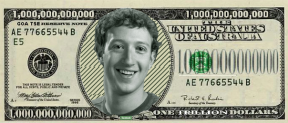
Facebook founder and CEO Mark Zuckerberg tackled the issue at a Tech Crunch conference. He insists he didn’t give the government access to servers. He claimed the NSA “…blew it on communicating the balance of what they were going for with this.” Facebook and Yahoo are filing a suit asking FISA’s blessing to publish more data on the government’s request for people’s information. But it doesn’t stop there. Next week, Zuckerberg goes to Washington and meet with Congress. Right to privacy issues and NSA privacy leaks are expected to be hot topics.
Nonetheless, I do find it suspect that Zuckerberg is only meeting with top Republicans, including John Boehner. Forgive my cynicism, but if he wanted to tackle the surveillance issue, shouldn’t he be meeting with both sides of the isle? Then I read about his other political contributions, and that makes me a little more suspect. I’m not suspect about his intentions about the NSA. I’m sure he’s doing this to protect his best interest and his users. He knows much of the public is sick and tired of this kind of spying. What if people stop using Facebook because of these NSA revelations? He can’t have that, can he? So business wise, I believe he’s sincere about taking on gov’t surveillance. But the cynic part comes in when I read about how he’s only meeting with top people from one party. Add that into the thousands he’s contributed to other politicians, and the millions Facebook has given to lobbyists. So what are Zuckerberg’s intentions: are they for us or for his own social/political intentions?
Sep 11, 2013 | Computer technology, Wireless
September 20 should be a big day in Apple’s history. This will be the day the iPhone 5C and iPhone 5S should be released. But the vibe I’m getting from the media and the public is: who cares?
The last time I checked today’s ticker tape, Apple stock lost 5% of it’s share this day alone. A year ago at this time, Apple’s stock was worth over $700. Another factor is timing. Are you aware it’s been 230 days since Apple came out with it’s last product? The last big space was 132 days. Low prices are doing little to help. This iPhone 5C goes for $99 in the US, with a contract. Some economic experts say the mid-lower price smartphone booming so much$99 isn’t cheap enough. Speaking of competition, as of this week, Samsung sold over 38 million Galaxy Note smartphones. During Apple’s release drought, Microsoft released the Windows 8 phone. Some experts say by 2017, Windows will have almost the same amount of the phone market Apple does now.
This is a long way from what we’re used to. I don’t see long lines and people sleeping on the streets rushing to get these iPhones. They got us spoiled. When you release new product after new product, you’re going to shorten consumers’ attention span. By this point, we’re addicted to seeing what’s next. When the what’s next doesn’t come for over 7 months, naturally, our attention is going to wander elsewhere. Competitors knew it and jumped on the opportunity. One would think a smartphone for under $100 would get people running to the Apple store. A few years ago, it probably would have. Now, you can get one for far cheaper, with a contract of course. Don’t get me wrong; I love Apple products as much as anybody. But it’s a new world out there. Can Apple compete?
Sep 10, 2013 | Entertainment, General
Between 1983 and 1993, John Sculley was at Apple serving as CEO. During his reign, Apple went from an $800 million franchise to an $8 billion franchise. His reign was famous for something else too: the termination of it’s own founder, Steve Jobs.
By 1985, Apple 3, Apple 2, and Lisa had either failed or was on life support. Now, everything depended on Macintosh, which needed funding in a hurry. You see, what’s hails today as one of the greatest computers ever was then little more than an object of ridicule. Jobs proposed the Macintosh price be dropped and most of the advertising be shifted from Apple 2 to Mac. Sculley opposed this move, and it went to the board. The board sided with Sculley. Jobs was removed as head on the Mac division, and the rest is history.
Sculley says Jobs wasn’t a good executive back then. I think Sculley’s background plays a part in this. During the interview last week, he blamed the board. But Sculley admits he came from a background where he had to be accountable to stockholders and other colleagues. Jobs was more of a revolutionary, convinced the Mac was going to change the world. Eventually, these two philosophies are going to clash, and they did here back in ’85. Logically, if I was in that boardroom, I would have sided with Sculley. I would’ve been thinking about the bottom line, and the bottom line was we need something to happen now, not in the future.? But this is why I have so much respect for Jobs. He stuck to his guns and knew he had a winner, and he was willing to risk it all. And eventually, he got the last laugh. Of course, this experience helped him become a better executive. I think we can all learn a lesson from one of most infamous showdowns in tech history. If you’re passionate enough about something, stick with it. You may fail, you may be ridiculed, and it may cost you, but keep persevering. Eventually, you too will have the last hurray. Can you imagine what life would be like today if Jobs gave in or gave up back in 1985?

Sep 9, 2013 | networking
In 2010, Kevin Systrom dreamt of a revolutionary way to?take and ?share photos and short videos through social media. Instagram was launched. As of September 2013, it has over 150 million active users (those who use it on at least a monthly basis). But wait; there’s more.
Enter Emily White, Instagram’s new Director of Business Operations. She seems dissatisfied with Instagram being just another app. I can see why; it worth at least a billion dollars. Under White’s guidance, advertisers will be allowed and encouraged to use Instagram for commercials. The ads should begin next year; right now it’s just the courting and wooing phase. She and her team are meeting with marketing companies and potential advertisers. In fact, Levi Strauss and Company are having a marketing campaign featuring Instagram. This campaign artist traveling in major cities and uploading pictures on the app. The ad team is looking at Instagram’s Discover app to launch these future commercials.
I say it’s worth a try. I know there are some of you who say social media is already littered with ads. But if that’s what it takes to keep it free for you and me, then I say advertise on! Plus, Instagram is worth billions and has hundreds of millions of viewers. And advertising is a great way to make money, and to show it’s might. It happened with other social media sites, and they can learn lessons from Facebook’s failures. What do you think about Instagram accepting advertisers?

Sep 8, 2013 | General, networking
President Barak Obama once said, “We’ve got to have the brightest minds to help solve our biggest challenges.” San Francisco, California attempts to live out that call.
This city is launching the Entrepreneurship-in-Residence program from mid-October to mid-February. People who own technological start-ups or small businesses who can contribute in making their community a better place can still apply. During this four month program, participants can get mentorship and connections from San Francisco government and business leaders. They can attend trainings on working with the government on issues like security and data standards. You can get on a platform and offer your services to local governments. Big time tech companies like Yahoo and Nokia are taking part. This could be the jackpot for many struggling startups and small businesses. They estimate there is up to $142 billion dollars worth of opportunity. The application process is still open. If successful this program will go to Los Angeles next.
You know, I hope this program is successful. Stats don’t lie: some polls have government approval rates as low as 13 percent. People don’t have a high opinion of big business either. If theses two entities can team up and help smaller business prosper and help their neighborhoods prosper, I think people will see them in a different light. San Francisco is a great start, with Silicon Valley being nearby. In the next several years I hope every major city in America has this kind of program. Think about it: it this is successful nationwide, jobs can be created, community relations can be strengthened, and business can prosper. Wouldn’t that solve a lot of city problems?

Sep 7, 2013 | Wireless
How much would you pay or how much did you pay for your smartphone? Was it $200? $300? 500? How would you like to get one for free?
Amazon is coming up with a plan to offer smartphones for free. Let’s not get too excited. There’s not going to be an Amazon man driving a milk truck handing out free smartphones on the public square anytime soon. There will be strings attached; we just don’t know what they are. Will they pay for loyalty programs like Amazon Prime? How high or low priced will the contracts be? Some companies offer old model phones for cheap, I mean $1 cheap, with contracts. There are also talks with phone makers and hardware makers. Since plans are in this early stage, no date has been set for this potential Amazon free smartphone.
I’m doubtful this will get off the ground for Amazon. But in the tech world, never say never. The smartphone market is already crowded with big names like Apple, Android, Samsung, and Microsoft. Let’s not forget smaller companies like LG Electronics and ZTE. However, if Amazon does pull this off, it could be very, very bad news for competitors, especially Apple. Let’s face it, they’ve been living really well off high priced devices over the years. If Amazon’s venture is successful, them and other top companies will be forced to change prices and strategies. But will it be successful? Will it even be possible?

Sep 6, 2013 | Computer technology, Wireless
This week, Google Glass and Samsung Galaxy Smartwatch have dominated headlines. That got me thinking: What wearable technology has made history? I’m putting this in chorological order.
10. Abacus jewelry: In the 17th century Far East, this jewelry was all the rage. You could add and subtract on it, a revolutionary concept for that century.
9. The first wristwatch: It was designed by Breguet Queens of Naples in the?1810s. It was the first to tell time on your wrist. It took decades for this to catch on. In fact, the first men’s wristwatch wasn’t developed until 1904.
8. 3D Glasses: During the 1950s, these disposable tools brought cheesy action and?horror movies closer to the viewer. In 1952, Bwana Devil was the first to test this fad.
7. First Digital Wristwatch: In the early 1970s, Pulsar LED were the first wristwatches to tell you the time computerized, not manually. Pulsar LED made a huge pop culture impact in the James Bond film Live and Let Die.
6. Heart Rate Monitor: Wear this around your wrist and/or your chest, and you can measure your heart rate during and after exercise. Invented in the late 1970s and tested by a Finnish ski team,?they ?began to fly off shelves by the mid 80s, and haven’t stopped flying.
5. Virtual Reality: In the late 20th century, a headpiece taking you into another world became a part of American psyche. By the ’90s, it was a part of TV and film culture, there was even talk of applying it to video games. The military uses virtual reality to train soldiers to this day.
4. First Bluetooth Headset: In the early 2000s, these headsets started to bridge the gap between fixed and mobile devices. They made you look really important too.
3. RFID Technology: Since the mid-2000s,?it’s been used in passports to track the passport holder.?RFID?chips no bigger than a grain of rice have?been put in animals in case they get lost. There’s talk of (and some have done this) of putting them in human beings for various reasons. It’s controversial technology; many argue RFID violates privacy rights.
2. Smartwatch: It’s been anticipated for years, but by October 2013,? you can take pictures, hold smartphone apps, and even talk on your watch!
1. Google Glass: Still not amazed? Starting in 2014, you can take pictures with the wink of an eye. In fact, all the things you can do with a phone you can do with a set of?glasses. If this and smartwatches are successful, by the 2020s,?we may not even need smartphones anymore.
That’s my list. What did I miss?

Sep 5, 2013 | Computer technology, Wireless
I learned something today. I thought Apple dominated the smartwatch scene. Then I learned of the Samsung Galaxy Gear and it’s early October release. I wonder what the outcome will be.
With this watch, you can catch notifications and keep time using many faces and time zones. The Galaxy Gear contains 1.9 megapixels worth of camera, two microphones. One can produce 10 second?movies with this watch. It’s not supposed to be used as a phone. But one can still conduct conversations with it. Samsung says you can access 70 apps on this watch, from Evernote to Pocket. It has a pedometer, to help you find your other Galaxy device in case it’s misplaced or stolen. There is some debate about battery life. They say battery life can last around 24 hours with no charging. But keep in mind it runs on Bluetooth 4.0 Low Energy, so I’ll believe it when I see it. This watch is packed with 4GB of storage power. The cost is expected to run around $299.
So are you convinced to go get a Samsung Galaxy Gear Smartwatch? If I wasn’t prone to losing my watches all the time, I’d be tempted. The many faces, camera, microphone and that good storage power on one little device are all great selling points. The real red flag is the battery life. It’s enough I got to keep my iPod touch plugged in all the time because battery life goes so quick. Do I have to worry about that?with this watch? Then there’s the $299 cost. With what I’m allegedly getting, I’m good with that price.?However, I’m reading comments that some people aren’t. Some even say they’ll only pay that much with an Apple watch. Speaking of Apple I-Watch, what will their response be? When these two devices go head to head, who will win?
