Apr 16, 2014 | Computer technology, Security
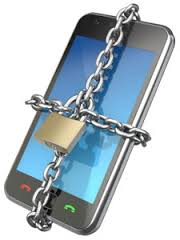
Every hour in the US, around 110 cell phones are lost or stolen, often by force or violence. States are circulating a ‘kill switch’ law. It would lock stolen phones. But big company names are fighting the good fight against this evil.
Companies such as Apple, Google, Samsung, Nokia and Microsoft are committed to adding their own anti-theft technology on newly made phones starting in 2015. Effective July that year, phones made after then will have ability to wipe out data and declare the device inoperable in case of a lost or stolen incident. This would be done remotely. Devices would be shut off until the original user gave permission. Some phones like Apple’s iOS 7, already have Activation Lock. This feature shuts down reactivation until the original user says so. In addition, these companies generally support the ‘kill switch’ law.
Although I totally applaud these carriers and companies for stepping up their anti-theft protection policy, not everyone feels that way. I read one comment that claims we consumers will now have to pay more for other consumers irresponsibility. I respectfully disagree with this. Yes, there are some common sense things can do to protect ourselves, like never leave your phone out in a public place. Guard your phone like you would your wallet or pocketbook. We can all do that. But the thing is, criminals are getting smarter and more brazen. Criminal hackers are using more sophisticated codes to break into phones. Instead of just pickpocketing a phone, robbers are just beating you out of it or sticking weapons in your face demanding it. So this is why I support such laws and efforts. Do you think they will help keep us safe?
Apr 15, 2014 | General
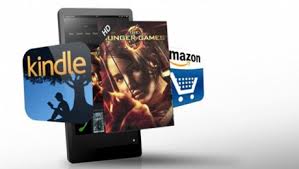
Within a few months, Amazon is expected to introduce it’s first smartphone. Let’s dig a little deeper.
Amazon has worked around the clock to make their smartphone unique in two ways: an intimacy with the Amazon brand and 3D interface like nothing ever seen before. I’ve seen some pictures. I can tell you it’s not the most attractive device in the world. I’m informed the smartphone should be ready for delivery by September 2014. Many sources say it will have 2GB of ram and backed by Qualcomm Snapdragon. Some say the screen will be 4.7 inches diagonally, smaller than many. There’s supposed be two cameras: a 13 megapixel in the rear and standard camera for the phone. Plans and prices of this smartphone are unknown.
But the 3D interface is supposed to be their selling point. Even the wallpapers are expected to be 3Ds. Some application icons are expected to be 3D. They expect to keep the 3D experience through Amazon’s stores, like the bookstore, music store and digital store. I’m not sure if this 3D angle will work or not, but it’s worth a try. The smartphone industry is so competitive it’s critical to have an edge, especially if you’re just coming to the market. Then there’s the effort ir takes to make a phone like this. Surely that’s going to come into play when factoring cost, which is unknown. I heard it will only be released in the US at first, but is that fair to Amazon’s global customers? Do you think Amazon’s first smartphone will be successful?

Apr 14, 2014 | Entertainment, General
In Silicon Valley, there’s an unwritten code of ethics among tech billionaires. They’re supposed to be humble, careful, and at least pretend to care about the world. Someone forgot to tell Larry Ellison.
The founder and CEO of Oracle is the fifth richest man in the world, worth around 50 billion dollars. In September 2013,? he took part in America’s Cup, a race he sold to the city and he was the defending champion of. This race would cost a contestant $100 million to enter. At the same time, the Oracle Open World conference was happening. Thousands were expecting the CEO to be the main speaker. But an hour before he was to take the mic, the people were told, point blank, he’d rather be on his boat competing in the race. That’s where he was.
First of all, they could have scheduled this a little better. They should’ve known Mr. Ellison was going to pursue his $100 million hobby, and that’s exactly where he did. So I can’t fault Ellison for that one. Maybe they’ll do a better job with their scheduling. But there’s something refreshing about Larry Ellison. What you see is what you get. He appreciates his toys and enjoys the fruits of his labor. He doesn’t put on the goody goody face mask some techies do. When I read about how some billionaire or near billionaire donates X amount of dollars, the cynic in me wonders what’s the motive: are they really doing good or just trying to look good to pump up their own company profit. There’s an old saying: when you do good,?don’t let your left hand know what your right hand is doing. I don’t think that will be a problem with Ellison. Plus, I’d always admired people who go against the grain. Isn’t that what Ellison is doing here?

Apr 13, 2014 | General
With a rising company comes rising responsibility. For many companies, one of those responsibilities is being a good lobbyist, assuming there is a such a thing. Over the last several years, Google proves there is.
Just 10 years ago, Google was only around 200th in lobby spending. By 2012, they were in the top ten. Now, they’ve got a 55,000 sq. ft. capital office in Washington. That’s about the size of the whole White House. And their presence in D.C. has put government leaders as well as technological rivals on notice. Consumer rights issues are Google’s main concerns. One top Google lobbyist is Susan Molinari, a former Republican congresswoman out of New York. She explains why Google’s lobby services are needed: “Technology issues are a big ? and growing ? part of policy debates in Washington, and it is important for us to be part of that discussion…We aim to help policymakers understand Google?s business and the work we do to keep the Internet open and spur economic opportunity.”
So what do you think? Now, Google is second to Microsoft in donating to political committees. On one hand, it could be a good thing for Google to have this kind of power. Most of us use Google, and it sounds like they’re standing up for the right things. On the other hand, this could be dangerous. Politicians may be tempted with so much money, power and influence. Our elected officials may forget that it’s voters like you and me who get them in office, not corporations like Google and Microsoft. Or at least that’s the way it’s supposed to be. One of my European friends said only in the US is this normal. But should it be?
Apr 12, 2014 | Security
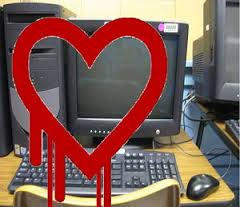
Two days ago, I warned about a mega bug called Heartbleed. Online security experts fear this could be the worst bug of all-time. Now, even more sinister allegations are coming up.
Some witnesses say the NSA knew about the Heartbleed virus, and it’s consequences, for over two years. The Director of National Intelligence sent out an email and vehemently denied this claim. If cyber criminals exploited this flaw, it give them access to countless bank accounts and emails and online shopping accounts worldwide. What would the NSA gain to use Heartbleed? They would collect data from even the most sophisticated hacking organizations. Bud despite that, millions of innocent people are at risk to criminal hackers, and even worse, governments that don’t like us very much. The NSA has been under scrutiny for ten months now, since former NSA employee Edward Snowden revealed the agency was spying on people’s cell phones and computers.
Let me just say: I hope this isn’t true. I know what’s been reported about this agency, and I hope and pray the allegations are just that. But it wouldn’t surprise me. When I look at what’s been reported over the last 10 months, nothing would surprise me about the NSA. I think I know the answer to this one: Is this the last we’ve heard of Heartbleed?

Apr 11, 2014 | Computer technology, Software
How bad do you want Google Glass? Do you want it so bad you’ll go through an exclusive process? Well April 15 may be your lucky day.
That’s because of April 15, Google will sale their portable Glass to anyone. So long as that anyone has $1,500. It’s only available in the US and this somewhat generous offer is for a limited time only. But don’t go looking for Google Glass at any technical store. You still have to fill out a form. This form includes why you want Google Glass. Google has increased the availability of Google Glass use, but you have the be invited to the Glass Explorer program. This offer includes a free shade or frame.
As far as making Google Glass more inclusive, this is a good start. But from what I’ve been reading, and what I feel, if they want to make this wearable computer more inclusive, come down on the price. I’ve heard suggestions of $1,000 (which sounds about right) to $150 (we’re talking wearable computer people, not a Commodore 64). And I say prolong this promotion, for as long as you can. If it sales well, make this available to some other nations. Just be careful which nations you choose. I used to scorn the Glass Explorer program, but now I’m understanding it. I can see why they want to be careful of who takes pictures with the bat of an eye. That kind of technology can be abused so easily. Will you be shelling $1500 for Google Glass?

Apr 10, 2014 | Security, Uncategorized
There is a new dangerous bug threatening systems everywhere called Heartbleed. This bug could be the most dangerous bug in Internet history.
I say that because Heartbleed is so technical and complicated. That’s because unlike other bugs, there’s not very much you can do to protect yourself. The burden of combating and preventing Heartbleed is on the web service, not the web service user. Then there’s encryption, a system used to keep online chatter private. Like if you’re paying for something online, encryption is what keeps other people from looking at the credit card numbers you’re using for payment. One of the most popular ways of keeping encryption secure is using free tools like Open SSL. SSL runs on 2/3 of the Web. But what if there’s a flaw in Open SSL, which is on the majority of the web? That’s what makes it so dangerous. What’s even worse is the flaw and bug is hardly detectable until it’s too late.
But there is some good news: there is something you can do. It’s suggested you change passwords for your following accounts: Facebook, Instagram, Tumblr, Pintrest, Google, Yahoo, Gmail, Yahoo Mail, Amazon Web Services, Go Daddy, Intuit (Turbo Tax), Dropbox, Minecraft, OK Cupid, Sound Cloud, Wunderlist. I’m not here to sensationalize anything. I’m not saying these organizations have been hit by Heartbleed. I have accounts with many of these great organizations, and I haven’t seen anything unusual or alarming yet. So don’t panic about it, but after learning about the potential severity of Heartbleed, I do think we need to heed these suggestions. I know I am. Are you?
Apr 9, 2014 | Computer technology, General
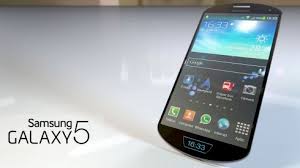
It’s a busy morning and you’re brushing your teeth. You turn around and drop your Samsung Galaxy S5 in the toilet. Don’t worry. According to test, this smartphone will be fine.
This is one of the biggest selling points of the new Samsung Galaxy 5. They’ve done other waterproof test, like freezing it in Jello and submerging it in a margarita. Other selling points include heart rate monitors and fingerprinting. That’s right: Do you have password problems? Just use your fingerprint to unlock your phone; it’s a lot harder for a hacker to copy. This smartphone claims to go back to basics, being simple to use. It has a larger screen and longer battery life than iPhone 5, up to 20 percent. It’s not exactly the best looking phone that’s ever been purchased. Samsung Galaxy S5 will cost you $200 with a two year contract.
There are other things I can talk about with this phone, but I want to highlight on the basics. For a phone of this magnitude, I think $200 plus contract is a decent price, so long as the contract remains fair and honorable. It’s cool that it’s waterproof, but don’t go all Homer Simpson or Peter Griffith. It’s made for water accidents. Leave the testing up to the professionals. Don’t? try these test on your own. It may not be the perfect phone; some say it’s too basic. But hey, isn’t life today complicated enough? It’s release date is expected to be April 11 in the US, UK, and over 100 other nations. Will you be in line to get the new Samsung Galaxy S5?

Apr 8, 2014 | Computer technology, Entertainment, Uncategorized
As you know, today is the last day of Windows XP. I thought we could look back at some other technologies that have left us. Moment of silence, please.
10. Windows XP : It’s been around for 12 years. The following, Windows Vista, was a bust. It was so successful people didn’t want to let go. It’s over. Let it go.
9. Napster: This file sharing, and music sharing website was the target of jokes, lawsuits, and celebrity controversy. In December 2011, they were bought out by Rhapsody.
8. Floppy Disk: Can you believe between 1970-2000, this was the premier way to save and protect your files?
7. Pagers/Beepers: For those born after 1995 here’s how it worked: someone called your pager number. You called them back at your nearest land line phone, even a pay phone. That’s right: you wouldn’t know what a pay phone is either.
6. Commodore 64: For many in the 1980s, this was their first home computer. It ran a family only $595 (around $1,500 in 2014 dollars). An Apple that decade cost you $2,000, that’s in 1980s dollars.
5. Atari 2600: For many in the 1980s, this was your first home video game system. Forget Angry Birds and Halo; we were lucky to have Frogger and Pac Man.
4. Walkman: Headphones, cassettes, and the freedom to blast those racy lyrics your parents will never hear.
3. Personal Digital Assistance: In the ’90s, these electronic gadgets let you organize your so-called personal life. We have smartphones for that now.
2. Record Player/Turntables: This was the premier way of listening to music from the early 1900s-80s. Now, many DJs don’t even use them in the club. The Mac Book serves as their ‘wheels of steel’.
1. Record Stores/Video Stores: No more mega chain stores like Virgin, Tower, Blockbuster. Then again, who needs VCR’s, VHS’s? cassettes, or CDs?
Wow Windows XP. You’re in good company.

Apr 7, 2014 | Entertainment, internet
I know I’ve talked about this many times, but I think it bears repeating. America’s viewing habits are changing. Cable TV is dying a slow death and online videos are taking over.
Now, Yahoo wants a piece on the online streaming pie. Rumors have it Yahoo wants to produce four comedy series, 10 episodes a piece, and with budgets in the millions per series. Before you send amateur videos made in your basement to Yahoo, they’re only interested in using experienced TV directors and producers. This is just one in many steps Yahoo is or has taken to boost ratings and revenue. They’ve hired former news anchor Katie Couric and actor/producer Alexandra Wentworth to host segments exclusive to Yahoo. Then there’s talk of acquisition of News Distribution Network Inc. for around $300 million.
Right now, Yahoo ranks fifth in online video properties, with nearly 45 million as of January 2014. But rival Google/You Tube is #1, with over 157 million videos in that time period. Their nearest competitor, Facebook, has over 84 million. So obviously, if Yahoo is trying to compete, they have a long way to go. But I think these are steps in the right direction. If I were CEO Marissa Meyer, I would host both professional and amateur videos. On one hand, you have well done and even Emmy worthy (House of Cards) programming that will attract viewers and advertisers alike. On the other hand, allowing amateur videos will give more people an equal playing field and to express themselves. And who knows how many stars will be born? Do you think Yahoo can successfully compete in the online video streaming market?
