
Oct 15, 2014 | Computer technology, General
Health care, and how far companies should go to insure their employees, has always been a touchy subject. Now, two technological giants are addressing an even more controversial health issue.
Facebook and Apple is offering women the opportunity for freezing their eggs. They will be the first corporations in US history to cover egg freezing for non-medical reasons. Facebook has already started the process. Apple will start covering egg freezing in January 2015. Here’s how egg freezing works: A woman donates her egg to a fertility clinic and has them frozen. When the motherhood clock starts ticking, she can go back and retrieve them. While this is no guarantee for a future baby, success rates are getting better. This procedure isn’t cheap. It can run someone $10,000 just for one procedure, plus an annual storage fee that can easily run $500. But starting in January 2015, Apple and Facebook will cover as much as $20,000 for egg freezing.
Now why would Facebook and Apple would invest in such a cause? It’s no secret by now Silicon Valley has been working around the clock to recruit women in technology fields. They know the statistics and things aren’t what they used to be. Several times as more women are having children later than they did back in the 1970s. Some say this will encourage women to stay with the same company longer, boosting loyalty cred, cutting down on hiring and recruiting cost, and stopping the ‘revolving door’ effect, when many employees are here today and gone tomorrow. Others say this will give women employees years to build up their career and advance in the company. But critics say that there’s no guarantee egg freezing will produce a child in the future. Some critics say women would compromise their souls to these companies. For instance, if she resigns, quits, or gets laid-off or fired in the future, will that company hold her frozen eggs for random or hostage? Where do you stand on this issue?

Oct 14, 2014 | Entertainment
You remember Edward Snowden? He’s the one who turned virtually turned the federal government and technological world upside down by revealing the NSA (National Security Agency) is spying on people’s computers, smartphones and social media accounts. Now comes Edward Snowden’s documentary.
Submitted for your approval is the documentary called Citizenfour. Launched by Laura Poitras, the documentary hints Snowden was higher in the US intelligent game than most gave him credit for and had rare access to minute-by-minute information on government surveillance. It talks about his current residence in Russia, his relationship with his girlfriend (she moved to Russia to be with Edward), and the reality of being in a foreign nation. Despite Snowden being in Russia, he still has to look over his shoulder. Sometimes, he’ll get a hand written notice warning him that he might be bugged or followed. The movie will be released October 24. It was pre-screened at a film festival in New York City and got some good buzz. In an interview with the New Yorker, Snowden talked about the documentary. He talks about missing his life here in the US and the people he left behind. He also working on a foundation to protect journalist in violently high risk areas.
The question is how many movie theaters will host this documentary? Because of who this is, and because of the controversy surrounding him, many movie theaters may pass on even hosting this documentary. Something tells me this will be heavily restricted to independent theaters. But what about the consumer? I think there will be quite a bit of support for this documentary. In 2013, Snowden was voted second only to Pope Francis in Time’s Person of the Year poll. I doubt the fascination with Snowden has slid that much in the last ten months. How does one live in Russia under his circumstance? Would you see Edward Snowden’s Documentary?

Oct 13, 2014 | Computer technology, networking
Medicine and medical information has come a long way in the past few decades. If you felt you had a symptom, you either called a doctor, or even 911. You’d maybe make a doctor’s appointment or even check yourself in the emergency room.? Now you can look it up online. Google is taking notice.
Google is now working on a Helpouts-style feature where people can chat with doctors online about their symptoms. In these chatrooms and through video chats, people can learn about their symptoms, and maybe even get a proper diagnosis. For example, say that you have back pain. Under this system, you would type in back pain. You could click talk to a doctor now, where you can chat with a doctor online about your symptoms. Below that, there are other illnesses and conditions the patient might have. During the trial phase, Google will cover the cost of these chats. It’s not known how long this trial period will last, or even if this helpout-style feature will even get off the ground at all. But I can imagine this service won’t be free for long. Then comes the debate of how and who will pay for it. Will this be out of the patient’s pocket or can insurance take care of it? At least it would be cheaper and easier than going to a local doctor or emergency room.
But even today, well, especially today, you can feel sick, look up a symptom and still get a bad diagnosis. This can be true even if you look at a respectable medical website. Don’t even get me started on these fly-by-night whack job websites. So maybe getting a real doctor to talk to is a good thing. In order for this Google experiment to work, you need to check, double check and triple check these doctors’ credentials as well as their personal character. If they don’t, they will be no better than the questionable websites. What do you think of this Google, MD experiment?

Oct 12, 2014 | Computer technology
Let’s go to the facial recognition comedy club. It’s not the name of a sketch or local play. It’s not a science fiction movie plot. This isn’t even about a celebrity getting recognized. The truth is far more bizarre.
In Barcelona, Spain, there is a comedy club called Teatreneu. Unlike most entertainment venues, you don’t pay up front. You pay by how much you laugh. It’s .30 Euros (that’s about 38 cents in US) per laugh with an 18 Euro maximum (about 23 dollars in US). How do they measure the laughs? They do so by facial recognition. There are tablets installed to every seat and each tablet is equipped with software that monitors facial expression. If you laugh, the tablet picks it up and charges the consumer per laugh. You would think this would creep many out. On the contrary. Facial recognition has driven attendance up and revenue has risen 6 Euros per customer. It’s so popular that it’s being popular through other parts of Spain, and maybe even other parts of Europe. One London, England comedy club owner joked she wouldn’t mind having such a system, so long as the faces being recognized aren’t leaked to the NSA.
That joke is so funny because there’s a lot of truth to it. In airports, there are using facial recognition to determine if you even make your flight or are considered a terrorist risk. It’s also been a key factor in the technology vs. privacy debate. So while this does sound cool and convenient on the surface, there is some concern here. What if facial recognition technology is used to abuse others of their civil liberties? I’m not saying they will, but can we guarantee, that major corporations and governments won’t? Can we really trust the entities of the world to do the right thing when it comes to facial recognition?

Oct 11, 2014 | Malware, News, Security
When will it ever end? First there was TJ Max and Marshalls, then Target, then Neiman Marcus, then Home Deport. Now, Kmart has been hack attacked.
Yesterday, Kmart’s parent company Sears released information to the public claiming between September and early October 2014, Kmart’s payment system was compromised. The source was a strengthened malware that couldn’t be detected or beaten by Kmart’s antivirus system. The malware was removed, but a little too late. Debit and credit card numbers were already hit. We don’t know how many cards were affected or the specific malware used. Nor do we know who the hackers are.? Those who shopped Kmart online aren’t affected. Social security numbers, pin numbers, email addresses and other personal information wasn’t targeted. It’s just credit and debit card numbers of those who shopped Kmart between September and early October 2014 that were targeted.
This is the worst time this can happen to Kmart. This discount department store chain, which has been part of the American fabric for decades, will be closing down many stores and costing many jobs. So it’s time to call your credit and debit card company, again. It’s something I suggest we do regularly. Check your bank account often; don’t wait for potential chaos to strike.? I say we should even use cash when we can. I don’t see this hacking trend going away any time soon. Then again, I hope I’m wrong. When will it ever end?
Oct 10, 2014 | General
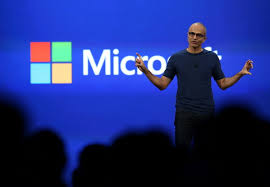
Being the CEO of a major tech company like Microsoft isn’t easy to start with. I’m sure current CEO Satya Nadella is finding that out. He found that out even more so in the past 24 hours.
There was a conference in Arizona called Grace Hopper Celebration of Women in Computing. Mr. Nadella took the stage and attempted to address the issue of? pay inequality between men and women. He said women should have faith in the system to give them a raise, and “It’s good karma. It will come back.” Whoops. The audience wasn’t happy with that response, and he quickly tried to clean up the mess he made. Within hours of his controversial comment, Satya Nadella wrote a letter. The letter said he was honored to talk to women in the technology field and he answered the question wrong when it came to pay raises. Mr. Nadella further stated his belief that both genders should be paid and treated equally and if you think if you’re deserving of a raise, you should ask. He credits the Grace Hopper Celebration of Women in Computing for teaching him a valuable lesson. I think he’s learned it.
When we speak at conferences like this, we have to pick and choose our spots. This was a conference celebrating women in computer technology. Also, keep in mind women are often paid less than men for doing the same job. So to tell women to have faith in this system at a conference empowering women was a bad move on Mr. Nadella’s part. But I am impressed with the way he handled it afterward. He saw his mistake, owned up to it, is doing his best to make amends, and is now trying to move on. So though pay inequality (and wealth inequality in general) are topics that need to be addressed, I say give Satya Nadella a break. What do you say?

Oct 9, 2014 | Computer technology, General
Today, Fortune Magazine released the top 40 most powerful and influential people around the world under 40. Those in technology virtually owned this list.
More than half the men and women on Fortune’s Top 40 list are in the technical field. Of the top ten, seven are involved in technology. Of the top twenty, thirteen of them were tech leaders. But the rankings were a bit surprising. I was expecting Facebook’s Mark Zuckerberg or Twitter’s co-founder Jack Dorsey to take the top spot. But there was a tie for #1: Uber’s Travis Kalanick and Airbnb’s Brian Chesky. It’s been explained these men top this list because of the revolutionary and controversial effect Uber and Airbnb are having on the world. With Uber, you can flag a taxi cab on your smartphone and a lot of cabbies don’t like that. With Airbnb, you can book house guest rooms and weekly hotels as well as some mainsteam hotels, changing the way many people vacation. Mark Zuckerberg placed second on the list. Surprisingly, Jack Dorsey only placed eleven. Almost everyone uses Twitter these days, so I’m a little shocked at that one. Whats App co-founder Jan Koum made number 5. Instagram’s Kevin Systrom’s made #8 and porfolio manager Jesse Cohn rounded out the top ten.
Women made their presence known. Thirteen made the top 40 list. The highest ranked is Yahoo’s Marissa Meyer. Despite the challenges and turbulence still surrounding Yahoo, Fortune Magazine ranked her the sixth most influential person under age 40. Snapchat COO Emily White is ranked 14 and Twitter General Counselor Vijaya Gadde placed number 28. Though almost half the Fortune under 40 list was made up of non-whites, not all the news of diversity was good news. Only two were African-American, Urban Compass founder Robert Reffkin (#29) and Walker and Co. founder Tristan Walker (#35). Unfortunately, I found no Latinos on this list. Diversity is an issue the technology community have been wrestling with for a while now, and it seems they have a ways to go. What do you think of the Fortune Magazine top 40 under 40?

Oct 8, 2014 | internet
Facebook doesn’t seem like the place one would choose to remain anonymous. Now they’re working on an app where you can still be you…well…kinda.
This social media site is working on a mobile-app where users can get on, through their page, but not have to use their own names, thus remaining anonymous. In fact, secrecy is being taken so seriously on this app that the people revealing this app insists on remaining anonymous. The app should be released in the weeks to come, or at least we should hear more about it by then. The ironic thing is this is virtually the opposite of what Facebook has built itself up to be. It’s always prided itself on the real you reuniting with real family, friends and people from yesteryear. Facebook product manager Josh Miller leads this anonymous app creation. If this app is successful, it will let users to use aliases to talk about subjects they may not be comfortable with online, or in real life. Planning is very much in it’s early stages. Will this app allow anonymous photo sharing? And how will this work with friend interaction? Recently, Facebook has seen the importance and increasing popularity of anonymity. Like earlier this year, CEO Mark Zuckerberg said app makers can use anonymous tools to log in.
But will the anonymous app work? Like anything else, this app can be used for good or evil. This app can be used to protect users from cyber bullying, extortion or exploitation. But an anonymous user can also use this app for criminal and down right wicked purposes. In an era where privacy may as well be on the endangered species list, I can see the concern and why many would want to remain anonymous. Some of my Facebook friends use nicknames as their Facebook headings. If you were to use a Facebook anonymous app, how and why would you use it?
Oct 7, 2014 | Security
The historic and international telecommunications company AT&T has announced a security breach. And this was an inside job. An employee allegedly comprised approximately 1,600 customers’ social security and driver license numbers.
A letter was sent to the Vermont attorney general. According to that letter, the breach happened in August 2014. The letter further states this employee violated strict rules and regulations by accessing account information without management’s knowledge or approval. The letter states the employee/hacker could see social security and driver license information and Customer Propriety Network Information (CPNI). What CPNI means is data collected by AT&T, or whoever the phone company may be, about customer’s telephone calls. This CPNI includes the time, date, phone number, even the customers’ phone subscription. It even knows the duration of each call on your phone bill. The kind of CPNI this letter talked about dealt with services customers buy from the company. This letter was composed by Mr. Micheal A. Chairmonte, AT&T’s director of finance and billing. The suspected employee no longer works for AT&T. They’re offering customers directly hit by the breach free credit monitoring and recommending customers change their passwords before anyone else gets hit.
Well, this is a good start, big emphasis on the word start. Now that we know 1,600 customers are being notified, they won’t release the name of the culprit.? We need to know who this hacker was. That’s a start. And it’s not enough that this anonymous person can be fired, which I’m glad he/she was. This hacker needs to be prosecuted and brought to justice. Maybe this is already happening. But until it does, this hacker will go to another company, or in his/her own privacy, and continue to compromise innocent people’s information. We’re just learning how many people may have been breached. The number could be even larger than 1,600. I have an idea: Shouldn’t the customers directly affected by this breach be entitled to a month of free service?

Oct 6, 2014 | Backup, Computer Repair, Computer technology
Hewlett-Packard, one of the biggest computer makers ever, is splitting up. The newer company will aim at building computer storage, data service equipment, software services and other business technical services. The other company will continue to build computers and printers.
Both companies will still be traded on the New York Stock Exchange. The new business technology oriented company is called Hewlett-Packard Enterprise. This split up will be official around October 2015, when their 2015 fiscal year ends. The split will take place under the leadership of Meg Whitman, HP’s chief executive. She didn’t like the split at first, but after watching her competitors on all sides thrive, she saw it was necessary, believing this will give the company a much needed competitive edge. They’re not the first and only ones to do this. Other mega tech conglomerates from IBM to Microsoft have either split up their company or gone totally private (which means they don’t have public shareholders to answer to).
Hewlett-Packard has been struggling for years now. In fact, this split up is part of the company’s five year program to turn things around. It goes to show you how critical business and cloud technology has become. These days, millions of systems can become one entity, thanks to the cloud. This cuts the server out and computers can interact with each other better than ever before. As more businesses realize this and change their storage and data habits, Hewlett-Packard couldn’t have picked a better time to take advantage of this trend. But this company has been through so much in recent years. This divide will split over $112 billion worth of revenue. Stocks are up 5% thanks to this move, but this move will also cost 5,000 jobs.? Can HP use this split to turn the company around? Will HP Enterprise succeed by serving businesses with these critical services? Or will it be too little too late?
