
Apr 13, 2014 | General
With a rising company comes rising responsibility. For many companies, one of those responsibilities is being a good lobbyist, assuming there is a such a thing. Over the last several years, Google proves there is.
Just 10 years ago, Google was only around 200th in lobby spending. By 2012, they were in the top ten. Now, they’ve got a 55,000 sq. ft. capital office in Washington. That’s about the size of the whole White House. And their presence in D.C. has put government leaders as well as technological rivals on notice. Consumer rights issues are Google’s main concerns. One top Google lobbyist is Susan Molinari, a former Republican congresswoman out of New York. She explains why Google’s lobby services are needed: “Technology issues are a big ? and growing ? part of policy debates in Washington, and it is important for us to be part of that discussion…We aim to help policymakers understand Google?s business and the work we do to keep the Internet open and spur economic opportunity.”
So what do you think? Now, Google is second to Microsoft in donating to political committees. On one hand, it could be a good thing for Google to have this kind of power. Most of us use Google, and it sounds like they’re standing up for the right things. On the other hand, this could be dangerous. Politicians may be tempted with so much money, power and influence. Our elected officials may forget that it’s voters like you and me who get them in office, not corporations like Google and Microsoft. Or at least that’s the way it’s supposed to be. One of my European friends said only in the US is this normal. But should it be?
Apr 9, 2014 | Computer technology, General
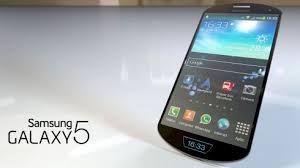
It’s a busy morning and you’re brushing your teeth. You turn around and drop your Samsung Galaxy S5 in the toilet. Don’t worry. According to test, this smartphone will be fine.
This is one of the biggest selling points of the new Samsung Galaxy 5. They’ve done other waterproof test, like freezing it in Jello and submerging it in a margarita. Other selling points include heart rate monitors and fingerprinting. That’s right: Do you have password problems? Just use your fingerprint to unlock your phone; it’s a lot harder for a hacker to copy. This smartphone claims to go back to basics, being simple to use. It has a larger screen and longer battery life than iPhone 5, up to 20 percent. It’s not exactly the best looking phone that’s ever been purchased. Samsung Galaxy S5 will cost you $200 with a two year contract.
There are other things I can talk about with this phone, but I want to highlight on the basics. For a phone of this magnitude, I think $200 plus contract is a decent price, so long as the contract remains fair and honorable. It’s cool that it’s waterproof, but don’t go all Homer Simpson or Peter Griffith. It’s made for water accidents. Leave the testing up to the professionals. Don’t? try these test on your own. It may not be the perfect phone; some say it’s too basic. But hey, isn’t life today complicated enough? It’s release date is expected to be April 11 in the US, UK, and over 100 other nations. Will you be in line to get the new Samsung Galaxy S5?

Mar 20, 2014 | General
Are you tired of those ads on your mobile device? Guess what? They are not going anywhere anytime soon.
In 2013 alone, mobile ad spending?more than doubled?from what it was in 2012. It’s now up to nearly $18 billion worldwide. That trend is expected to increase this year. By the end of this year, mobile spending ad should increase to around $31.45 billion. Google and Facebook alone made up for around two thirds?of the difference. Twitter Pandora and YP made up a combined minor percentage, while ‘others’ made up to around 25 percent. It’s also estimated by eMarketer mobile ad devices now make up for over half of all digital advertising.
Clearly, this is the wave of the future. But I noticed only Facebook and Google made up for over half of the entire mobile ad market. I always thought Twitter was the more popular social media site, especially among the younger generation. Yet they only have around 2.5% of today’s mobile ad market. What about You Tube, as much as it’s grown? And what about Netflix? It’s one of the fastest growing avenues of entertainment today. Have you guys seen House of Cards recently, and how much buzz it’s getting? Why are Google and Facebook dominating the mobile ad market?

Feb 28, 2014 | General
In the San Francisco and Silicon Valley area, there has been widespread protest over techies’ use of the public transit system. Google wants to make up for the troubles.
Google?is donating 6.8 million dollars to fund free public transit rides for children and teenagers age 5-17. It’s one of the largest private grant fundings for any reason?in San Francisco’s history. So far, over 30,000 people have taken advantage of this generosity. The controversy started when Silicon Valley tech companies began using public bus stops to pick up employees in their private vehicles. Community activists have called for tech companies to invest more in the Bay Area, but despite this kind of funding, the protest continue. Some say this doesn’t generate revenue.
I see a lot of underground tension on both sides. First, community leaders and local politicians should be thankful for this generous offer. Some say it doesn’t generate revenue, but yet they got 6.8 million dollars in more business. And think of the one less burden parents have to deal with, especially those that are struggling. So I say have?a little more gratitude. But I can see why some leaders are so suspicious. For Google to make this move in the wake of this controversy. Why be so generous now and towards this particular cause? Is Google really donating in the name of community or trying to bribe the community into it’s good graces?

Feb 18, 2014 | General, internet, Uncategorized
Silicon Valley has become iconic for the many Internet and tech companies that are there. It’s a region in Central California south of San Francisco/Oakland that all of us in the industry owe a debt to. But that might be changing.
Due to the long commutes home, and the not so good public transportation in Silicon Valley, some are proposing Silicon Valley be moved to Oakland. You see, many employees live in San Francisco and some companies are settling there. But keep in mind it’s one of the most expensive cities in the US, and that will start more problems. But Oakland is cheaper and public transportation is better. Oakland is also offering tax breaks. I know, when people think of Oakland, they think of poverty, crime, gang banging, prostitution/pimping, and no opportunities. It was voted one of the toughest cities in the USA. But I see an opportunity here.
If Silicon Valley moves to Oakland, this could change the city’s reputation. I’m sure there are a lot of boarded up buildings that could be turned into gold mines of tech offices. It will be an easy commute between Oakland and San Francisco, the kind of commute not needed with a car. And there are some things Oakland can offer, like Jack London Square and the infamous Raiders. But most of all, these tech companies can tap into Oakland’s untapped reservoir: the youth of that city. There is so much potential there. Push the education system to give them a tech based quality education. Hire high school and college kids for lower entry level work, and turn them on. Offer field trips to these headquarters for younger kids. Teach and hire these kids to these corporations. It won’t happen overnight, but this can be good for everyone involved. Will this work?
Feb 13, 2014 | General, Uncategorized
The business and technical world got a lot shorter thanks to a major merger. Cable giant Comcast has agreed to buy cable giant Time Warner.
This move will merge the two largest cable companies in America into one powerhouse! This deal will cost Comcast over $45 billion in cash and stock. Time Warner has been on the selling block for months. Comcast’s offer beat out Charter Communications and billionaire John Malone. This merger brings Comcast 11 million more cable subscribers. They will? now virtually own the New York City cable market.
Am I the only one who worries about what this could lead to? Am I the only one that worries about a monopoly? Comcast has purchased over $65 billion in acquisitions since 2004, one of them being $16 billion dollars for NBC Universal. Of course, that $65 billion doesn’t include this latest Time Warner deal, scheduled to become official later this year. Now sure, this might save a few jobs in the short term, or save an entire company in the short term. But what around the long term? What about when cable bills go sky high and there’s nothing the consumer can do because there’s no competition? What about if a small company wants to get started but are shut down by he big boys immediately? What are some of the positive aspects of Comcast buying Time Warner, if there are any?
