
Dec 6, 2015 | Computer technology, Security
Is there someone on your Christmas list that wants a Hello Barbie? This is a consumer alert. The Hello Barbie could be a major technological security risk.
It’s not me saying so. Some of the greatest cyber-security minds in America found major security flaws in the popular Hello Barbie doll. She’s the first Barbie to use the Internet and artificial intelligence to communicate with her consumers. According to Bluebox Security, Hello Barbie’s cloud storage and mobile app are venerable. The deficiencies can allow hackers to listen in during playtime with Barbie. Barbie’s creators at Mattel are already on it. So is Toy Talk. Toy Talk is the toy tech company behind Hello Barbie’s voice. A Mattel spokesperson issued this statement:?”We are aware of the Bluebox Security Report and are working closely with ToyTalk to ensure the safety and security of Hello Barbie.” Toy Talk’s co-founder Martin Reddy released a statement assuring the public that many of these hacking threats were already fixed. But consumer advocates and privacy rights?groups raised concerns even before this disturbing Bluebox Security report. The report just backs up their claims. Here’s how the talking part works: The user presses a button. The user is recorded, then sent to an online audio file where it’s processed. Hello Barbie responds to the child’s comment with one of thousands of Barbie’s pre-recorded messages. Parents must express consent and set it up through a mobile app before the child can use it.
My question is: Why would someone want to hack a child’s conversation with a doll? How lowdown does one have to be? Maybe, at best, parents and guardians can use it to see what their child is really up to or analyse their child. But we didn’t need to go this far when I was growing up. And most of us turned out okay. But something tells me hackers could use these deficiencies for something far, far more sinister. And who says it’s just hackers? Could the NSA and other agencies use Hello Barbie for their own spying and surveillance purposes?

Dec 4, 2015 | Computer technology
Yes, laptops and tablets and smart devices are booming. No, the desktop isn’t dying. But don’t go to sleep on wearable technology.
From the looks of things, smartwatch and fitness tracking devices are very high on consumers’ Christmas lists. In Q3 2015, companies shipped 21 million wearable devices worldwide. That’s almost triple the number of such devices shipped in Q3 2014. Fitbit leads the charge with 22% of the market share, as far as the top five companies are concerned. I’ll get to that later. Apple and Xiaomi placed second and third, with 19 and 17% of the market, respectively. Garmin and BBK round out the top 5 with a combined 7 percent of Q3 2015 market share. But guess which category leads the pack? The ‘others’ lead it. The ‘others’ sold over a third of all wearable technology devices just in the Q3 of this year. The wearable technology boom has made Fitbit a household name, thanks to Fitbit Change and Fitbit Surge. More than 70 of the world’s top Fortune 500 buy from and/or endorse Fitbit. They’re beating Apple, though Apple Watch sales are increasing. Chinese based Xiaomi has grown the fastest. At this time last year, they only shipped 400,000 smartwatches per quarter. Now, they’re selling 3.7 million per quarter. It’s expected smartwatch sales will increase quarter by quarter and year by year.
But what strikes me is how well ‘other’ wearable technology devices are doing. This tells me the door is wide open and the sky is the limit for smartwatches, wrist monitors, and other wearable technology. An relatively young company like Fitbit is beating big and bad Apple in this field. This gives me hope this trend is worth trying. This gives me hope that the American free market economy isn’t dead yet. The smartwatch market today is ripe for anybody to be the next big tech innovator? Will you be that next innovator?

Nov 30, 2015 | Computer technology
Other than the smartwatch, the other new technology is the drone. Amazon leads the drone movement. Amazon’s new revelation they’ve already gone beyond the old helicopter style.
Now, Amazon debuts their new Prime Air drones. It’s more helicopter than airplane. In fact, the only thing helicopter about it is the vertical take-off and landing. It flies horizontal like a passenger jet. This is made to fly faster and be more effective in deliveries. The Prime Air drone can fly 15 miles per trip and can go as fast as 55mph. A former Top Gear host named Jeremy Clarkson narrates a video promoting Amazon‘s new drone. After Prime Air lands on the intended target, it will find a landing spot on it’s own. Of course, users can help by marking their yard or area with a Amazon logo. It will drop your package and fly on to it’s next destination. One Amazon spokesperson boasts one day, we’ll see Prime Air drones as regularly as we see mail trucks today. But don’t expect to see them in the air now. This service will probably be more popular in rural areas. Can you see Prime Air drones flooding the skies in Manhattan, Miami, Chicago, Los Angeles, or other major metropolis?
My question is: Have the FAA even approved Amazon for drone delivery service? I know drones are becoming more popular for personal use. And corporations are pushing for commercial use. I get they’re trying to be ready for that time when commercial drone service is legal and ready to go. Maybe Amazon and other corporations should spend more time and energy getting Washington to approve these drones for commercial use. Until that happens, then all of this time, money and energy is virtually pointless. What do you think the top priority should be: Getting commercial droning approved or building the best drones you can?
Nov 20, 2015 | Computer technology
Let’s go back to November 20, 1985. The Cosby Show was the #1 show on TV, the Chicago Bears had their best season ever, and “We Built This City” was #1 on the radio. Meanwhile, a technological revolution was underway.
On this day 30 years ago, Windows was born. On November 20, 1985, Microsoft released this software and computer technology was never the same again. The 1985 Windows may be primitive by 2015 standards, but it paved the way for long-term support software. In fact, Windows 1.0 was supported until New Years Day 2002. Windows XP, released in 2004, lost it’s support in 2014. In 1988, Windows 2.1 came out. This was the first software system to support multitasking, and this was before the word ‘multitasking’ was a part of American psyche. In 1993, Windows 3.11 and the 32-bit network supporting helped prepare the way for the early days of consumer Internet. But many came to know Windows 95 and Windows 98 through a slew of TV commercials and other venues of advertising. By the late 1990s, with the Internet taking off, Windows was becoming a culture icon as well as computer software technology. But it wasn’t all good. Windows 98 was also known for creating the infamous blue screen of death. The second Windows 98 didn’t help matters.
Though 2001’s Windows XP was an improvement, as was 2004’s XP Service Pack 2, Vista became little more than a pop culture punch line. In 2015, Windows 10 was released. As far as we know, there won’t be a Windows 11, 12, or any new Windows future release. They’re going to make improvements to Windows 10 as needed. I feel a lot will be needed. I don’t say that to hate on Windows 10. I say that because technology is changing so rapidly today. For over half the 30 year period, the desktop PC was the dominant computer. Now there’s the laptop, tablet, smartphone, etc. Windows has a lot of competition now. Where do you see Windows in the next 30 years, or by 2045?

Nov 19, 2015 | Computer technology
Who wants X-Ray vision? Remember when that superpower was limited to our superheroes and villains? Soon, people like you can have x-ray vision.
It can track people using radio signals. This tracking can be put in your smartphones, video game consoles and health care systems. Scientists at MIT (Massachusetts Institute of Technology) are building systems that beam out human radio waves. Receivers pick up reflections. They’re processed by algorithms and map people’s live movements. This system of radio systems and wavelengths can travel through walls. This is how you get the x-ray vision. This system is called RF-Capture. Researchers at MIT brag about how they can identify 15 people walking through a wall. One MIT Ph.D. says you can look at a person from the inside out…literally. Not only can you detect them through walls, you can see their heart rate and breathing rate. They say RF-Capture will help build better games, especially ones where you play with your whole body, and not just with a controller. MIT isn’t the only institution interested in RF-Capture tracking technology. Earlier this month, they had a?SIGGRAPH Asia conference in Japan. One of the highlights was using radio waves 1,000 times greater than WiFi, to improve RF-Capture technology.
Scientifically, this is unprecedented. They’re accomplishing things that I use to think could only be done in sci-fi movies. But I’m concerned about the social ramifications. Government agencies around the world could use RF-Capture to track every move you make every second of the day, even what goes on in your bathroom and bedroom. Not only that, anybody with a smartphone could track your every move with RF-Capture. This includes nosy friends and family members, crazy exes, disgruntle workers and bosses, and overall criminals and psychopaths. They can know your every move. Yes, superheroes used x-ray vision to beat the bad guys. But this isn’t a movie, and we don’t even know who the bad guys are. So do you trust RF-Capture, or better yet, do you trust those who will use RF-Capture?
Nov 1, 2015 | Computer technology
Technology and technology ownership has changed dramatically since the beginning of the decade. This is particularly true with smartphones and tablets.
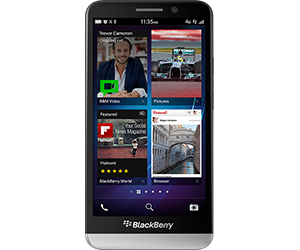
In 2011, 35% of Americans owned smartphones. Today, it’s 68%. Smartphone ownership has almost doubled in such a short time. Ninety-two percent of Americans own some kind of a cellphone. In some demographics, smartphone use and ownership has about peaked out. Statistics say 86% of Americans age 18-29 have a smartphone, as do 87% of those aged 30-49. And 87% of those making over $75,000 a year have one. Tablet computer use has also skyrocket since the beginning of the 2010s. In 2010, only 3% of American adults owned a tablet. Now, that number is 45%. Tablet computer ownership has grown fifteen fold so far this decade, and shows no signs of slowing down. But these are about the only technology devices that have seen rapid increases in ownership in recent years. Other devices have either leveled off or have been in decline. For example, 40% percent of Americans own a MP3 player, compared to 47% just five years ago. E-Book readers have apparently peaked out. In 2009, 2 out of 100 Americans had one. Two years ago, that peaked to around 30%. Today, nineteen percent of Americans own e-book readers like Amazon Kindle. Desktops, laptops, and gaming consoles have remained steady in ownership this decade.
What’s to make of all this? It should be no surprise MP3 players have taken a decline. Smartphones and the iPod Touch has taken that market over. In fact, I’m surprised that many people even have MP3 players today. I am a little surprised that e-book devices have taken a decline. Maybe it’s because smartphones are seeping in that market too. Or maybe it’s because people really do miss the feeling of a good old hardback or paperback book. But just like desktops, laptop, and game consoles, smartphones and tablets will eventually peak out. That means they will no longer become trendy phenomenons but normal necessities. Or are they already?
