
Sep 5, 2017 | General
Yesterday was Labor Day. It’s a day we remember the sacrifice and hard work of the American laborer. But the holiday brings sadness too, especially in these 2010s. Because it seems many young Americans gave up on the American Dream. So let’s talk young people, the American dream and technology.
So yesterday in Boston, near our computer service shop, they had a march. Fast food workers went on strike. They demanded a wage increase to $15. But what does technology have to do with this? Well, other cities and states did raise the minimum wage. What did some fast food chains do? They fired all the workers, then replaced them with robots. Because in their eyes, robots are cheaper than human beings. I know that sounds awful, but that’s how many business owners and managers think nowadays.
However, at least these fast food workers have some belief in the American dream. According to one poll, only 42% of 18-29 years olds have a favorable view of capitalism. That’s an all-time low. In fact, 33% say they outright prefer socialism/communism. That’s disturbing. ?What is wrong with young people, the American dream and technology? ?I think history and circumstance have huge roles to play.
In 2017, the average college graduate was born between 1994-1995. They were in elementary school when 9/11 happened. Imagine how traumatizing that must have been for a first or second grader. So your childhood is already full of fear and anxiety. Then, when you’re in junior high, the Great Recession starts. You see parents, neighbors, and friends lose their jobs, houses, cars, etc. So now you’re in high school and college. You look for a part time job. Sorry. Somebody with a Masters degree or a parent feeding their three kids needs that job more than you. So you get no work at all.
Go to college, the Baby Boomers say. You do. You graduate. Everybody is so proud. But it takes you a year to find a job. Meanwhile, you’re $100,000+ in student loan debt. Your job is in Silicon Valley, or Seattle, or Boston, or New York City, or Washington, DC. You know how high rent is up there? Jobs in your hometown are scarce, or non-existent. Nobody wants to rent to you, so you’re stuck in daddy’s basement. No woman wants to date a jobless person living in the basement. But speaking of technology, you have your adult film websites. So what do you care what women think, but that’s another subject for another time.
So do you see how this just breeds hopelessness? You see why so many young adults are turning to socialism and hating capitalism? What can we do to bring back young people, the American dream and technology together again?
Sep 4, 2017 | Uncategorized
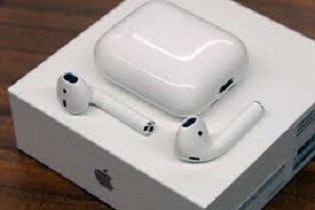
They can say 2017 is the year of the wireless headphone. So far in 2017, over 900,000 wireless headsets were sold. And that’s in the USA alone. Also, there are still four more months to go. But one company and one product tops them all.
I’m talking about Apple and their Air Pods. They came out around a year ago. However, they account for 85% of the sales of all wireless headphones. When Apple says their Air Pods are wireless, they mean it. Two small pods go into your ear. That’s it. A lady in our Boston computer service shop came in with some on. The only disadvantage: she forgot she had them on. We had to yell to get her attention.
But watch out, Apple. Because you do have competitors. Base, Sony and Beats all have wireless headphone products. Critics say they’re equally as good as Apple, if not better. We can thank the shift to Bluetooth for this trend. Also, we give credit to Bragi and Doppler Labs. Because they’re the ones who first made wireless earbuds. Furthermore, this technology goes deeper than just listening to music. For example, Samsung has headphones that also includes heart rate monitors. It has 4GB for music storage.
Then there hearing buds that Doppler’s provide. Remember when we had to yell to the lady because of her Air Pods? Well, these Doppler’s have an external microphone. This microphone helps two people have conversion at a loud raucous bar, or tune out crying babies and/or complaining, annoying adults. So 2017 is the year of the wireless headphone. Yes, Apple leads the charge, but there are many who want to take that throne. From what I’m reading, they very well could. In fact, some should. I’d love to have Air Pods that tune out distraction as read your heart rate as well as play your music. What is your favorite wireless headphone?
Sep 3, 2017 | Smartphone
In China, they have networking company Huawei. So that’s kind of like the AT&T or Verizon of China. So why am I talking about a Chinese networking company and I’m in a Boston computer service shop? Because Huawei has the artificial intelligence smartphone.
They call it the?Kirin 970. Let’s start with the chip set. It has 5.5 million transitors in one centimeter. They say it’s 8-core CPU and a 12-core GPU is 50x more efficient than the average smartphone. It should also give 25 times better performance Then they tested the chip set. It processes 2,000 images per minute. So why is all this important? Because they want to use Kirin 970 as a platform for AI, making this the artificial intelligence smartphone.
In fact, the Kirin 970 is part cloud AI and on-device AI. According to a Huawei spokesperson, AI will play a major role in the future of smartphones. They want AI to give smartphones better voice, data, and image facilities. However, when they say AI will ‘disrupt’ the smartphone experience, that concerns me. But even they say AI will make heavy demands on computing, energy, and cloud services. Maybe that’s why they’re taking their time.
Huawei leaders say the artificial intelligent smartphone will be complete around 2020. They’re even trying to make it more intelligent and give it almost human like capabilities. So even after they make the phone, they have to promote it. This is scary and exciting at the same time. Yes, this phone will be able to do things we can’t even dream of. But what if it can do too much for us? There’s already debate about AI taking human jobs. Could the AI smartphone add to that worry? So we have at least 2 1/2 years before this kind of phone comes out. Would you buy the artificial intelligence smartphone? And how much would you pay?

Sep 1, 2017 | News
Today, President Trump may make even more enemies. Because today, they expect him to end DACA. They call the program Deferred Action for Childhood Arrivals. So this program lets young adults who came to the US as children to stay in the US. However, they have to have work permits. This is the story of Trump, Silicon Valley and DACA.
The Obama Administration started the program started with 2012. For five years, it protected hard working young adults, they nickname them Dreamers, from deportation. These workers do not yet have documents. But today, President Trump may change that. White House insiders believe Trump will end this legal protection; they also believe he will announce it today.
Most Silicon Valley leaders urge Trump to continue DACA. If they cut DACA, over 800,000 young adults could face the real possibility of deportation. Leaders petitioning on DACA’s behalf include Facebook’s Mark Zuckerburg, Apple’s Tim Cook and Google’s Sundar Pichai. Then there are the 300 other CEOs. Many of them are from Silicon Valley companies like Linkedin, Lyft and Netflix. They signed a letter saying how critical Dreamers are to the US economy. In fact, Mark Zuckerberg said, “We need a government that protects Dreamers”.
What does Trump, Silicon Valley and DACA have to do with IT support and technology? Quite a bit. Because tensions between Silicon Valley and the Trump Administration are already high, and has been since the beginning. ?I thought, or I hoped, they could be at least tolerable with each other. But if Trump kills the DACA program, this could end the comrade. Then ask your self, “Why is Silicon Valley fighting so hard for DACA”? It’s not because out of love, but out of business! Are you aware of how many undocumented workers tech companies depend on? Are you aware of how many tech employees come from China and India alone? It doesn’t take a Ph.D. to figure out why Silicon Valley is so adamant about saving DACA. Where do you stand?
Aug 31, 2017 | Wireless
One thing I try to do is keep up with tech trends. Because even in our Boston computer service shop, people ask about such things. Though I never heard anyone ask about a thermostat, this one caught my eye. So here is introducing the Nest Thermostat.
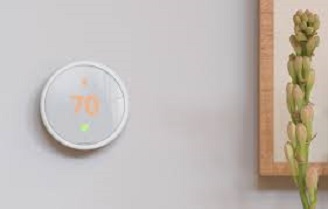
Well, they call this latest one the Nest Thermostat E. Yes, it still takes the room temperature. But this learns your temperature preference. For example, you keep setting your Nest Thermostat E to 72 degrees. Eventually, it will set it to 72 degrees for you without you touching it. It also does your scheduling for you.
However, two thing separate the Nest Thermostat E from other thermometers, ?even it’s predecessor. Those things are the look and price. This one looks less like a smart thermometer. It has a circular white screen with a white ring. This makes it looks more homey and less technical. The older one had metallic rings. The numbers on the new ones on bigger. Instead of telling you the temp through a scale, it just displays the number. You choose whether you want it Centigrade or Fahrenheit. Again, this adds more of a homey feel. The leaf below the temp is pretty nice as well. The price will run you $169. Compare that to the $250 the original Nest Thermostat will cost you. You can control both on your own. Also, you can hook both up to Alexa or Google Assistant.
The Nest Thermostat E will cost less, but it seems to be a better buy. It does get you everything the original does. But this one looks better. That is, if you want one of these. This new thermostat will be available in the next several days. Between you and me, I’m not sold. This hardly sets themselves apart from other thermostats. I mean, what does the Nest do that other thermostats don’t?
