
May 17, 2018 | Computer technology, News
So here’s a digital/tech few talk about: the coming cashless society. Do you think it’s a conspiracy theory? Then why is Japan working so hard to create cashless banks? But they’re not the only ones. Is Australia trying to go cashless?
Effective in 2019, the Australian government will bans cash transactions of more than $10,000. That means you won’t be able to buy anything more than $10,000 with cash. You’ll need a check, credit/debit card, or other for of payment. Basically, you’ll need a form of payment in which they can track you. Australian government leaders say this will combat tax evasion. They also say fight crime like drug dealing, terrorism and cyber robberies and attacks. We’ll see.
So most of us don’t walk around with $10,000 in cash buying stuff. But many businesses, even IT service ones, hate this decision. One man, who runs a security business, says 95% of his business is cash transactions bigger than $10,000. There are other businesses that claim they do millions of cash actions a month. So as you can imagine, they’re not happy about this either. However, on the other side, IT support leaders want this, and not just an Australia. Twitter CEO Jack Dorsey himself wants a day where Bitcoin is the global currency period.
But why am I talking about Australian technology in a Boston computer service shop? Because the cashless society movement isn’t just Australia’s, or Japan’s. In Australia, 32% of all transactions are done through cash. Here in the USA, that number is 37%. This includes little thing, like cups of coffee. India is so bent on digital currency that they’re banning 500 and 1,000 Rupee bills (that equals to $7 and $14 USD). The money scene is changing globally. Computer technology plays a huge role in that. Is Australia trying to go cashless? Maybe I’m asking the wrong question. Is the world trying to go cashless?
May 16, 2018 | internet
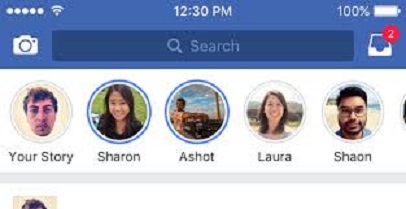
So we all know the trouble Facebook is in. We also know Facebook won’t crawl over and die that easy. This is where Facebook Stories come in. It’s the rise of Facebook stories: weaning off typing.
So yes, there are some Facebook users who don’t like typing their posts. For them, they can post through Stories, a system that uses audio, voice and photos to substitute for posts. Now, they’re banking the rise of Facebook Stories to be their next big thing. However, they’re turning to India, not the USA, for help. Because that nation has lots of languages and dialects, they can use Stories to get their messages across. Did you know India has 22 national languages? Furthermore, India is a major nation for smartphone sales and lots of people take photos with them.
Today, Facebook begins their Stories experiments in India. Hopefully, it will spread to other nations. Then there’s another factor: The rise of WhatsApp and the fall of Snapchat. Recently, Facebook’s WhatsApp past Snapchat in the number of users (450 million to 300 million). They’re even building a Stories archive. Also, they have a new Save to Facebook Camera. That’s a private tab where you can hold your stories.
So it seems like Facebook is bent on making Stories work. Here in our Boston computer repair shop, and on my personal FB page, people use stories. In fact, media companies like ESPN use Facebook Stories. However, in these Stories, nobody is commenting, liking, or sharing. So while Facebook Stories is picking up, it’s clear they got work to do. I was hesitant on why Facebook would use India, but now it makes sense. They have one of the biggest companies in the world, then look at swift rise of their IT support and other technology. Would you use Facebook Stories instead of typing and posting?

May 15, 2018 | Computer technology, internet
So most of us in IT support know what Google Assistant is. To make a long story short, it’s software that does much of your daily planning for you. But they’re taking it even further, coming up with Google Duplex. What is it? Should we embrace it?
Google Duplex makes phone calls to people at your request. However, it uses WaveNet technology?to do so. That’s a speech program that joined sound stogether to create speech. Furthermore, keep in mind you don’t have to type in anything for WaveNet to speak. But it’s really hard to understand when WaveNet speaks. But Duplex adds to Wavenet, and you can actually understand what the robotic voice is saying.
In other words, the Duplex sounds just like a human voice. In fact, I saw some examples where they used Duplex to book hair salon appointments and restaurants. The Duplex voice sounds just like a human voice, even down to the accent. They’re training Duplex strictly for bookings and inquiries. They can’t have conversations like humans can…yet. But their AI is still trying to learn the mystery of human voice and conversation. It realizes each person talks differently. Then there are the languages, dialects, and accents that differ just about everywhere.
Then there are the ethical and moral concerns, like the ones I have. Yesterday in our Boston computer service shop, I debated with a colleague about this. I found the fact that a robot can sound just like a human to take information creepy. There are others that feel the same way. That’s why Google assures they will let people know it’s an AI robot they’re talking to. I hope they can keep that promise because I don’t know how they’re going to do that. Think of all the businesses in the world and customers in the world. Good luck with that one. Because I believe there will come a day where you can and will have full conversations with Google Duplex. It could be an intricate part of our lives. Should we embrace it?

May 14, 2018 | Malware
So for years, we know Android products are venerable to malware. It’s a little better now, but the threat is making a comeback. Android malware is back: the new threat.
Because in the last few days, cyber security company Symantec found not one, but seven different rouge apps. We all thought these fake apps were gone. However, they just got a new publisher. Also, the fake apps are just changing names. Furthermore, these dangerous apps pretended to be productive and even use Google’s imagery in order to hide their real cause. They pretend to be legit. In fact, they even look friendly enough. But in reality, all they want to do is promote scams and infect malware to our devices.
There is good news here. Google took these fake apps down. But they still don’t know how these bad apps got through in the first place. This is especially troublesome after they worked months to make Android products malware free. Or should I say, to make them more malware free. Plus, this kind of malware slipped into Google Play. That’s even more alarming because this rarely happens to Google Play. Yes, malware sneaks in there once in a while. But rarely does it come back as a new strain of malware. In most cases, it shouldn’t be as easy as a name change. But that’s what happened here.
Did I title this blog wrong saying Android malware is back? Should I say, “Android malware never left”? Because not just here, but in IT support in general, we see this a lot. For example, we treat a malware threat. But a year or two later, that same threats comes back because hackers come up with a new way to threaten your computer. It is one of the biggest reasons we have laptops fixed. If Android malware threatened your computer, what would you do?

May 11, 2018 | Computer technology
So as you know, I talk about robotics and AI technology a lot on this blog. You also know I’m very cynical of this kind of computer technology.?This Ted Talk explains why. But I saw some footage that might change my mind. Let’s talk about robotics’ good side: Can they heal?
So robotics company Ekso Bionics provides us with this potential breakthrough. They build exoskeleton robots and other devices. The CEO is Max Scheder-Bieschin. First, I love the faith in his product, saying what smartphones were like 10 years ago. Now look at them today. Then he says 10 years from now, exoskeleton technology will be just as big. Furthermore, Ekso Bionics always had our armed forces in mind.
At first, Esko was about helping soldiers carry weight. Then a Navy Seal became injured. In fact, his injury paralyzed both arms and legs. This changed Bieschin’s goal to helping this man and other injured veterans get their movements back. Then there is Darrell Musick. He’s a physical therapist and an Esko VP. He says their exoskeleton technology helps patients get upright a lot faster. They have over 300 patents. They also say all their technology is getting better, from the electronics, senors, to even their cloud technology.
But you know what impressed me though? The patients they treat. Watching them get up and walk with the help of this kind of IT support. The exoskeleton wraps around their limbs. Then, they get up and can move, get up and even walk. That’s awesome. That is what I mean by robotics’ good side. Personally, what Esko Bionics is doing inspires me. To use robotic technology to help our soldiers is very honorable. I can only hope they can help all people dealing with paralysis. So this story somewhat changes my opinion of robotics… kinda….sorta.
