
Dec 4, 2015 | Computer technology
Yes, laptops and tablets and smart devices are booming. No, the desktop isn’t dying. But don’t go to sleep on wearable technology.
From the looks of things, smartwatch and fitness tracking devices are very high on consumers’ Christmas lists. In Q3 2015, companies shipped 21 million wearable devices worldwide. That’s almost triple the number of such devices shipped in Q3 2014. Fitbit leads the charge with 22% of the market share, as far as the top five companies are concerned. I’ll get to that later. Apple and Xiaomi placed second and third, with 19 and 17% of the market, respectively. Garmin and BBK round out the top 5 with a combined 7 percent of Q3 2015 market share. But guess which category leads the pack? The ‘others’ lead it. The ‘others’ sold over a third of all wearable technology devices just in the Q3 of this year. The wearable technology boom has made Fitbit a household name, thanks to Fitbit Change and Fitbit Surge. More than 70 of the world’s top Fortune 500 buy from and/or endorse Fitbit. They’re beating Apple, though Apple Watch sales are increasing. Chinese based Xiaomi has grown the fastest. At this time last year, they only shipped 400,000 smartwatches per quarter. Now, they’re selling 3.7 million per quarter. It’s expected smartwatch sales will increase quarter by quarter and year by year.
But what strikes me is how well ‘other’ wearable technology devices are doing. This tells me the door is wide open and the sky is the limit for smartwatches, wrist monitors, and other wearable technology. An relatively young company like Fitbit is beating big and bad Apple in this field. This gives me hope this trend is worth trying. This gives me hope that the American free market economy isn’t dead yet. The smartwatch market today is ripe for anybody to be the next big tech innovator? Will you be that next innovator?

Dec 3, 2015 | General, Uncategorized
There’s still three weeks left until Christmas Eve. There’s plenty of shopping season left. But when you look at the last Black Friday, Amazon didn’t just win that race…they dominated!
According to a tracking app called Slice Intelligence Amazon accounted for over 35% of?online?Black Friday sales last week. Electronic retail giant Best Buy placed a distant second, only getting 8 percent of online sales. Rounding out the top five are Macy’s at 3.38 percent, Walmart at 3.35 percent and Nordstrom at 3.11 percent. That’s right: these three retail corporations only got a combined 10% of online Black Friday sales. Amazon itself bragged of it’s online success, claiming a record year for Amazon based product sales. Overall, Black Friday sales rose 7 percent. Some online stores, like Wayfair, tripled in Black Friday sales. This trend continued through Cyber Monday. Amazon did well here, too. But Cyber Monday 2015 was good to Ebay. Their online mobile sales increased 13 percent. Payment processing company Pay Pal says the biggest sales came from toys, electronics and cosmetics. In a statement, Amazon VP of Amazon Devices Dave Limp said millions will be playing with Amazon devices this year. Without giving specifics, hundreds of thousands of Kindle products were sold over this big shopping weekend.
What does this mean? Does it mean an improving economy? Maybe. But there’s a deeper meaning here. People are tired of long lines and fights at the store. More people have mobile devices than ever before. So these factors, and others, mean mobile holiday shopping is the trend of the future. Amazon is the first to cater to this trend, and they do so well. Other major retailers like Ebay are catching on. Then there’s Walmart. They got only 3% of the Black Friday online pie. Maybe it’s because so many of their customers are still in the long lines and wrestling over the last TV or crock pot. Walmart can make it a lot easy on themselves and their consumers by investing more time, effort, and advertising on online sales, especially mobile sales. Or does America’s biggest retailer like long lines and fights?

Dec 2, 2015 | General
Yesterday, Facebook CEO Mark Zuckerberg announced the healthy and successful birth of his daughter. He and wife Priscilla Chan named her Maxima. But it’s Zuckerberg’s letter to his newborn daughter that’s getting lots of social attention.
In his letter to baby Maxima, Mark Zuckerberg promises to make the world a better place for her and her generation. Mark and Priscilla wrote they would give most of their company shares (around $45 billion) to make the world a happier place. Zuckerberg will direct these stocks to ‘advance potential and promote equality’. He made this declaration official by filing it with the US Securities and Exchange Commission, though he intends to hold his majority voting power. He pledges to focus on issues like education, medical care, and making the Internet available to everyone worldwide. Zuckerberg joins other technology leaders who pledge to give much of their wealth to charities and worthy causes. This written promise is called Giving Pledge. Other signers of Giving Pledge include former Microsoft CEO Bill Gates, Facebook COO Sheryl Sandberg, and Oracle leader Larry Ellison. Zuckerberg and Priscilla back such promises. They’re building ‘The Primary School’ in a low income neighborhood in the Silicon Valley area. This doesn’t include the $120 million they’re pledging to San Francisco public schools.
First and foremost, we at Geek Choice congratulate Mark Zuckerberg and Priscilla Chan on the birth of their daughter. I share Mark and Priscilla’s dream of this world being better for Maxima’s generation than it is for us. There’s a lot of work to be done in that area. You just can’t throw money at the problem. The initiatives they’re talking about will take years of hands on innovation, hard work and people skills. They can’t do it alone, either. It will take many, many helping and willing hands. I think the Zuckerbergs are up for the challenge. What do you think?
Dec 1, 2015 | Security, Software
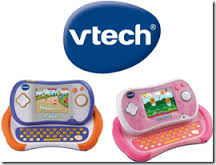
Digital company and online store V Tech specializes in children’s technology products and learning tools. Just in time for the Christmas shopping season, V Tech faces a security crisis.
There’s been a massive breach at V Tech. It’s so massive that investigators and security experts believe up to 200,000 children and 4.8 million parents have been hacked. The only good thing about this cyber attack in no credit card numbers were affected, because V Tech’s database doesn’t contain them. But it’s believed adult names, email accounts, IP addresses and online histories have been compromised. What’s more disturbing is the information of child customers: their names, birthdays and genders were compromised as well. According to news site Motherboard, they stole photos and online chat information. V Tech insists affected customers were contacted. Some accounts were even shut down as a precaution. Security experts are warning more attacks against digital toys are likely. One reason is these toys lack security expertise and software development that most adult devices now have. One such expert believes V Tech missed the mark in securing data and allowed unscrambling the data to be too easy. V Tech is based out of Hong Kong, China. According to Motherboard, an anonymous hacker has claimed responsibility. This hacker says he will do nothing with the data.
Then why did he hack the data to start with? Why did he put millions of livelihoods on the line, including the privacy of over 200,000 children? Couldn’t there had been a better way to prove a point? But I will admit, there’s a point that needs to be made. We need to do a better job securing children’s toys and technology. If we fail to secure our kids’ toys, then we fail our kids. It’s that simple. There’s no telling what kind of predators would take advantage of this. That’s the scariest part of all. What can be done to keep digital toys safe?

Nov 30, 2015 | Computer technology
Other than the smartwatch, the other new technology is the drone. Amazon leads the drone movement. Amazon’s new revelation they’ve already gone beyond the old helicopter style.
Now, Amazon debuts their new Prime Air drones. It’s more helicopter than airplane. In fact, the only thing helicopter about it is the vertical take-off and landing. It flies horizontal like a passenger jet. This is made to fly faster and be more effective in deliveries. The Prime Air drone can fly 15 miles per trip and can go as fast as 55mph. A former Top Gear host named Jeremy Clarkson narrates a video promoting Amazon‘s new drone. After Prime Air lands on the intended target, it will find a landing spot on it’s own. Of course, users can help by marking their yard or area with a Amazon logo. It will drop your package and fly on to it’s next destination. One Amazon spokesperson boasts one day, we’ll see Prime Air drones as regularly as we see mail trucks today. But don’t expect to see them in the air now. This service will probably be more popular in rural areas. Can you see Prime Air drones flooding the skies in Manhattan, Miami, Chicago, Los Angeles, or other major metropolis?
My question is: Have the FAA even approved Amazon for drone delivery service? I know drones are becoming more popular for personal use. And corporations are pushing for commercial use. I get they’re trying to be ready for that time when commercial drone service is legal and ready to go. Maybe Amazon and other corporations should spend more time and energy getting Washington to approve these drones for commercial use. Until that happens, then all of this time, money and energy is virtually pointless. What do you think the top priority should be: Getting commercial droning approved or building the best drones you can?
