Feb 10, 2016 | Computer technology
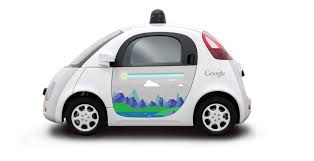
The self-driving Google car has been talked about several times on this website. Like all cars, it must be approved by the federal government before it hits one US street, highway, freeway, avenue, drive, road boulevard or parkway. Google just got a letter bringing their revolutionary car one step closer to that approval.
That letter came from the National Highway Traffic Safety Agency (NHTSA). The letter confirmed the computer driving the self-driving car can legally be the driver (sorry if that sounds confusing). Here is that letter in it’s entirety. I should warn you, reading War and Peace in Russian is easier to understand. ?The current fleet is still being tested at Google headquarters in Mountain Valley, CA. California law restricts them to maximum speed of 25 MPH. The state law also requires a human driver be present at all testings in case something goes wrong. However, there are some guidelines in the NHTSA’s letter. The letter stated that brake pedals need to be accessible to the driver. But since the computer is the driver, then the brake is accessible through electronic means. Therefore, they comply with this rule. The letter shows some conflicts about rear view mirrors. Unlike human driven cars, the Google car has no need for rear view mirrors. It has a full sensor array, so they can skip that rule.
This is where tensions may come between regular and Google cars. I am glad the US government is making sure Google has some accountability. But the fact they can already skip one rule might throw things into whack. What about other car parts humans might need but Google doesn’t? Now let’s say Google goes out on roads all over America, then the world. How do car manufacturers adjust? How will consumers adjust? This car is coming along nicely, and we can’t delay this conversation any longer. Is America ready for the Google self-driving car?

Feb 9, 2016 | Computer technology, internet, scam, Security
Do you know what today is? Yes, it’s Fat Tuesday/Mardi Gras. Yes, it’s voting day in New Hampshire. But it’s also Safer Internet Day.
Safer Internet Day began in 2002 and is celebrated every 2nd Tuesday in February. It’s now observed in 120 countries. It was first observed to help keep children and teens safe online. But over the years, issues like hacking and identity theft became so prevalent the day takes on another meaning. That meaning is keeping you safe from hackers, malware, cyber criminals, even national agencies and world governments. Safer Internet Day is observed by giving tips to keep you and your family safe. We at Geek Choice honor that tradition.
Be careful of what you post and the pictures you upload to social media. Don’t give out your too much information or let the pictures become too risque. Hackers have been known get risque photos and threaten to blast them globally if they don’t get what they want. They’ll use your posts against you too. I’ve read stories where social media posts have gotten people fired, arrested, and even worse.
Change your passwords and change them often. Don’t use easy passwords either. Use passwords that you and only you would know like the name of your elementary school, your first car, or first pet, and the year these things happened (it’s always good to mix alphabetical and numerical signs together).
Get and update anti-virus software. With free anti-virus services like Avast, there’s no excuse not to.
If an email or social media post sounds too good to be true, it probably is. If you get one saying something like, “We have money waiting for you. But we need some information…”, don’t give in. Too many people had been had.
If someone calls you and claim they’re from a legit corporation, like Microsoft , and say you need to pay to get a virus removed, or need your credit card information, don’t do it! Some scammers have put up viruses, then call you claiming to be a Microsoft rep and demand money. Microsoft doesn’t operate like that. If a virus is holding your computer hostage, call Geek Choice.
Parents, monitor your children and teenagers’ computer activities. They’re too many cyberbullies, pedophiles, trolls, con-artists, even terrorists out there to be too relaxed about your kid’s online safety. Talk with your kids and warn them about the dangers out there. Remember, you’re their parent, not their friend. What other tips would you offer to keep innocent people safe online?

Feb 8, 2016 | Entertainment, internet
Another Super Bowl has come and gone. The ads have come and gone. But this year’s ads won’t be as memorable, according to the hashtags.
Hashtags were in 45% of Super Bowl ads, compared to 50% last year. Twitter and Facebook led the social media way, though neither were mentioned that much. A website called MarketingLand counted 60 different ads between the first kickoff and the end of the game (pre-game festivities weren’t counted). Of those 60, 27 had hashtags, 21 had their ad’s website, 3 had their Twitter and 3 had their Facebook posts. This is the lowest count since MarketLand started conducting such research in 2012. That year, only 12% ads had hashtags of them. Of course, four years ago, many of us were still trying to figure this social media thing out. Movies went heavy on the social media. The main movies advertised were Jungle Book, Independence Day Resurgence, and X-Men Apocalypse. They had at least one hashtag, URL, or social media symbol. Another movie, Jason Bourne of the Bourne Identity franchise had none of those. In fact, the majority had none of the those. The rest only had one: either a hashtag, URL, or social media siting. Only one ad, T-Mobile, had a hashtag, URL and social media siting.
So are hashtags a trend in commercial that is fading? I don’t know. But I know this year’s Super Bowl commercials left a lot to be desired. Look at the Doritos commercial. Are they going to convince me Doritos are so good they will make a pregnant woman give birth early? What a joke. And don’t even get me started on those prescription drug commercials they had. Haven’t the pharmaceutical companies saturated and invaded the advertising market enough? Maybe social media companies were just ashamed to be a part of that. I was ashamed at looking at some of those commercials. Is the ad hashtag trend winding down? Or were the Super Bowl commercials just that bad?

Feb 7, 2016 | internet
Is it just me, or is getting decent sleep a thing of the past? Some even boast proudly, “I’ll sleep when I’m dead!” Is Facebook contributing to this trend?
Researchers of a study done by University of California-Irvine seem to think so. They linked lack of sleep to browsing social media sites like Facebook. Researchers monitored the sleep and social media habits of 76 UC-Irvine students. They monitored the students’ computer/smart device use. Researchers studied how often the students texted and used social media apps. Students did surveys in the morning and at night on their sleep. The research studied sleep debt, the difference between the amount of sleep needed and the amount actually gotten. The study proved what most people know all along: Not enough sleep leads to people being distracted easier, essentially saying Blame Facebook. Their attention especially goes to the app screen and social media site. One researcher said,??If you?re being distracted, what do you do? You go to Facebook. It?s lightweight, it?s easy, and you?re tired.? This isn’t the first time a like between social media and no sleep has been proven. Another study? proved teens who text with lights off get less sleep and worse grades than those who text with lights on.
All this study proves what common sense should be teaching us. How many times have you found yourself not sleeping at night? You see what people talk about on Facebook or Twitter. You watch You Tube or Netflix. You Snapchat a friend or throw some selfies on Instagram. Next thing you know, it’s an hour or two before you have to wake up. You started the night getting less sleep. You start the next day getting almost none. Do you know how many times I’ve seen a Facebook post saying, “Who else is awake?” Shouldn’t we turn off the computer/smartphone and get a good night sleep for a change? Do you Blame Facebook for your lack of sleep?

Feb 6, 2016 | Entertainment, internet
Twitter is another company that’s growing up. Late in 2015, they’ve announced changes to make the social media conglomerate even better. According to BuzzFeed, Twitter could introduce an algorithmic timeline sometime in February 2016.
So that nobody gets confused, an algorithmic timeline is very different than a chronological one. The algorithmic timeline will put tweets in the order it thinks people want to see. For instance, it’s Super Bowl weekend. So if someone tweeted about the Super Bowl yesterday, you may see that in your Twitter feed before you see a tweet about what someone had for lunch an hour ago. We don’t know if the algorithmic timeline will be optional or required. This June 2015 article argues this could elevate Twitter’s popular content. Since becoming the new CEO in October 2015, Jack Dorsey has sought out new ways to revolutionize Twitter. Since October 2015, the company replaced term favorites with likes. There’s also talk of ending the 140 character Tweet limit. I don’t know if that would be shortened or expanded. But Twitter’s algorithmic timeline has already been tested among some Twitter markets. Now, it looks like it’s about to expand to all. Twitter leaders and spokespersons decline to comment.
But Twitter followers and consumers are commenting on Twitter’s algorithmic timeline. Most aren’t happy with this potential change. One person said she should be able to control what’s on her feed, not have Twitter control it for her. Another person believes this is going to ruin Twitter. A meteorologist complained this would be a huge problem, especially if a severe weather warning comes up. One man said this is a just another way Twitter will let celebrity tweets go in front of others, and silence regular people. In fact, I haven’t read any comments or postings saying the algorithmic timeline is a good idea. Twitter, listen to your consumers. Without your consumers, there would be no Twitter. The people don’t want this sort of timeline. Some even suggest it could be the beginning of the end of Twitter. So why is Twitter so bent on forcing something the consumers don’t want?
