
Aug 6, 2016 | Smartphone
Wasn’t that a wonderful Olympic opening ceremony yesterday (depends on who you ask)? Today, the games are off to a flying start. Technology helps covers it all. Technology also fights a more serious battle…the battle against the Zika virus.
In the last year or so, the Zika virus spread like wildfire throughout Brazil. The Olympic games were affected. Some Olympians even chose not to participate because of the Zika threat. Smartphone apps are fighting the Zika threat. The WHO (World Health Organization) has the WHO Zika App. It arms you with critical Zika information. It gives general information, symptoms, and prevention measures. And it updates people on the latest Zika related news. The WHO isn’t the only one developing apps fighting Zika. The PDC (Pacific Disaster Center) app tracks Zika all over the world. It highlights breeding grounds. Using GPS systems, the PDC tracks where Zika is most acquired, most suspected, even which areas are most venerable. According to their maps, Columbia and El Salvador are at high risk. This app also reports on earthquakes, wildfires, and other natural threats. Thermometer company Kinsa is doing it’s part. Kinsa uses high tech thermometers to track symptoms and uncover local outbreaks.
All these apps are good to have. If you’re in Brazil, I highly recommend you get one. They’re available on all Apple and Android devices and they’re free. But the PDC app is the most thorough. It gives total Zika cases by nation and by a nation’s region. It gives the number of cases among pregnant women. This is extremely important. It’s believed the Zika virus among pregnant women causes microcephaly. Microcephaly is a condition where babies are born with shrunken heads. This could lead to huge development problems later in life. Brazil is faced with a lot of problems right now. During the opening ceremonies, there were mass protests surrounding them. Let’s hope these apps will keep people safe. I’d like to keep the focus on the games themselves. Don’t you?

Aug 5, 2016 | Uncategorized
Today, the 2016 Summer Olympic games begin in Rio de Janeiro, Brazil. You won’t be glued to your couch for every event for two weeks (At least…I hope not!). Smartphone and the Olympics come together. Here are some tips.
The Olympics are a time of boundless patriotism. We love our American athletes, don’t we? There’s a Team USA app. It’s available on all Apple and Android devices. It gives USA profiles, updates, events, schedules, videos, photos, and other Team USA goodies. Maybe you’re a British fan? You’re in luck. The BBC Sports app does the same thing Team USA app does with American athletes. Both apps are free. Let’s move closer to home. Do you have Olympians in your hometown you’re cheering for? You’ll want the NBC Rio 2016 app. This app partners with your phone’s GPS to get the inside scoop on your hometown heroes. You can see the medal count and winners for various nations and events. There’s the Olympics app. It does what all the other Olympic apps do. But this one is owned by the IOC (International Olympic Committee). With Rio 2016, choose your language and time zone. You get updated at your convenience (it can be every 5 minutes if you want). Like all the others, keep track of your favorite countries and stars. All the apps mentioned are free and available on Apple and Android.
I notice a pattern. All of these apps pretty much offer the same thing. They all offer coverage of your favorite team, sport and athlete. They’re all free and on Apple and Android. It would be nice to have some diversity in these apps. I see no apps are telling you the background these Olympians are competing in. This background includes waterway sewage, inadequate housing, political turmoil, terror threats, poor medical facilities, a crime wave, and police threatening strike because due to lack of wages. I digress. But here are your apps. I wish our athletes the very best. And if I haven’t said it already: USA! USA! USA! USA! Which app will you follow the Olympics with?

Aug 4, 2016 | General
Even the tech industry lacks in some things. Diversity is one of them. Year after year, we see how lily white and male the tech industry often is. Thankfully, that’s starting to change. Apple makes progress in diversity.
As of August 2016, 32 percent of Apple’s US work force are women. Nine percent are Black. Twelve percent are Latino. In Apple’s global employment, 37% are women. They’re making strides in minority hiring. In the last year, 27% of hires represented a minority group. Apple has done several things to bridge the embarrassing lack of racial and gender diversity. They’re recruiting from historically black colleges and universities. Apple is investing in elementary schools to train future tech geniuses. Apple claims to bridge the economic pay gap for women and minority workers. Harvard professor Hannah Riley Bowles has openly criticized Silicon Valley for their lack of women and minorities. Bowles said, “…the numbers are encouraging.” But she wants to see increased improvement over time. Even civil rights leader Rev. Jesse Jackson praised Apple’s progress. Some complain the progress is only because of Apple’s retail stores. Their salaries are less. They could be true or fabricated. But Apple’s Black and Latino representation stands at eight percent. Despite Google and Facebook’s valiant efforts, Blacks and Latinos represent around 4 percent of their workforce.
This is a conversation that needs to continue. It started three years ago. If it didn’t start, we wouldn’t be making this much progress. More progress needs to be made. I applaud Apple’s efforts and results. I know Google and other companies still lack behind. But we can’t let them give up! It looks like they’re doing all they can to hire and attract more women and minorities. In the years to come, I hope to see their numbers rise. Think about the number of Blacks and Latinos who consume Google and Facebook products. I’m just saying. What can be done to increase diversity in the tech industry?
Aug 3, 2016 | Computer technology
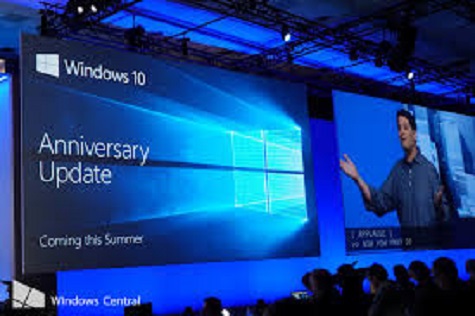
Somebody celebrated a birthday yesterday. Well, a lot of people celebrated birthdays yesterday (happy 39th Tom Brady!). But it Windows Ten’s first birthday. How does Microsoft celebrate?
They celebrate by giving us a new version of Windows 10. Don’t forget: There will be no Windows 11. They stop at Windows 10. Everything else will be updates. This update will be called Windows Ten Anniversary Update. The update is free. But if you have Windows 10, you’re going to get the update, whether you like it or not. One update feature is Cortana. With your voice, you ask Windows 10 simple questions. Windows 10 will answer you. Your computer and smartphone will be able to talk to each other. The edge browser gets better. It accepts extensions from Chrome, Firefox and other web browsers. It also includes password memory assistance and ad blockers. And it uses low battery power. If you still struggle with passwords, you can use facial recognition. Just look at the picture and you’re in. Some machines us fingerprint technology. This is called Windows Hello. Windows insists your face and fingerprint will be confined only to your machine. Do you have a Microsoft Pen and Surface Tablet? Good! You can use sticky notes and a sketch pad. If you forget anything, just depend on Windows Ten Anniversary Update.
Personally, I think Windows 10 is the best thing that came out of Microsoft in years. Windows 10 Anniversary Update has some good qualities. First of all, it’s free. But some Windows 10 customers may not want this update. I don’t agree with forcing this down customers’ throats. I like edge browser’s password assistance. But I am not on board with facial recognition technology. It seems secure. But what can Microsoft do with your facial recognition? What can other government and corporate entities do with facial recognition? How much can you be tracked? That’s the scary part about fingerprint and facial technology. But the rest of this looks good, especially password memory. That’s the best selling point. I struggle with password remembrance quite a bit. I, and many others, could benefit. What’s your favorite Windows Ten Anniversary Update?

Aug 2, 2016 | News, Security
Pokemon Go can be a fun game for adults and kids alike. It can also be a tool for criminals and predators. The State of New York doesn’t want that tool to happen. New York bans Pokemon from registered sex offenders.
This is under the jurisdiction of New York Governor Andrew Cuomo. This new law forbids registered sex offenders on parole from playing any online game, especially Pokemon Go. Governor Cuomo wrote Niantic, Pokemon Go’s developers. He called on Niantic to prevent offenders from signing up. NY State Senators Jeffrey Klein and Diane Savino came up with this law. They toured neighborhoods in which registered sex offenders lived. They discovered many Pokemon Go stops. Senators Klein and Savino worry registered sex offenders can use the ‘lure’ part of the game to entice children and underage teens. So, Senators Klein and Savino created a bill banning registered sex offenders from Pokemon Go, and all online games. This new law has it’s controversies. Cuomo insists this law will only affect the 3,000 registered sex offenders on parole. Some critics argue the law won’t be effective. Some argue this could be the start to online gaming censorship.
It do see Cuomo, Klein and Savino’s concern. In Missouri, robbers used the Pokemon Go lure app. But it wasn’t to get Pokemon points. They used the lure app to jump innocent people and rob them of their possessions. If robbers can do it, what’s to stop child predators from this kind of evil? Fortunately, I haven’t heard of any registered sex offender stooping this low. But if this law keeps children safe, then pass it and above all, enforce it! Just keep the law’s focus where it needs to be. This is not an excuse to trample on the rights of innocent New York citizens. Do you think this law is the right course of action?
