
Aug 21, 2016 | Computer technology, Smartphone
First came the smartphone. Then came the smart watch. They’re working on the self-driving smart car. How would you like a smart home?
Apple is working on just that. This app is called Home. With Home, you can control all your appliances, from turning on the air conditioning to dimming the lights. I wonder if Home can wash the dishes (thinking aloud). There are three components to Home: Home, Rooms and Automation. With the Home screen, you pick with of your favorite accessories to control. With Rooms, you control individual room accessories. Automation sets up your accessories to function in the real world. Home can be set up with all Apple devices. Say you’re just getting home. Your Apple device tells the Home app to unlock the door and turn on the lights at once. Can it pour you a drink, too (again, thinking aloud)? Home lets you activate scenes. One scene is Goodnight for going to bed. Can Goodnight read you a bedtime story too (again, thinking aloud)? You can control the Home app through Siri voice. You want the lights on? Just say, “Siri, turn the lights on.” She does it. Yes, there is competition for tech home control. Amazon has Echo. Echo’s voice command is Alexa. Google is working on it’s own home tech control.
There’s a reason I’m thinking aloud. All of this home control is totally unnecessary to me. Especially when it’s tasks you can do in seconds. Turn off the light? A toddler can do that. Unlock the door? I can do that in less than a second. Open the blinds? Isn’t that what the pulley is for? Maybe if you lost a key, I can see how Home can work for you. But that’s about it. When Apple Home can wash the dishes, pour me a drink, and read me a bedtime story, then we’ll talk. How would you like a smart home?

Aug 20, 2016 | Entertainment
The Rio Olympics were faced with problems. These problems included water pollution, crime waves, inadequate living quarters and new, frightening diseases. Many braced for low ratings, and they got them. Olympic ratings are down. Digital viewership is up.
Prime time TV ratings fell 17% compared to the London Olympics of 2012. Prime time ratings fell 25% among the critical 18-49 year old demographic. But digital viewership is booming. An incredible 1.86 billion, with a B, minutes of 2016 Olympics were streamed in the first seven days alone. That’s more than double of what London had in 2012 or what Sochi, Russia’s Winter Olympics had in 2014. Yes, less people are interested in this year’s Olympics. But more people are watching tidbits of them online. That creates a problem for NBC. You see, NBC has rights to the Olympics until 2032. They paid $12 billion for this investment. Naturally, they’re going to offer more digital options. Plenty of people are watching the Olympics on their computers, tablets, and smartphones this year. But you better have a cable login to watch the games, no matter how you’re watching it. The problem is not everybody has cable. How do they reach out to the millions who have computer devices but don’t subscribe to cable?
That’s a question NBC needs to answer sooner than later. More people obtain computer devices. Less people depend on cable. Why should they? In an era of Netflix, Hulu, and other streaming services, who needs the expensive costs and mediocre services of cable? That’s the dilemma. I tell you what…the prospect of this upcoming Olympics looked bleak. But some awesome stories came out of them. The stories are what saved the 2016 Olympics from total ruin. Technologically speaking, I guess the computers did too. But the human stories and competition are what saved these games from what many predicted would be a total disaster. NBC has the Olympics for at least 16 more years. What should they do to reach out to non-cable users? Should they?

Aug 19, 2016 | internet, News, Security
Over the months, I’ve written several blogs about the tech industry’s war against terrorism and extremism. Many social media corporations are in this fight. Few fight harder than Twitter. Twitter continues war on terrorism.
Twitter suspended 235,000 accounts believed to promote terrorism and/or extremist causes. This accounts were suspended over a six month period. Twitter began their anti-terrorism campaign in summer 2015. Since then, over 360,000 Twitter accounts were suspended. A Twitter spokesperson issued this statement: “We…remain committed to eliminating the promotion of violence or terrorism on our platform.” Twitter has a strict anti-terrorism policy and it’s enforced with authority. Suspensions have gone up 80% since last year. That’s because Twitter has cracked down over such extreme speech and promotion of violence and terror. As Twitter grows it’s teams of reporting extreme tweets, reports are dealt with quicker. They also work with other social media businesses and activist groups to fight online terrorism and extremism. This is a tremendous step in fighting this good step. But some activists say more needs to be done.
Some activists worry online terrorists can get to potential victims in other ways. For instance, they could publish personal information, like emails, phone numbers, addresses, credit/debit card numbers, and anything they wish to. They could use this information to fleece people’s finances, or worse, hunt people down and do the unthinkable. Some wonder how this could interfere with free speech. I’m a huge advocate for free speech and First Amendment rights. Twitter does a good job of keeping people safe without compromising people’s freedoms. I’m a advocate for personal responsibility. If thugs use Twitter to promote murder, bombings, or destruction, then they don’t need to be on Twitter. If someone makes such threats in the real world, they can be arrested and prosecuted for those threats. Same thing on social media. I love Jimmy Kimmel’s Mean Tweet segments. I’m not about political correctness or sensitivity at all. But look at all the terrorist attacks we’ve had in July 2016 and August 2016 alone. Why give these thugs a free platform? Do you think Twitter’s anti-terrorism rules compromise free speech?
Aug 18, 2016 | Computer technology, Smartphone, Software
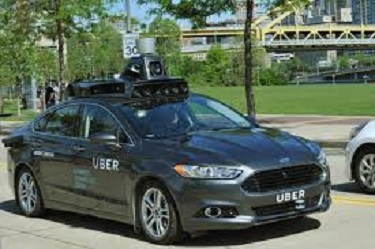
Just think: Five years ago, nobody ever heard of Uber. The only ride sharing services were taxis. Years later, Uber comes out. Uber starts a social media and app revolution. They’re not done yet. Uber’s self-driving car is almost here.
These cars are specialty made Volvo XC90s. Human drivers will just occupy the driver’s seat and supervise. The experiment will start in Pittsburgh. Later this month, Uber allows customers to choose these self-driving Volvos for service. There’s a reason this experiment is happening in Pittsburgh. It’s home to Carnegie Mellon University’s robotics program. This program helps Google produce self-driving cars. Now they’re helping Uber. That’s not all. In July 2016, Uber acquired Otto. I’m not talking about the Simpsons bus driver. I’m talking about Otto the start up driver less trucking company. Otto has 91 employees, all trying to bring self-driving technology to tech corporations. Otto currently develops big rigs to drive themselves so well drivers can catch up on sleep…while literally on the road! Uber will not produce fleets of self-driving cars. Instead, they’ll work with Volvo to produce self-driving models. Otto will help with lasers and other systems used in self-driving cars. Hailing a self-driving car will be as normal as any other car, even down to the price.
I must tell you, don’t go requesting a self-driving car in your home town. This is just an experiment. This experiment will only be done in Pittsburgh, PA…for now. But if Uber is going to get into the self-driving game, they should do a better job setting themselves apart. They’re starting to do this. They have Otto on their team; the other companies don’t. They’re not producing a fleet. Apple, Google and Tesla are. What I think they should do is invest in self-driving big rig trucks, maybe even put their name on them. I know the 18-wheeler isn’t Uber’s business…yet. But neither is car manufacturing Apple’s business…yet. If I were Uber, I’d work miracles with Otto and cause yet another social media and highway revolution…this time with mack trucks. How will Uber do with self-driving cars?
Aug 17, 2016 | Computer technology, Software
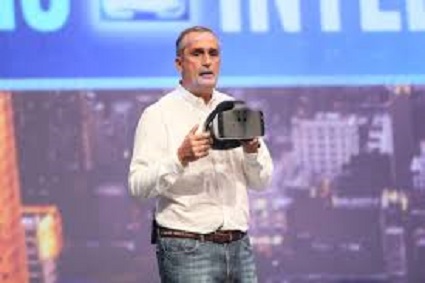
Intel’s revolutionary Project Alloy takes the VR (virtual reality) movement to another level. An Intel Developers Forum wants your VR experience to be without restraint or restriction.
Project Alloy is a virtual reality system that is completely wireless. Not even leading VR devices, like Oculus Rift, can boasts this. Intl’s VR headset has all cameras, sensors and controls all rolled up into one. Intel CEO Brian?Krzanich’s motive is clear. He and his top colleagues want a free moving VR experience. This means no wires, no screen issues, no technological hangups whatsoever. Project Alloy relies on hand tracking technology and integrated sensors. They use Real Sense technology and lasers ?to capture people walking into a virtual world. Other successful virtual reality devices have great frame rates and clean screenings. These headsets depend on their wiring to ensure quality frames and screens. Intel is partnering with Windows. Windows Holographic and Project Alloy will combine forces and operating systems to build powerful applications. This system is very early in development, although Krzanich gave a public demo about it. I say this because Project Alloy probably won’t be made public anytime soon. It mid to late 2017, it will reveal the Project Alloy hardware. This is so Alloys Hardware and Windows Holographic can be easier to combine.
Let’s get back to wireless. Just how is Intel going to give us the quality we need by cutting wires? If I were a VR fan, I’d hope Intel would give us the quality and wireless technology to make this work. If they do, that alone would set them apart from the competition. That would be good for Intel business wise. That would be good for virtual reality customers and enthusiasts. But what about socially? I wouldn’t want people to live in their fantasy VR world 24/7. I know it sounds far fetched. But I think so many people are disillusioned by the real world that they’d be happy with 24/7 VR. What these wires do is limit VR headsets. In some ways, they keep us from going too far. I’m afraid of what we’d do with wireless VR. Would wireless VR mean social chaos?
