May 7, 2017 | Entertainment, internet
Apple and Amazon never got along that well. But that was probably a good thing. Because that bred competition. They competed for our business and our loyalty. However, note how I’m using past tense. Amazon and Apple team up: What about competitors?
So here’s how Amazon and Apple team up. They agree to bring the Amazon video app to the Apple TV box. Do you know what this means? This means Amazon Prime subscribers can watch their favorite shows using their Apple TV. But before this, Amazon Prime users had to resort to trickery to watch their shows on Apple TV. And such trickery included connecting other Apple products using a WiFi connection.
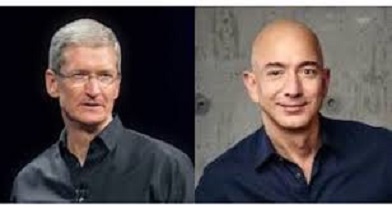
However, it’s going to be a lot easier now. Well, maybe not now. These Amazon services will be available on Apple TV sometime in fall 2017. It will probably happen just in time for the new fall 2017-18 TV lineup. Again, let me make this clear. No deal is official. But according to tech journalists and speculators, this deal would have to come from the very top. Hence, it would have to meet approval from Apple CEO Tim Cook and Amazon CEO Jeff Bezos. But why do this? Because they want to dominate the entertainment world at any costs.
So if that means merging their services, they will do it. Of course, nobody from Amazon nor Apple is talking. However, if Amazon and Apple team up like this, then what about competitors? Now I could play the cross-examiner. This could be a good thing for Apple TV watchers and Amazon Prime subscribers. Both have millions. So why should Amazon Prime people have to jump through hoops just to watch TV programs on Apple TV? Nobody else has to do that. And they would have a point. But still, what about competitors? And what about those, even in IT support and computer repair, who don’t care about Amazon Prime or Apple TV? Is this merger (let’s call if for what it really is) even worth it?

May 6, 2017 | News, Security
To this day, some say hackers caused Donald Trump to win the brutal election of 2016. But in France, another brutal presidential election plays out. Also, some believe hackers are playing a role. The French election: Are hackers targeting?
Tomorrow is France’s Election Day. The presidential race is between politically moderate?Emmanuel Macron and conservative, and often controversial, Marie LePen. But yesterday, Marcon’s people said hackers dumped a massive computer hack on him. So here is their story. Somebody posted 9GB of data to website?EMLEAKS to Pastebin. That’s a secret document sharing website. The timing is funny. Because it’s just 36 hours before the election. However, polls show Marcon leading LePen.
So far, we don’t know who did the hacking. In fact, we don’t even know if a hacking took place. But if it did, it violates France’s rules regarding influencing an election. French leaders are staying far away from this one. But an election committee will investigate Marcon’s claims. Also, this non-partisan committee told French media not to publish the details. If they did, they could face criminal charges. Like I said, we don’t know where these potential hacks came from. But as usual, Russia gets the blame.
So what? What does an election in France have to do with computer repair? Maybe nothing. But these potential election hacks should concern us. It doesn’t matter if we work in IT support or on a farm or in a classroom, politics affect us all. Elections affect us all. And if hackers from other countries, particularly ones that don’t like us, can sway an election, that’s not good. France is already on edge. In fact, this election is so intense riots are already flaring up. And voting day isn’t until Sunday, May 7. The French election could have been hacked. Is this any good for democracy?

May 5, 2017 | scam
This is a Google Docs alert. At least, the past few days were like this. I say this because a massive phishing scam took over Google Docs this week. Hence, Google Docs shut down for an hour two days ago.
So hackers sent an email with a link. Here is one scary part: They sent it in the name of someone you know and trust. Then, you clicked on the link. You got a real Google Apps page. But then, it told you to authorize another Google Docs app. There lies the problem. The app, sent to you by the hacker, was a fake app. It didn’t take long before this fake Google Docs app infected millions of systems: PCs, tablets, smartphones.
But thankfully, Google’s security was right there to answer this Google Docs alert. It took them about the hour to remove the threat. They removed all fake pages, applications and documents. Now why would they do this? Because the hackers know many people link their Gmails and Google Docs to Facebook, Amazon, Twitter, and other social media accounts. Do you realize how much info is on those accounts?
But there are things you can do to protect yourself. First of all, Google has a tool Password Alert. Password Alert warns you if a Google page isn’t really Google’s. ?If you run across a fake Google Docs or anything Google, they’ll alert you about it. Then, they’ll advise you to change your password and secure your account immediately! In our Boston computer service shop, many of us got this protection. That’s sound advice. If this phishing scam got you, change your password and secure everything right now! Don’t wait! For every second you wait, that’s every second the hackers have a party with your information. The other scary thing is they use real people and real docs to use this phishing scam. What do you suggest to keep us safe?
May 4, 2017 | internet
On Easter Sunday 2017, a guy made a Facebook video. But this wasn’t like other Facebook videos. Because he made one of himself killing a 74-year-old innocent man, then claimed he killed several others. Also, in April 2017, someone posted their own suicide. This is an epidemic Mark Zuckerberg wants to rid Facebook of. So Facebook fights violent videos by hiring 3,000.
Facebook will hire them to monitor violent and harmful videos. Also, this team will remove them quicker. ?Zuckerberg believes this move is vital. He hints that with more people, they deal with such videos more effectively. Facebook gets millions of complaints every week. Also, keep in mind Facebook has over two billion people. So many believe this move isn’t enough.
Yes, I know most people don’t put violent and deadly posts on Facebook. But all it takes is a small handful to mess it up for everyone else. This is just another attempt to make Facebook a safer place. They launched tools for loved ones to contact each other in the wake of natural disaster or mass violent attacks. Then they set up suicide prevention tools. Furthermore, they have tools to combat the epidemic of revenge porn and sexploitation. Now Facebook fights violent videos.
They also vow to fight ‘fake news’ and ‘hate speech’. I don’t know how to feel about that one. Yes, I’m all for getting rid of murder and suicide online. Why any psychopath wants to put that online is beyond me. Furthermore, why would anybody want to see a murder or suicide online? I do think every IT service company should fight this kind of videos. But them tackling ‘fake news’ and ‘hate speech’; I’m weary about that. Because I don’t want Mark Zuckerberg, or any other Facebook employee, telling me what ‘fake news’ and ‘hate speech’ are. That gives them way too much power. And couldn’t that lead to censorship altogether?

May 2, 2017 | internet
One thing about Facebook: It often target people’s emotions. For example, a Facebook friend posts a news article. Then, others feel emotional and rant about that same article. But I read one disturbing report. It has to do with Facebook emotions: Do they target venerable teens?
So this report leaked to The Australian. Supposedly, this report talked about how Facebook could target the emotions of millions of teenagers. They talked about looking for teens who want to ‘look good’ or ‘lose weight’ or ‘gain confidence’. All of this is to target them to advertisers. This is all according to this The Australian report. Also, Facebook can see when teens feel ‘useless’, ‘worthless’ or ‘like a failure’. So it sounds like they really are preying on Facebook emotions, especially on young teenagers.
But Facebook employees say not so. One calls this article misleading. They also say this was to study how people overall act on Facebook. They insists Facebook in no way targets venerable teens. But Facebook did apologize for this. Also, they say they broke no laws, or other legal rules, during this process. Facebook promises to improve it’s research. And they vow to take actions against anyone who abuses their research policies.
I don’t know what to say about this one. I understand the outrage. No company, no IT service company, or any other, should ever exploit the emotions of underage peoples. This goes double for those already feeling bad about themselves. That’s from a moral stand. But what about business? Let me explain. Advertisers always go after people’s vulnerabilities. It’s been that way for decades. Look at this early 1960s commercial; it preys on people’s social fears of being outcast because of bad breath. I hate to say it, but preying on people’s fears is a part of advertising. But doing it to young, struggling teenagers is something else. You have to draw the line. And to use teens already struggling with emotions is crossing that line. So I hope Facebook is sincere with this apology. Was this social research or were Facebook emotions purposely targeted?
